
While preparing for abrasive blasting inside a steel tank, a crew lead plans to connect a supplied-air respirator hood to the jobsite's standard diesel air compressor used for jackhammers. Why must the supervisor stop this?
Select an answer to reveal the explanation.
Short Explanation
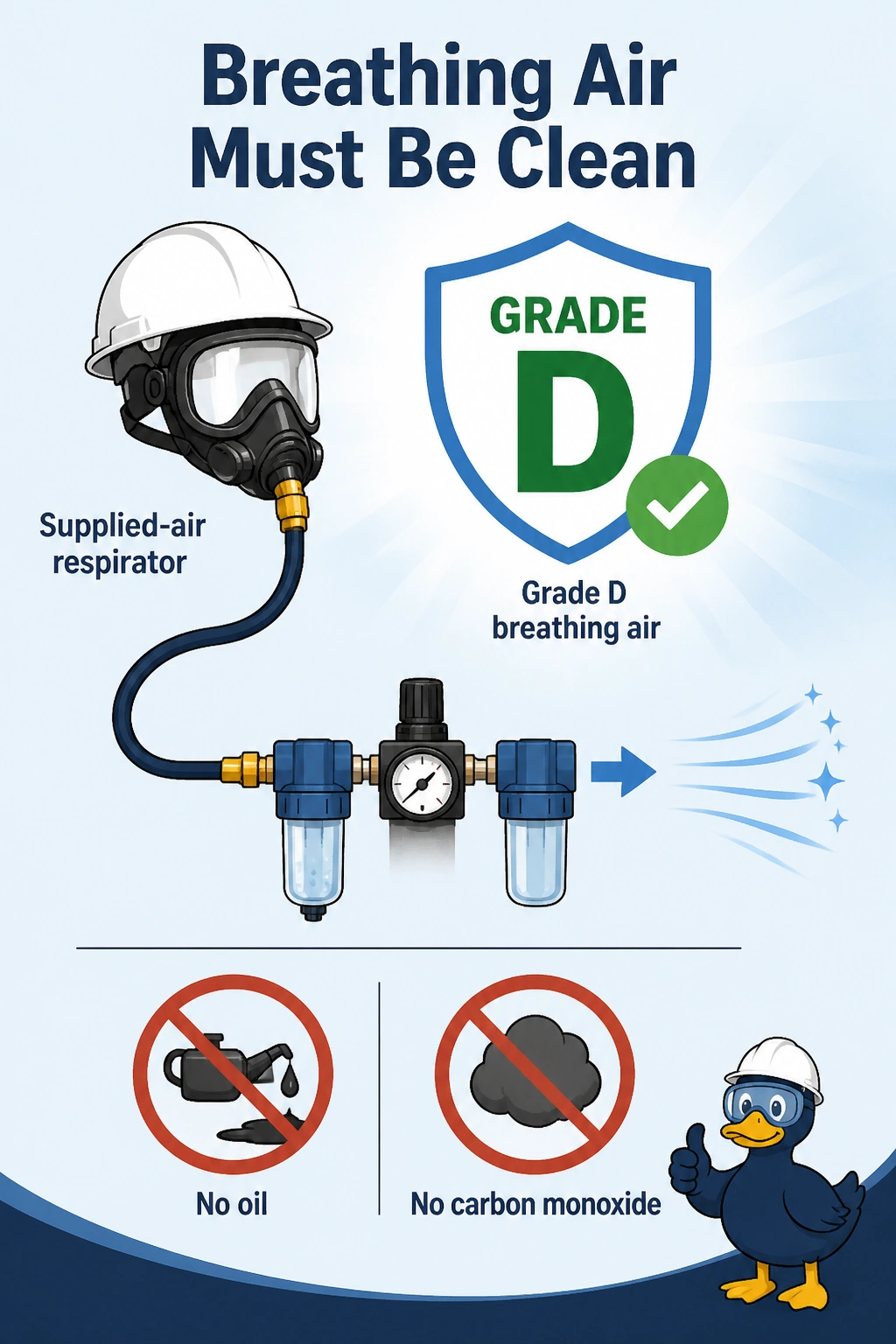
Hooking a breathing hood to a jackhammer compressor sounds convenient, until you realize what is riding along in that air line. The trap is assuming any compressed air is safe to breathe when standard tool compressors can pump oil mist and deadly carbon monoxide straight into a hood. Always require a verified Grade D breathing air source with proper filtration and CO monitoring.
Full Explanation
Under 29 CFR 1910.134(i), atmosphere-supplying respirators must be supplied with breathing air that meets at least Grade D requirements, which strictly limits carbon monoxide, carbon dioxide, oil mist, and moisture. The supervisor must stop the setup because "Supplied-air respirators require Grade D breathing air free of oil and carbon monoxide" rather than unfiltered utility air from a tool compressor. Standard oil-lubricated or diesel-driven compressors can introduce deadly carbon monoxide from exhaust intake or thermal oil breakdown directly into the worker's hood. Choosing "Standard tool compressors deliver too much pressure and will immediately burst the respirator hood" is inaccurate because inline pressure regulators control flow, yet regulation alone cannot purify toxic contaminants. Choosing "Supplied-air hoods can only be fed from portable oxygen cylinders rather than any air compressor" is false and dangerous because pure oxygen must never be used in supplied-air respirators due to extreme fire hazards. Choosing "Diesel compressors operate too loudly to hear the respirator's low-air warning whistle" misses the lethal atmospheric contamination hazard inside the breathing line. As a caveat, oil-lubricated compressors used for breathing air require high-temperature or carbon monoxide alarms, or both, to monitor air quality continuously. For an operational check, verify the breathing-air compressor's intake location, Grade D certification, and active CO monitor alarm before any blasting starts.
Prefer to study offline? Printable PDF study book + test engine ($7.50, unofficial). These questions stay free here.