
During an occupied hospital wing renovation, a carpentry foreman opens a chase wall and discovers heavy black mold growth across damp drywall panels. Which control should the foreman require before demolition continues?
Select an answer to reveal the explanation.
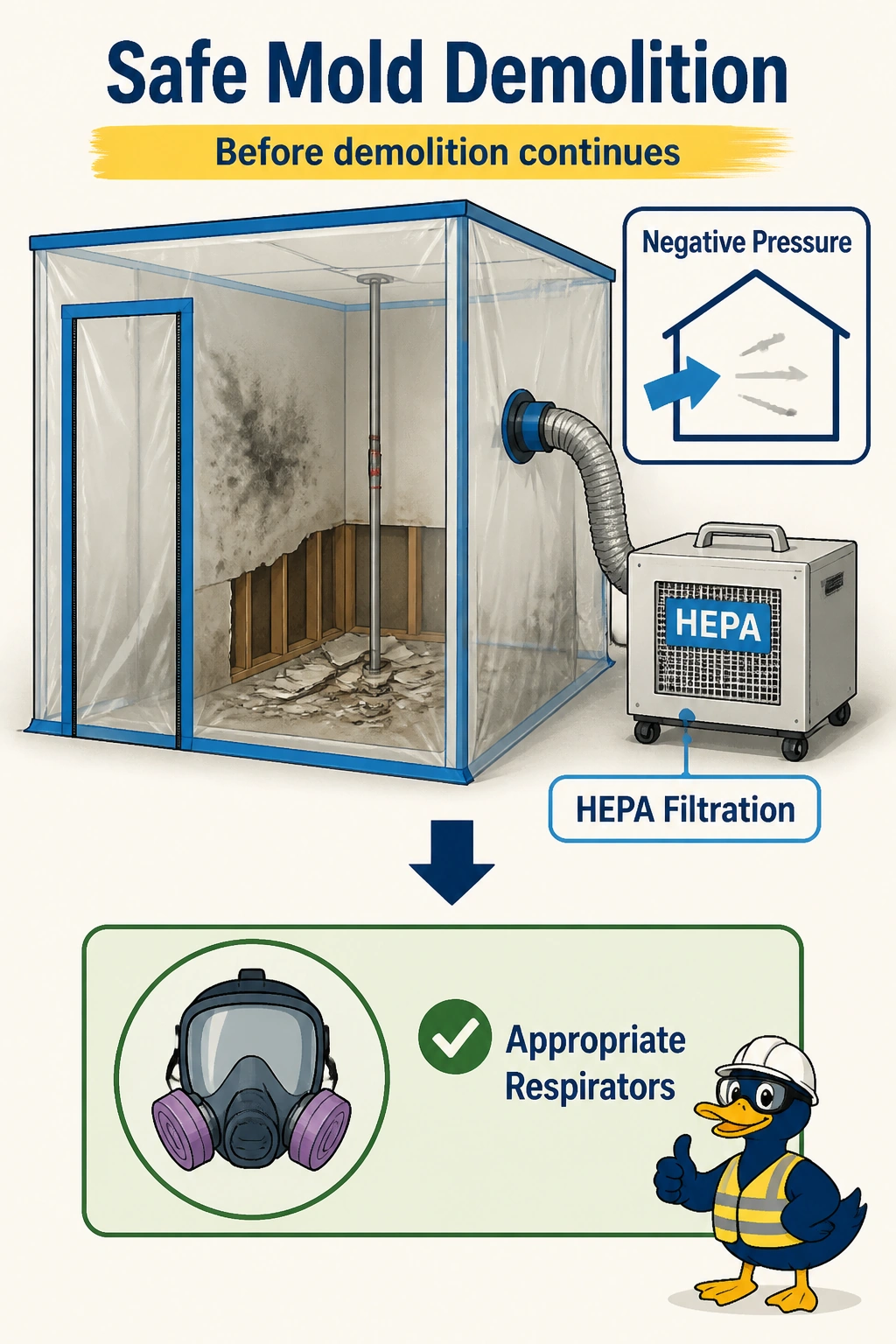
Short Explanation
Disturbing moldy drywall is like shaking a dusty rug in a clean kitchen—you have to trap the cloud before it spreads through the building. The trap is trying to blow or dilute spores with fans or house HVAC, which turns a local problem into a hospital-wide exposure.
Full Explanation
Choosing to Isolate the work zone under negative pressure with HEPA filtration and require appropriate respirators controls both inhalation exposure for the crew and cross-contamination into occupied hospital areas. Negative-pressure containment keeps air flowing inward so disturbed fungal spores are captured by HEPA filters rather than drifting into corridors, while proper respiratory protection shields workers from airborne particulates. Attempting to Direct portable floor fans toward the corridor doors to dilute airborne spores before tearing out the wallboard pushes contaminated air directly into adjacent occupied spaces. Choosing to Dry-scrape the visible surface growth with wire brushes while wearing only cloth dust masks for comfort aerosolizes dense clouds of spores and relies on non-rated cloth coverings that do not seal or filter fine particles. Deciding to Keep the building's central return-air vents open so the HVAC system filters the demolition dust continuously draws spores into ductwork and distributes them throughout the facility. As a caveat, containment setup and respirator selection must match the size of the affected area and site infection-control rules. Before demolition starts, check that HVAC returns in the room are sealed and verify negative airflow at the containment entry with a smoke tube or manometer.
Prefer to study offline? Printable PDF study book + test engine ($7.50, unofficial). These questions stay free here.