
A civil grading foreman notices that two scraper operators complain of lower-back pain after bouncing for hours across rutted haul roads in older machines with worn-out seat cushions. Which control should the foreman prioritize first to reduce whole-body vibration?
Select an answer to reveal the explanation.
Short Explanation
Picture bouncing down a washboard dirt road for eight hours straight—your spine takes a beating even when you never lift a finger. The trap here is reaching for a quick personal fix like a back belt or standing up in the cab instead of smoothing the haul road and fixing the seat suspension.
Full Explanation
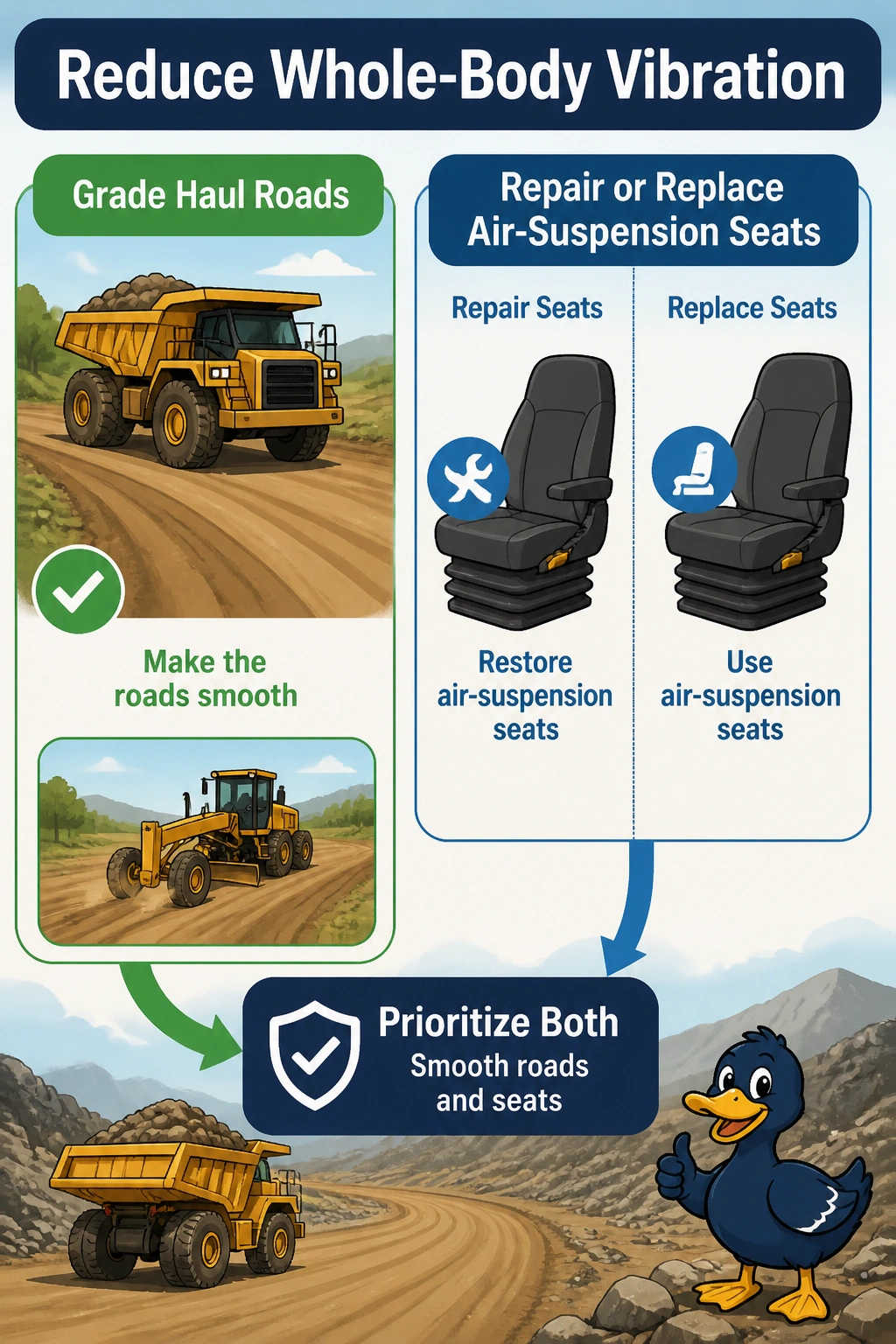
Whole-body vibration (WBV) travels through the seat into the spine and lower back, increasing the risk of disc degeneration and chronic musculoskeletal pain. Under the hierarchy of controls, the most effective step is to reduce vibration at the source and along the transmission path, so the foreman should Grade the haul roads smooth and repair or replace the air-suspension seats. Smooth haul roads remove the jolts created by ruts and washboarding, while properly functioning air-suspension seats absorb remaining low-frequency energy before it reaches the operator. Choosing to Issue elastic lumbar back belts to both operators before the next shift fails because NIOSH does not recognize back belts as effective personal protective equipment against vibration or back injury, and they can create a false sense of security. Choosing to Require operators to stand on the cab floorboard while crossing rough sections of the haul road fails because standing in a moving cab compromises operator control, seatbelt use, and stability, creating a severe ejection or collision hazard. Choosing to Schedule operators to drink extra electrolyte water during every afternoon break addresses hydration for heat stress rather than mechanical vibration. As a caveat, even well-maintained seats lose effectiveness if they are adjusted for the wrong operator weight. For an operational check, inspect haul-road surface conditions and verify that each machine's seat suspension moves freely and is adjusted to the operator before the shift.
Prefer to study offline? Printable PDF study book + test engine ($7.50, unofficial). These questions stay free here.