
After concrete slab grinding inside a warehouse renovation, a supervisor sees two laborers using stiff push brooms to dry-sweep thick gray concrete dust across the floor, filling the air with haze. What must the supervisor require?
Select an answer to reveal the explanation.
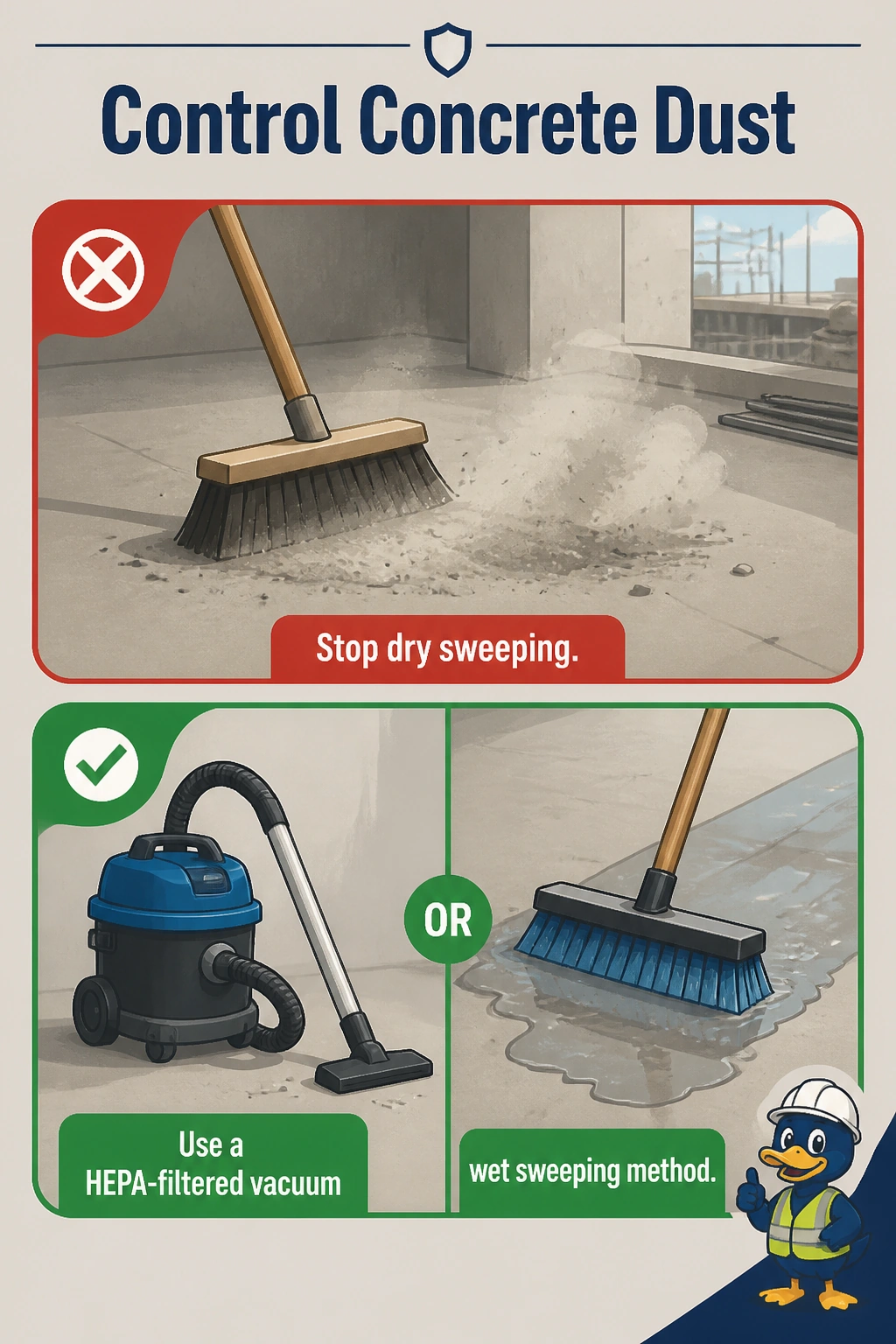
Short Explanation
Dry-sweeping concrete dust just kicks settled silica back into the air where your crew breathes it deep into their lungs. The trap is handing out N95s or blowing dust out the door instead of capturing it with a HEPA vacuum or wet cleanup.
Full Explanation
Under 29 CFR 1926.1153(f), dry sweeping or dry brushing of dust that could contribute to respirable crystalline silica exposure is prohibited unless wet sweeping, HEPA-filtered vacuuming, or other methods that minimize exposure are not feasible, so the supervisor must Stop dry sweeping and use a HEPA-filtered vacuum or wet sweeping method. Choosing to Have the laborers wear disposable N95 masks while continuing to sweep faster relies on personal protective equipment alone while continuing to contaminate the entire workspace air for nearby trades. Choosing to Open the loading dock doors and use a leaf blower to push the dust outside violates compressed-air and blowing prohibitions and creates a massive airborne silica cloud. Choosing to Wait until the end of the shift to sweep so fewer trades are in the room still exposes the cleanup crew to high airborne dust concentrations and leaves silica settled on surfaces. Even after grinding stops, housekeeping methods are strictly regulated because fine silica particles stay suspended for hours. Check the housekeeping cart before concrete cleanup starts to confirm a working HEPA vacuum or wet-sweeping supplies are staged on the floor.
Prefer to study offline? Printable PDF study book + test engine ($7.50, unofficial). These questions stay free here.