
During a food-processing plant expansion, two pipefitters are TIG-welding stainless steel process lines inside a tight mezzanine room with minimal natural airflow. Which control should the supervisor prioritize to reduce hexavalent chromium fume exposure?
Select an answer to reveal the explanation.
Short Explanation
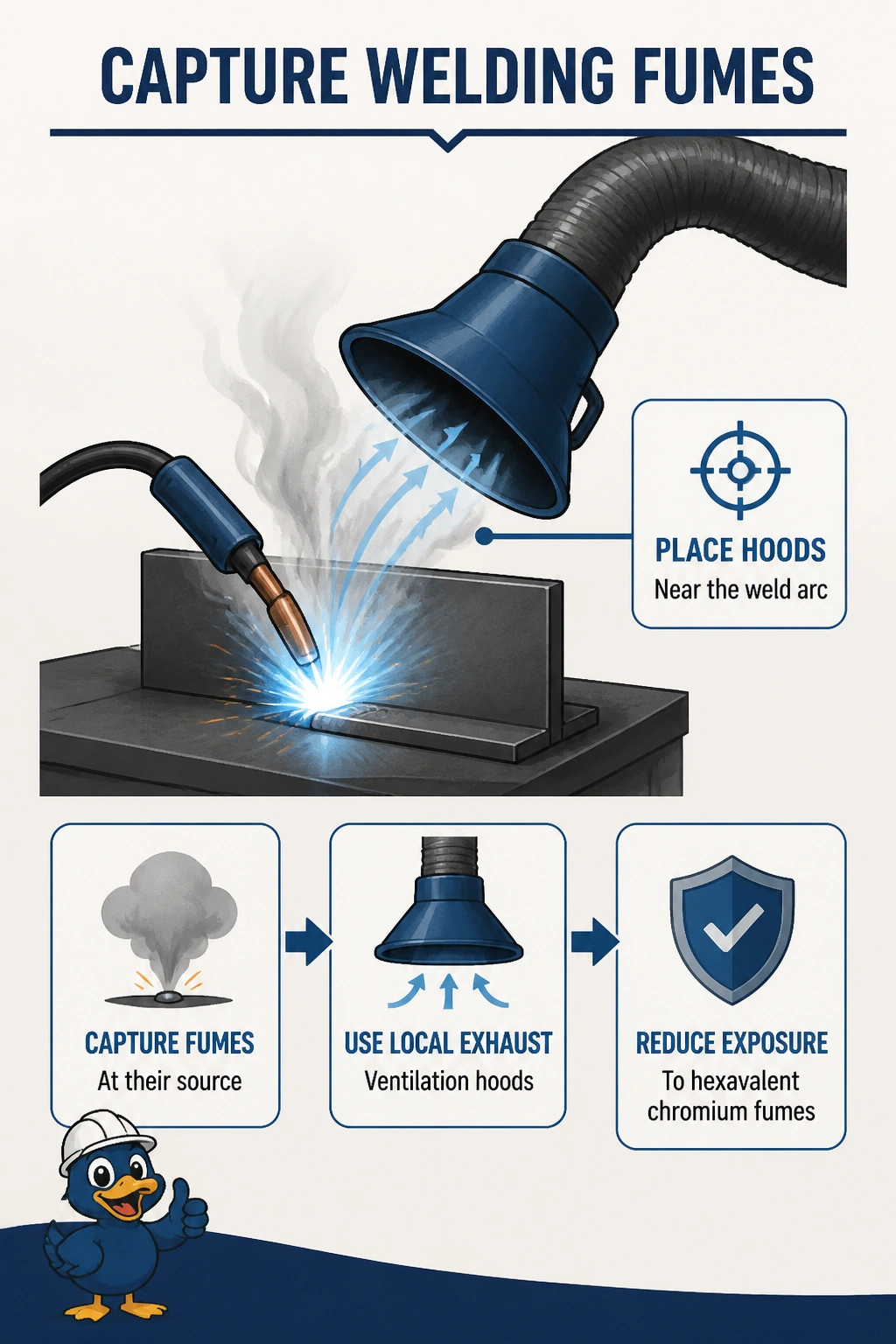
Stainless steel welding looks clean compared to stick welding, which makes it easy to overlook invisible hexavalent chromium fumes building up in your breathing zone. You should position local exhaust ventilation hoods close to the weld arc to capture fumes at the source. The trap is relying on comfort dust masks or longer breaks while toxic metal fumes stay in the room.
Full Explanation
Welding stainless steel generates hexavalent chromium, a regulated carcinogen under 29 CFR 1926.1126 that requires engineering and work-practice controls before relying on respirators. Choosing to Position local exhaust ventilation hoods close to the weld arc to capture fumes removes the contaminant at the point of generation before it enters the workers' breathing zones. Conversely, choosing to Provide extra bottled drinking water and extend afternoon break periods by ten minutes addresses hydration and fatigue rather than airborne metal fume concentration. Selecting to Replace the welding helmets with darker auto-darkening lenses to reduce arc glare protects vision from ultraviolet radiation but does nothing to capture hexavalent chromium. Choosing to Issue disposable paper filtering facepiece dust masks for optional comfort use fails to provide adequate respiratory protection or source capture for welding fumes. As a caveat, local exhaust hoods lose capture efficiency rapidly if placed too far from the arc, so welders must reposition the pickup as the joint moves. For an operational check, inspect the fume extractor's filter and airflow indicator, place the hood within inches of the weld without disturbing shielding gas, and confirm exhaust discharges outside the occupied mezzanine.
Prefer to study offline? Printable PDF study book + test engine ($7.50, unofficial). These questions stay free here.