
While checking a leaking hydraulic fitting on a concrete pump, a mechanic wipes a pressurized pinhole spray with a gloved hand, feels a sharp sting, and sees only a tiny pinpoint mark with minimal bleeding. What should the supervisor do immediately?
Select an answer to reveal the explanation.
Short Explanation
A pinpoint mark from a pressurized hydraulic leak can hide a surgical emergency, so you must treat the sting seriously even when there is barely a drop of blood. The trap is brushing off a tiny puncture or squeezing the finger, which drives toxic fluid deeper into tissue.
Full Explanation
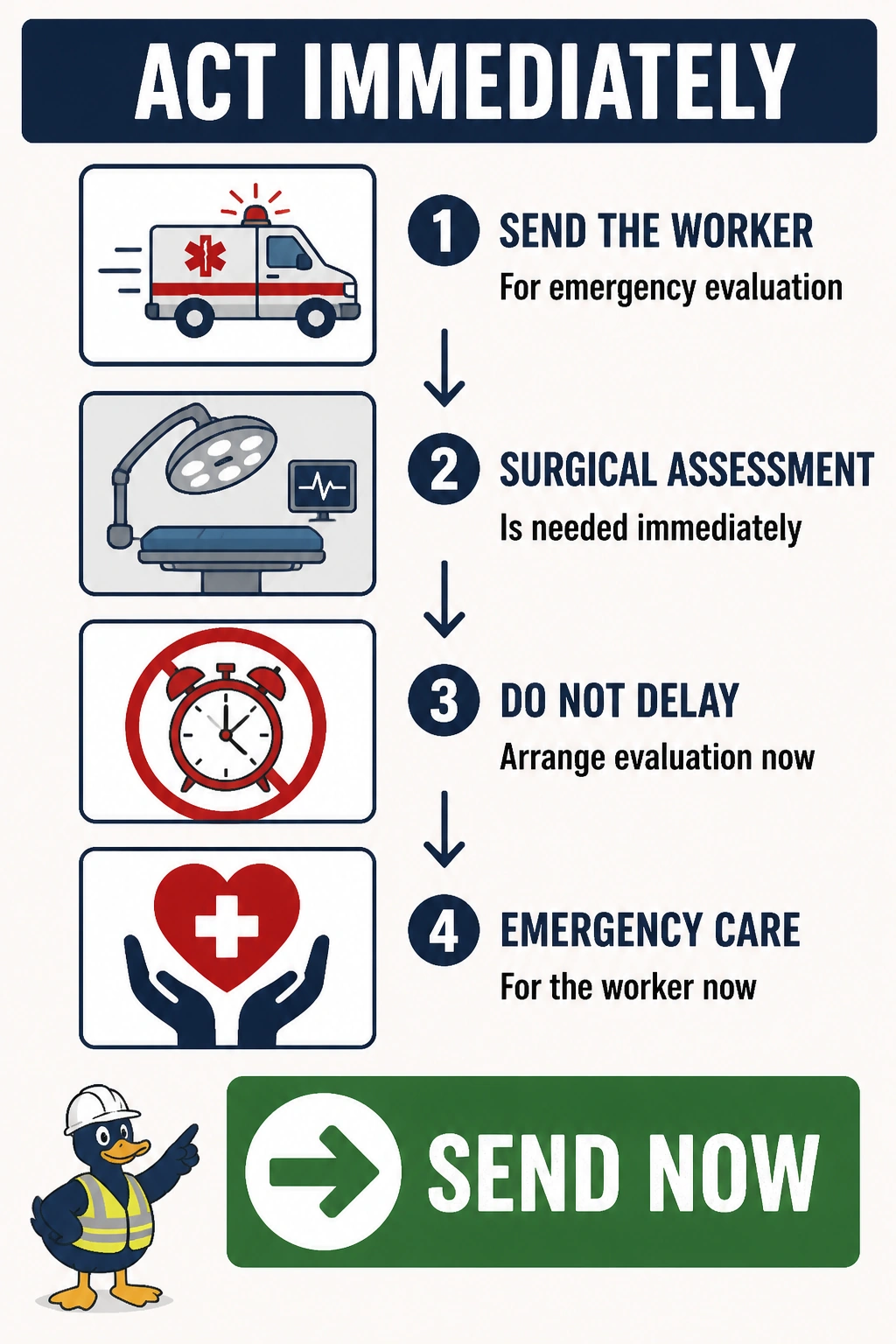
High-pressure hydraulic fluid can penetrate gloves and skin through a microscopic jet, driving toxic oil along tendon sheaths and causing rapid tissue necrosis or amputation if surgical decompression is delayed. Choosing to Send the worker for immediate emergency surgical evaluation ensures rapid specialist care before swelling and chemical irritation destroy deep tissue. Deciding to Apply an adhesive bandage and let the mechanic finish the pour ignores a deceptive internal injury that worsens hour by hour even when surface bleeding looks trivial. Choosing to Squeeze the finger firmly to press out any trapped hydraulic oil forces injected fluid further along fascial planes and increases tissue damage. Opting to Soak the hand in warm water and recheck the mark at lunch wastes critical hours during the narrow window when surgical washout is most effective. As a caveat, always depressurize hydraulic systems and use cardboard or wood—never a hand—to trace suspected pinhole leaks. For an operational check, send the hydraulic fluid's Safety Data Sheet with the injured worker so emergency clinicians know the exact chemical composition.
Prefer to study offline? Printable PDF study book + test engine ($7.50, unofficial). These questions stay free here.