
While gutting an abandoned retail space during a commercial renovation, a laborer uncovers several discarded hypodermic needles behind a wall cavity. What should the site supervisor instruct the worker to do?
Select an answer to reveal the explanation.
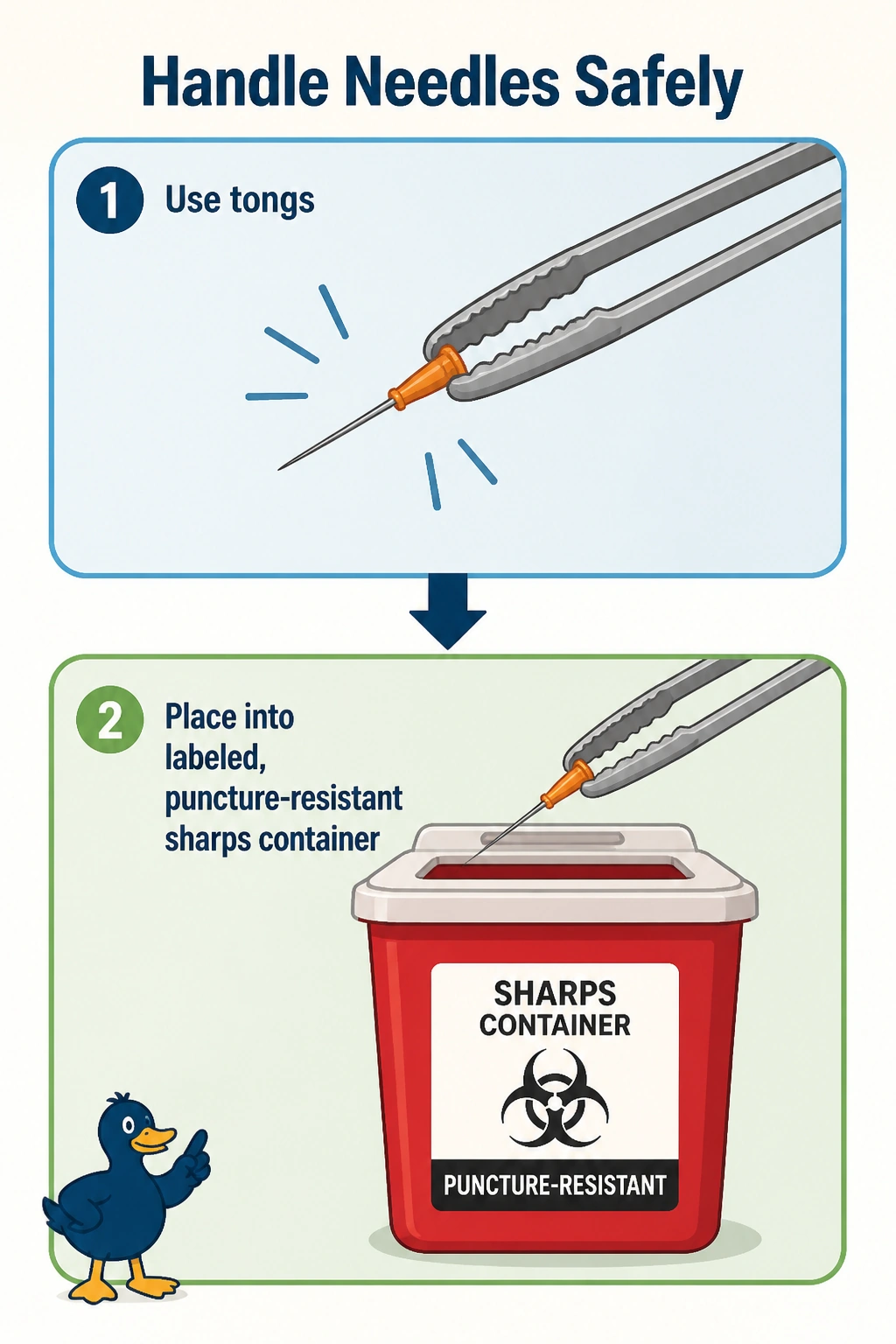
Short Explanation
Hidden sharps turn a routine gut-out into a bloodborne pathogen hazard before you know it. The trap is trusting leather gloves or bending needles, which still invites an accidental stick. Keep your hands off the sharps and use mechanical tools to drop them straight into a proper container.
Full Explanation
Bloodborne pathogens such as hepatitis B, hepatitis C, and HIV can remain infectious on discarded needles, so supervisors must treat unknown sharps as contaminated under OSHA bloodborne pathogen practices. When you instruct the worker to Use tongs to place the needles into a labeled, puncture-resistant sharps container, you eliminate direct hand contact and prevent the needle from piercing a bag or injuring custodial and waste-handling crews later. Choosing to Gather the needles using heavy leather work gloves and place them in a plastic bag fails because leather does not reliably stop a sharp needle tip and thin plastic bags tear easily. Choosing to Bend the needle tips with pliers before placing them inside the general jobsite trash bin is dangerous because manipulating sharps increases needle-stick and splatter risk and puts waste handlers in danger. Choosing to Leave the needles undisturbed inside the wall cavity and cover them with new drywall merely hides an active hazard for future maintenance or demolition workers. As a caveat, if a worker is stuck, wash the site immediately and arrange confidential post-exposure medical evaluation. For an operational check, keep a rigid sharps container and long-handled tongs in the site first-aid kit before starting demolition in vacant buildings.
Prefer to study offline? Printable PDF study book + test engine ($7.50, unofficial). These questions stay free here.