
While grading a parking lot on a humid 90-degree afternoon, a laborer begins sweating heavily, looks pale and clammy, and reports dizziness and nausea. What should the supervisor do immediately?
Select an answer to reveal the explanation.
Short Explanation
Heavy sweating, clammy skin, and nausea are your warning lights for heat exhaustion—ignore them and heat stroke is right around the corner. The trap is telling a dizzy worker to push through or sit alone in a hot cab instead of cooling and hydrating them under watch.
Full Explanation
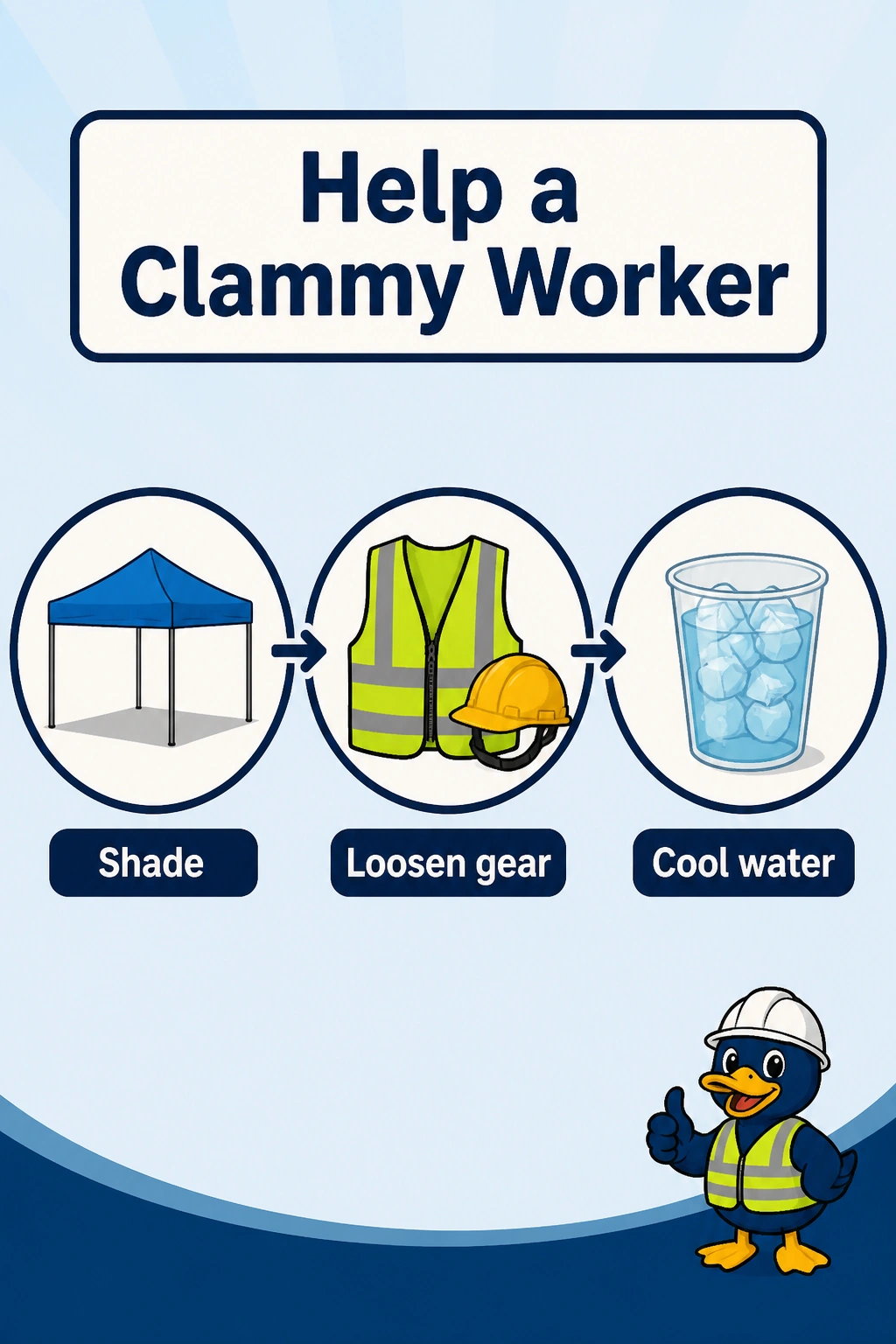
Heavy sweating, pale clammy skin, dizziness, and nausea are classic signs of heat exhaustion, so the supervisor must Move the worker to shade, loosen gear, and give cool water while staying with them. Removing the worker from direct sun, loosening tight vests or PPE, and sipping cool water help lower core body temperature and restore hydration before the condition escalates to life-threatening heat stroke. Choosing to Have the worker finish the row and rest at break time fails because continued exertion in high heat rapidly worsens fluid loss and collapse risk. Deciding to Give the worker salt tablets and tell them to keep moving slowly fails because concentrated salt tablets irritate an already nauseated stomach and continued movement adds metabolic heat. Opting to Send the worker alone to sit inside an uncooled truck cab fails because an uncooled cab traps heat like an oven and leaves the worker unmonitored if confusion develops. Watch closely for any confusion, slurred speech, or fainting, which signal heat stroke requiring an immediate 911 call. Verify that shaded rest areas, cool drinking water, and a buddy check are active on every hot-weather shift.
Prefer to study offline? Printable PDF study book + test engine ($7.50, unofficial). These questions stay free here.