
During an interior hospital buildout, two drywall laborers report shoulder and lower-back strain from pulling loaded 600-pound panel carts backward down long corridors. Which ergonomic work practice should the supervisor require?
Select an answer to reveal the explanation.
Short Explanation
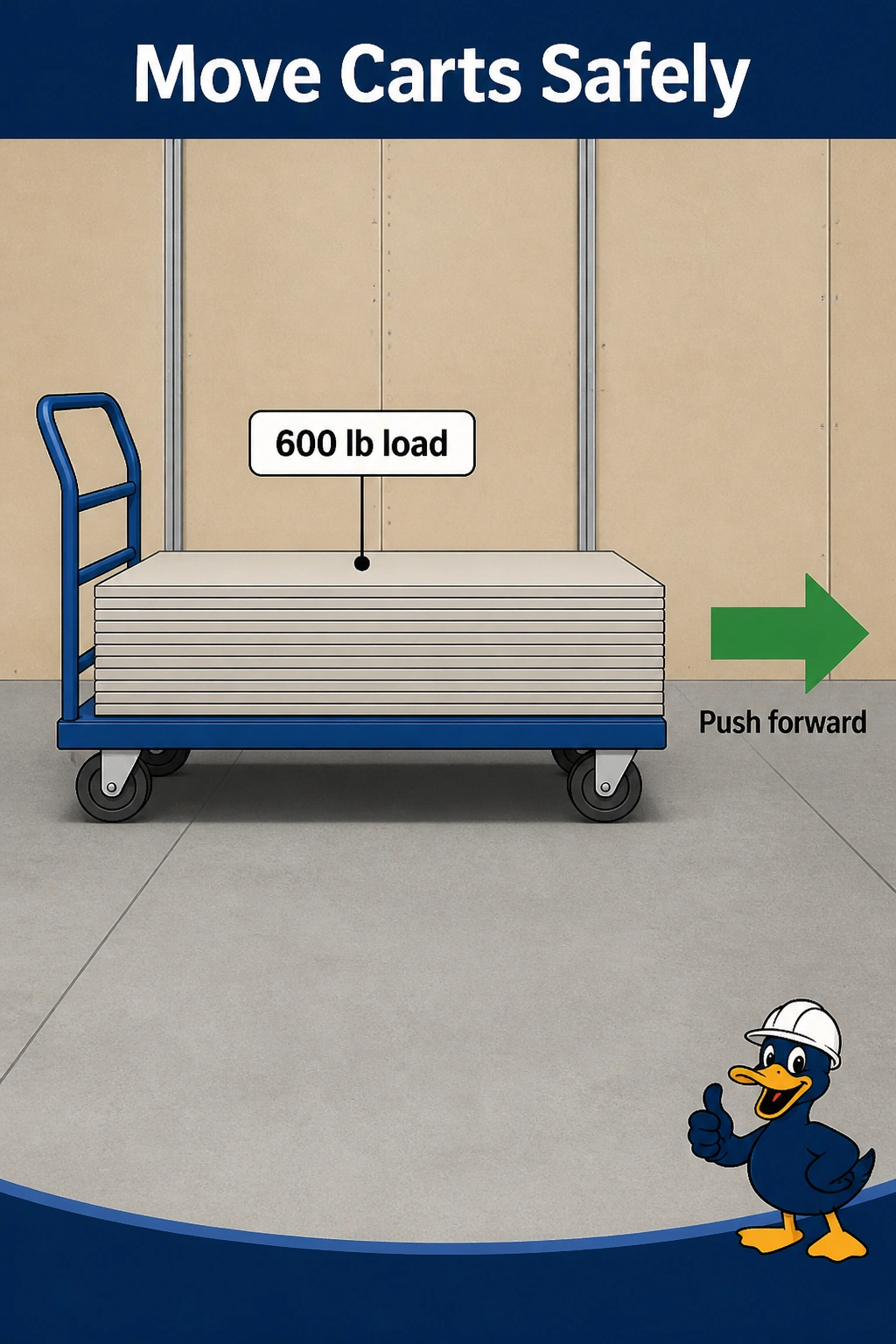
Pulling a heavy cart behind you forces your shoulders and lower back to absorb the load while blocking your view of trip hazards. The trap is thinking extra momentum or heavier loads will save effort, when they actually spike joint strain. Have your crew push carts forward with their legs and keep loads manageable.
Full Explanation
Ergonomic principles from NIOSH show that pushing a wheeled load is generally safer and requires less awkward musculoskeletal force than pulling it. When workers Push the loaded carts forward using body weight and leg muscles instead of pulling, they keep the load in front of them, maintain a neutral spine, use stronger leg muscles, and can see obstacles in their path. Choosing to Have one worker pull from the front while a second worker twists to steer still subjects the lead worker to backward shoulder extension and adds torso twisting, a major risk factor for lumbar strain. Choosing to Load more sheets onto each cart to cut down the total number of trips increases rolling resistance and peak starting force, raising the risk of acute back injury. Choosing to Speed up the pace through corridors so momentum carries the cart farther increases stopping distance and collision risk around blind corners. As a caveat, pushing only works well if cart casters roll smoothly and floors are clear of debris. For an operational check, inspect cart wheels for seized bearings or wrapped wire and limit cart loads so workers can start and stop them smoothly without straining.
Prefer to study offline? Printable PDF study book + test engine ($7.50, unofficial). These questions stay free here.