
During interior demolition of painted steel beams containing lead, a foreman sees two workers unwrapping sandwiches on a scaffold plank inside the containment area without washing up. What health control must the foreman enforce?
Select an answer to reveal the explanation.
Short Explanation
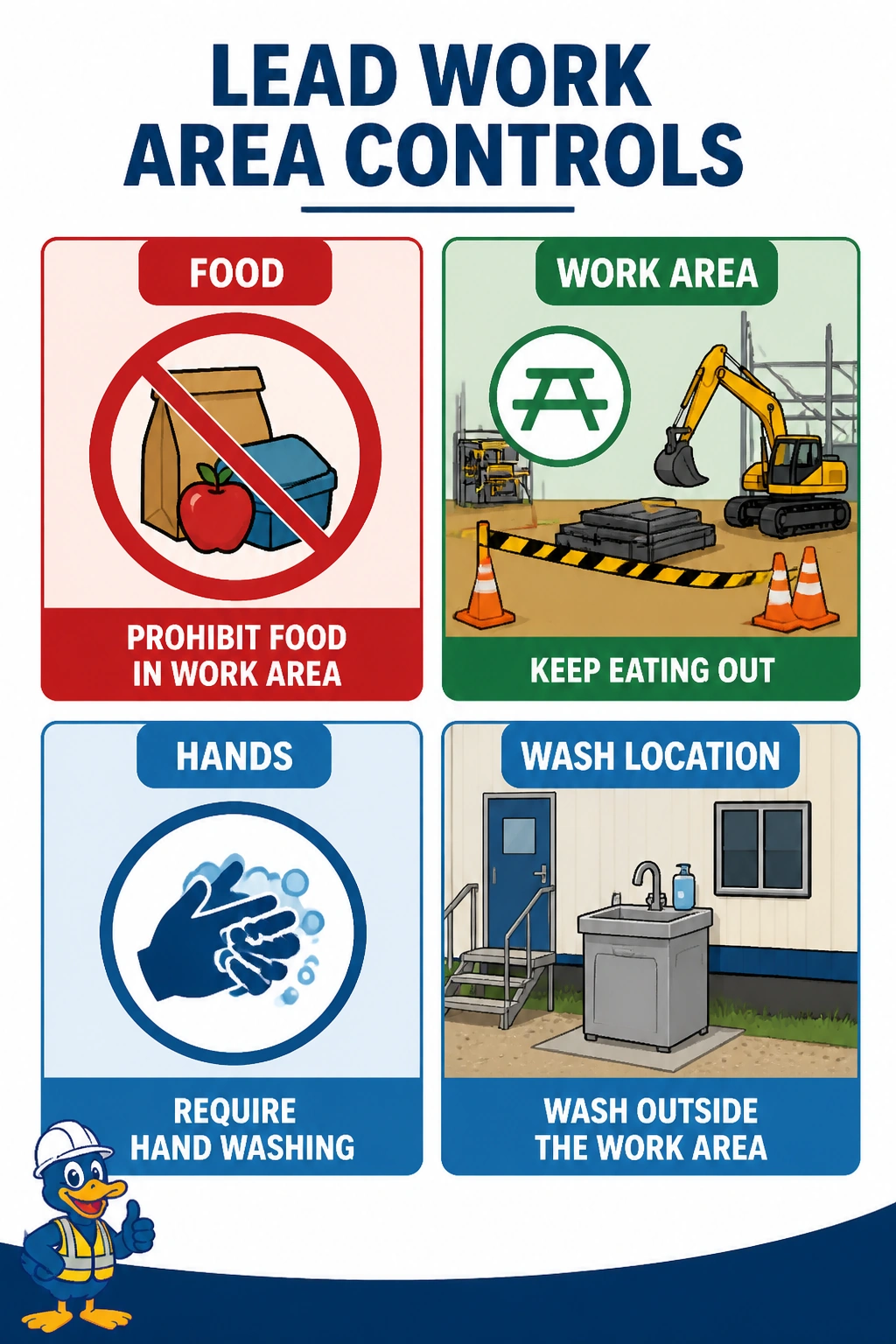
Lead dust doesn't just float into your lungs—it rides straight into your stomach on unwashed hands and lunch wrappers. The trap is letting workers improvise a quick bite inside containment instead of enforcing a clean break area and real handwashing.
Full Explanation
Under the OSHA construction lead standard, 29 CFR 1926.62(i), food, beverages, and tobacco products must not be present or consumed in areas where employees are exposed to lead above the permissible exposure limit, and employers must provide clean eating areas and washing facilities. Selecting Prohibit food in the work area and require washing hands outside it blocks the ingestion route of exposure before lead dust transfers from hands or surfaces to food. Choosing Require workers to wear disposable latex gloves while eating on the scaffold fails because airborne or settled lead dust inside containment still contaminates the food and unwrapping surfaces. Choosing Have workers wipe their hands with dry shop rags before taking a lunch break merely smears fine lead particulates into skin creases and onto rags without removing them. Choosing Provide bottled water inside the containment zone so workers stay hydrated violates the prohibition on beverages inside contaminated work zones and risks ingesting settled dust from bottle rims. A key caveat is that workers must also remove or HEPA-vacuum contaminated protective clothing before entering clean break areas. As an operational check, verify soap, running water, and clean towels are stocked at the containment exit before each shift.
Prefer to study offline? Printable PDF study book + test engine ($7.50, unofficial). These questions stay free here.