
While working on an exposed winter bridge deck, a carpenter pulls off a wet glove and shows the foreman two pale, waxy, numb fingers on one hand. What should the foreman do?
Select an answer to reveal the explanation.
Short Explanation
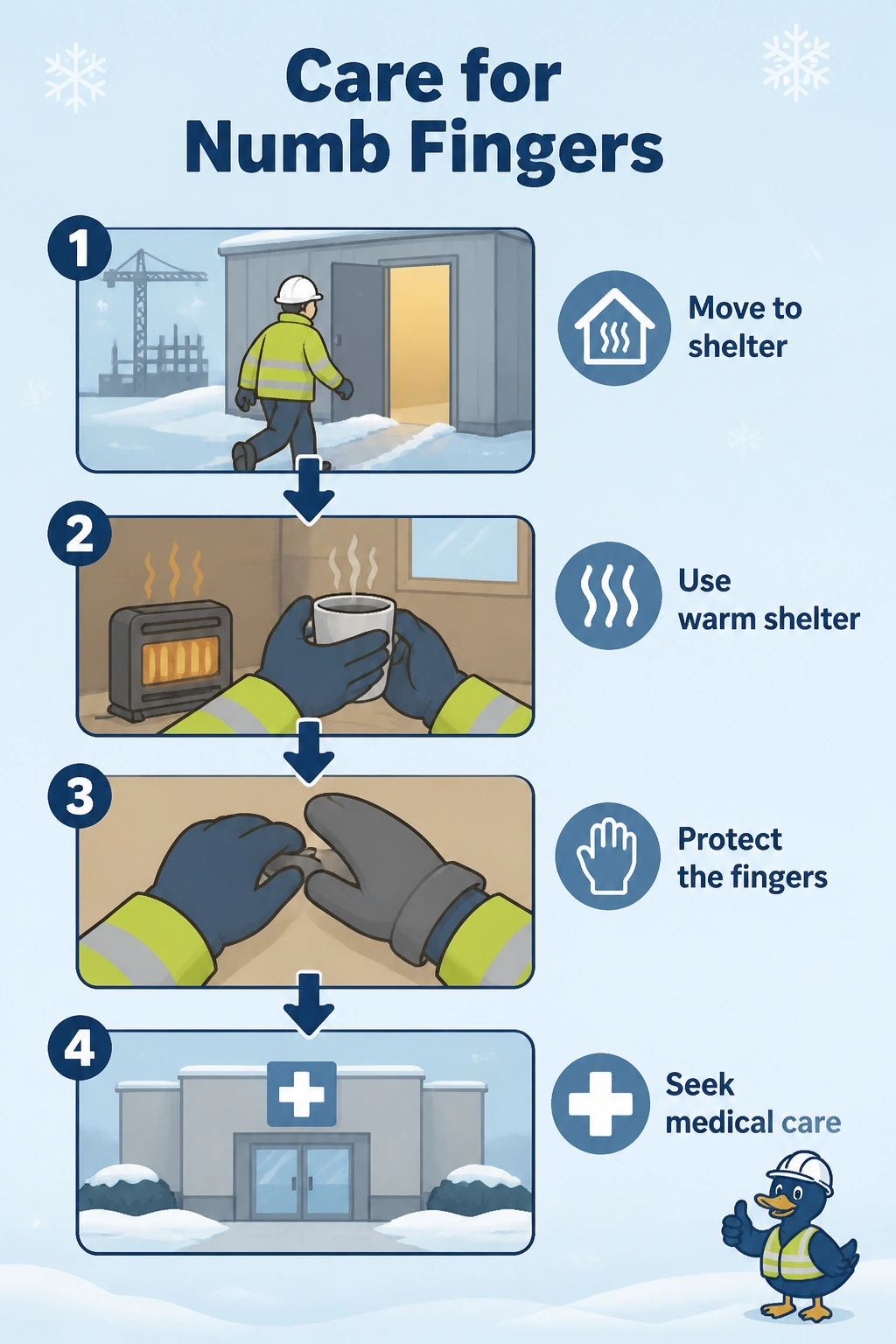
Pale, waxy, numb fingers suggest frostbite, and rubbing them or exposing them to direct heat can make permanent damage much worse. You can protect the worker by moving them to warm shelter, protecting the fingers, and seeking medical care rather than treating frozen skin like mild coldness.
Full Explanation
Frostbite occurs when skin and underlying tissues freeze in cold, wet conditions, leaving affected fingers pale or grayish-yellow, firm or waxy, and numb. Moving the worker to warm shelter, protecting the fingers, and seeking medical care halts further heat loss and avoids mechanical or thermal trauma to fragile frozen cells while ensuring proper clinical rewarming. Rubbing the pale fingers briskly with snow or a rough cloth to restore circulation can make ice crystals in frozen tissue tear cell walls, worsening tissue necrosis. Holding the numb fingers directly over a portable propane heater risks severe burns because numb skin cannot sense excessive radiant heat or flame. Having the carpenter put on dry gloves and keep nailing until break time allows freezing to progress deeper into tendons, nerves, and joints. As a caveat, do not attempt rapid field thawing if the fingers could refreeze before definitive medical care, because freeze-thaw-refreeze cycles can cause devastating tissue loss. For a practical check, inspect crew gloves for moisture during cold, windy shifts and enforce scheduled warm-up rotations in heated break areas before numbness develops.
Prefer to study offline? Printable PDF study book + test engine ($7.50, unofficial). These questions stay free here.