
Before entering a concrete-cutting containment zone, a laborer puts on an assigned, fit-tested half-mask elastomeric respirator and immediately reaches for the saw without checking the facepiece seal. What must the foreman require first?
Select an answer to reveal the explanation.
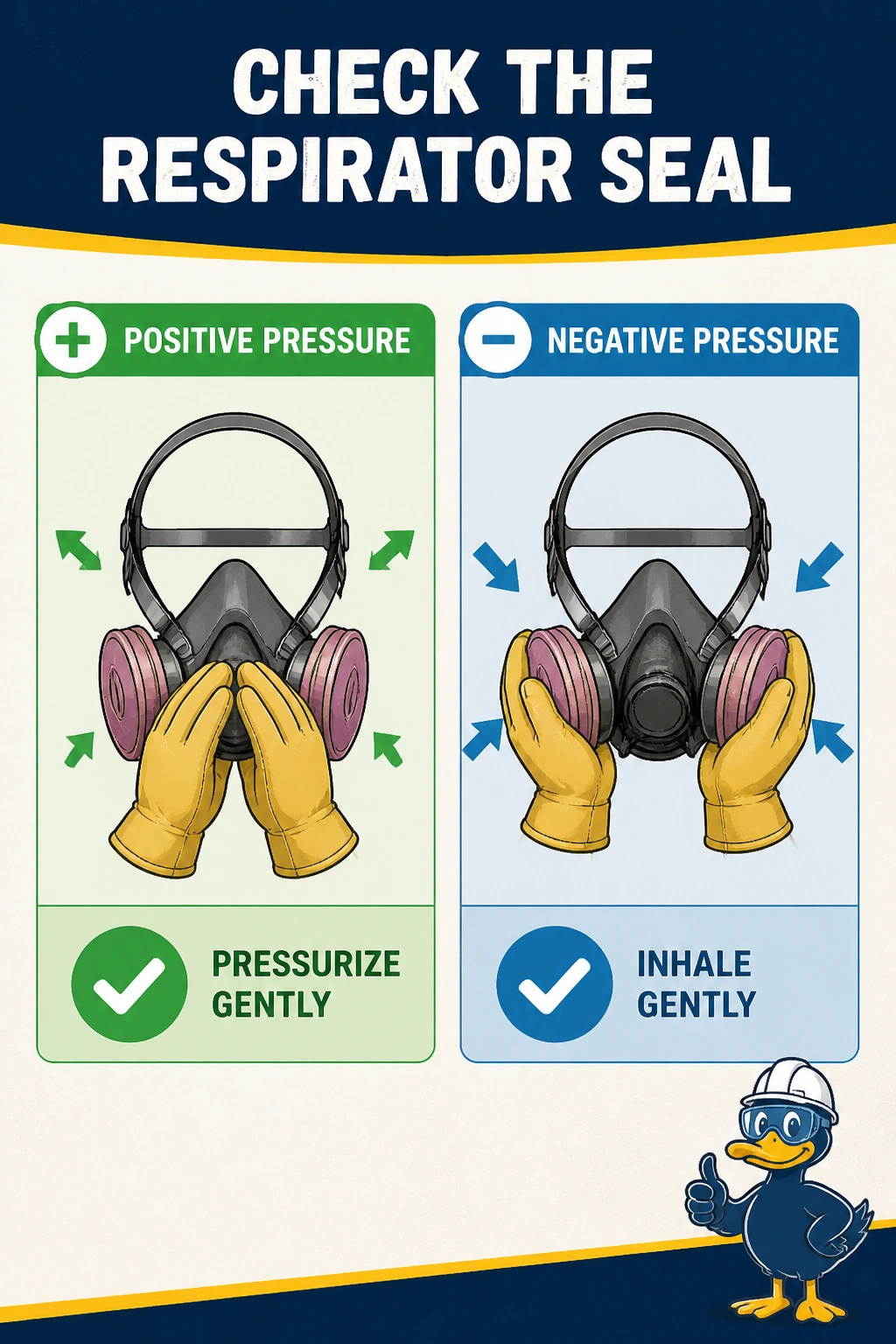
Short Explanation
Passing a fit test six months ago does not guarantee your respirator seated properly on your face this morning. You must have every worker run a quick positive and negative user seal check each time they put on a tight-fitting mask. The trap is skipping the daily seal check because the worker already passed an annual fit test.
Full Explanation
Under 29 CFR 1910.134(g)(1)(iii), workers using a tight-fitting respirator must Perform positive and negative pressure user seal checks every time they don the facepiece to verify an airtight seal before entering the hazard zone. A twisted strap, worn gasket, or debris on the sealing surface can let silica dust leak around the mask even when the worker passed an earlier fit test. Choosing to Schedule a new annual quantitative fit test before the shift confuses periodic fit testing with the quick pre-entry check required at every donning. Opting to Tighten the head straps until the facepiece pinches the nose can actually distort the silicone cushion and create gaps along the cheeks. Deciding to Swap the particulate filters for organic vapor cartridges first removes the particulate protection needed for concrete silica dust without checking the seal at all. Even a successful user seal check does not substitute for a clean-shaven sealing surface or annual fit testing. As an operational check, watch the worker cover the exhalation valve and cartridges to confirm slight outward and inward facepiece pressure without air leaks.
Prefer to study offline? Printable PDF study book + test engine ($7.50, unofficial). These questions stay free here.