
During a windy, wet 38-degree concrete form strip, a laborer begins shivering uncontrollably, slurring words, and fumbling hand tools. What should the foreman do immediately?
Select an answer to reveal the explanation.
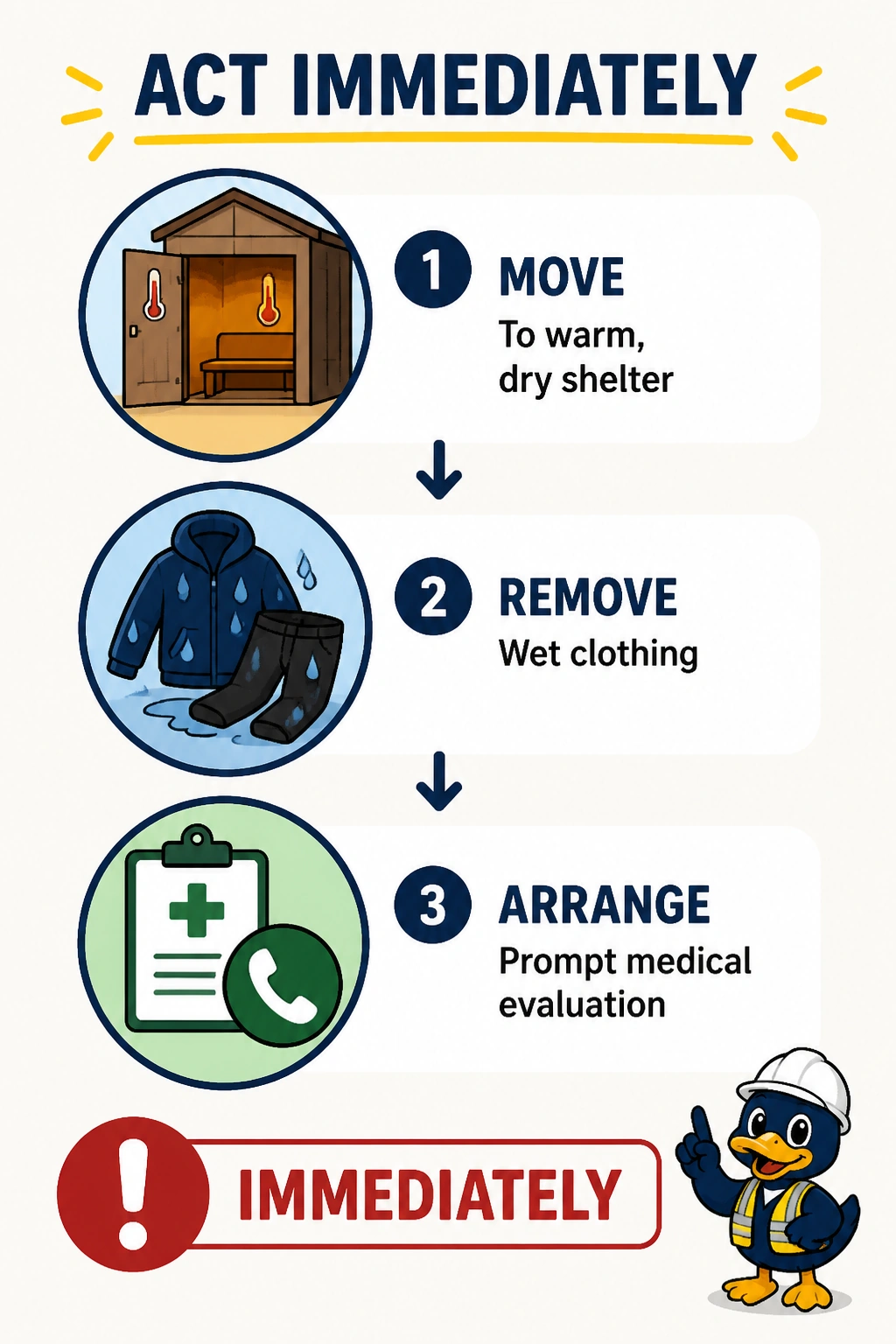
Short Explanation
Think of a chilled worker like a stalling engine in freezing rain: you have to pull them out of the weather before anything else works. The trap is trying to force a quick warm-up with caffeine, heavy lifting, or isolation, which can worsen hypothermia or mask a medical emergency.
Full Explanation
Slurred speech, loss of coordination, and uncontrollable shivering in cold, wet conditions are classic signs of moderate hypothermia, where core body temperature has dropped enough to impair brain and muscle function. The right response is to Move the worker to a warm, dry shelter, remove wet clothing, and arrange prompt medical evaluation. Removing wet layers stops ongoing evaporative and conductive heat loss, while warm dry cover and medical care protect against dangerous cardiac or neurological complications. Telling someone to Have the worker stand close to an open propane heater and drink hot coffee to warm up as fast as possible is unsafe because rapid external heat can trigger shock or burns on numb skin, and caffeine acts as a diuretic. Choosing to Assign the worker to briskly carry plywood forms across the site so physical exertion restores body heat risks severe falls when coordination is already failing and diverts blood away from vital organs. Choosing to Let the worker sit inside an unheated pickup truck cab alone until the shivering stops on its own leaves the worker unobserved in wet clothes as core temperature can keep falling. Caveat: even above freezing, wind and moisture accelerate heat loss rapidly. Operational check: before cold-weather shifts, verify a heated break area, dry spare blankets, and emergency medical contacts are ready on site.
Prefer to study offline? Printable PDF study book + test engine ($7.50, unofficial). These questions stay free here.