
During a hospital ceiling rough-in, two electricians spend four hours continuously reaching overhead from ladders with arms raised and necks tilted back to drill concrete deck anchors, and both report shoulder soreness. Which ergonomic control should the supervisor implement?
Select an answer to reveal the explanation.
Short Explanation
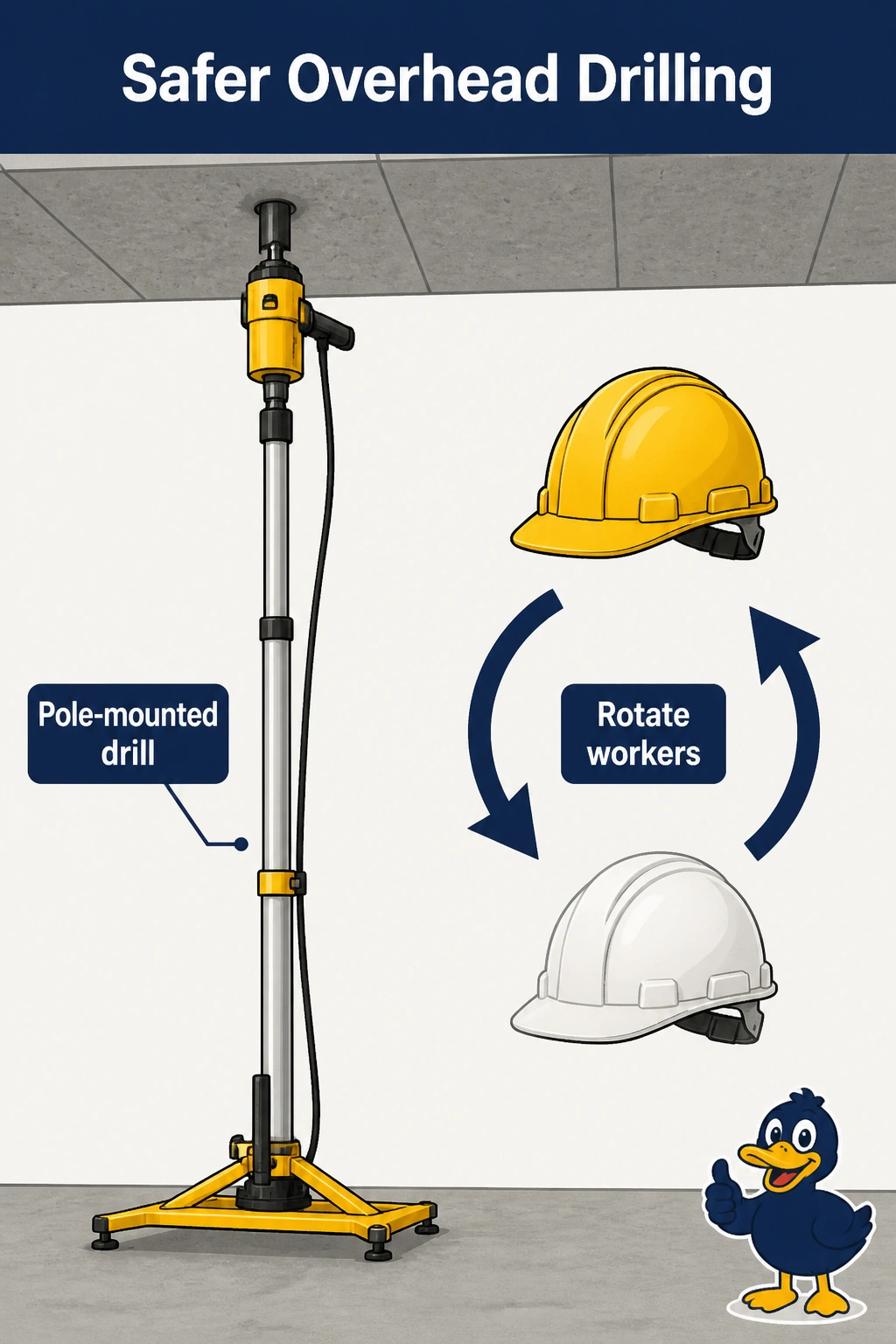
You can reduce the strain by changing the overhead posture and limiting how long each person does the task. Telescoping pole-mounted drills and worker rotation address both, unlike thicker pouch straps, faster drilling, or stretching only after the deck is finished.
Full Explanation
Prolonged overhead reaching, forceful exertion, and neck extension increase the risk of shoulder impingement and other musculoskeletal disorders. Telescoping pole-mounted drill systems can keep your arms closer to a neutral position and reduce neck tilt, while rotating workers off overhead tasks limits each person’s cumulative exposure. Thicker padded shoulder straps for tool pouches do not reduce arm elevation or the weight of the overhead drill. Instructing the crew to drill faster may increase forceful pushing and vibration, and can raise the risk of bit binding or ladder instability. Requiring shoulder stretches after the entire deck is finished is reactive and cannot undo hours of sustained awkward posture. A caveat is that rotation helps only if it meaningfully limits each worker’s overhead time rather than distributing the same prolonged exposure across the crew. Check that electricians are using the pole-mounted systems and rotating tasks before soreness develops into a strain.
Prefer to study offline? Printable PDF study book + test engine ($7.50, unofficial). These questions stay free here.