
On a large commercial foundation job, two ironworkers spend all morning bent over at the waist tying rebar cages directly on the mud slab, and both report lower-back stiffness by mid-shift. Which ergonomic control should the foreman implement?
Select an answer to reveal the explanation.
Short Explanation
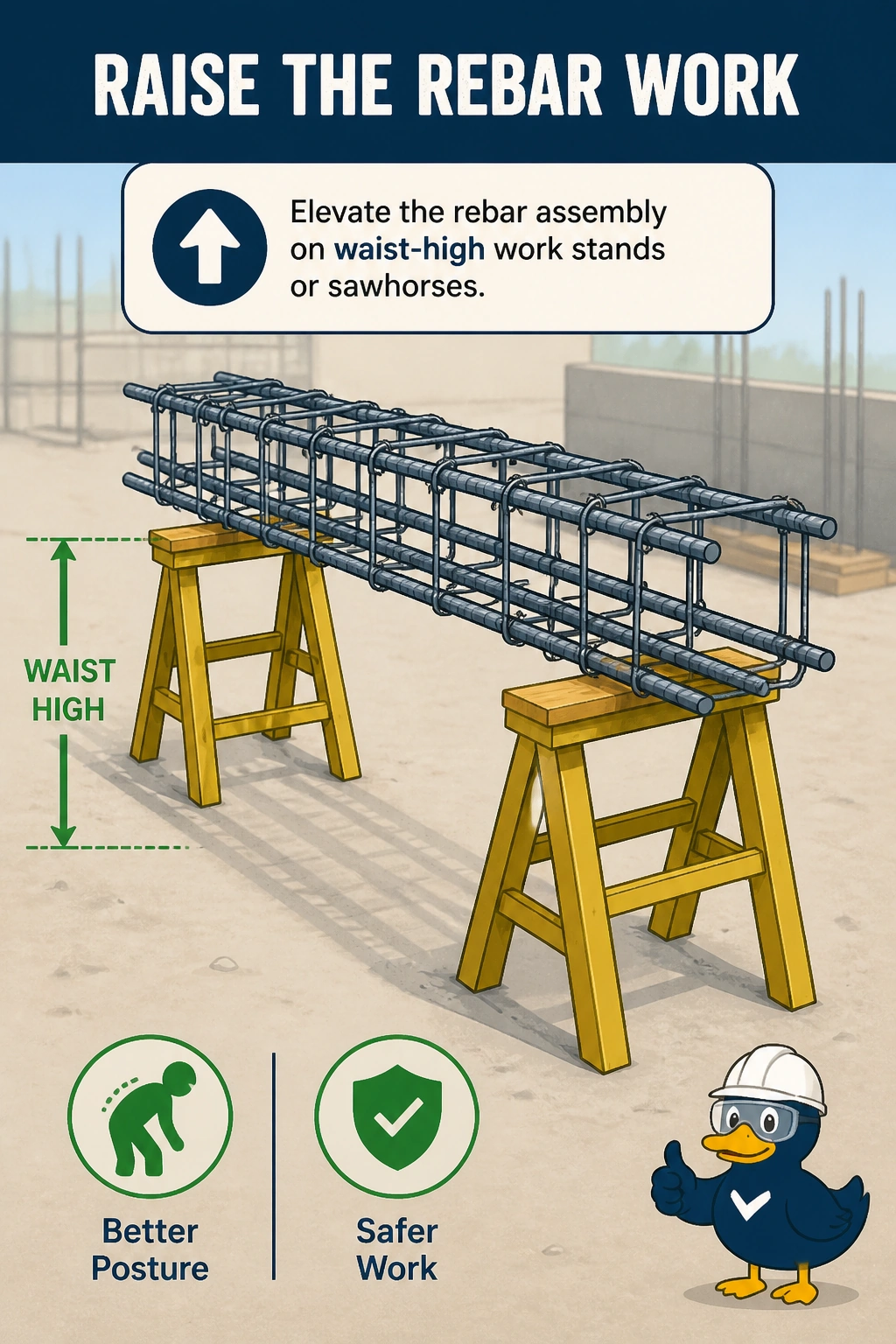
When you spend hours bent over a mud slab, your back muscles fatigue and your spine takes avoidable strain. You can make the task more comfortable by using waist-high work stands or sawhorses to raise the rebar and help you maintain a more upright posture, rather than relying on a back belt.
Full Explanation
Prolonged forward bending places sustained compressive and shear loads on the lumbar spine, rapidly fatiguing back muscles and increasing musculoskeletal disorder risk. Staging waist-high work stands or sawhorses to elevate the rebar assembly is effective because it lets workers tie cages in a more upright, neutral posture without constant stooping. Issuing elastic lumbar back belts does not eliminate the biomechanical strain of bending over; OSHA and NIOSH do not recognize back belts as effective personal protective equipment. Requiring workers to hold their breath during each tie is unsafe and ineffective: breath-holding raises blood pressure and increases fatigue without correcting posture. Switching to shorter pliers while leaving the ground-level setup unchanged still forces workers to bend deeply toward the slab for hours. An exam caveat is that the belt, breath-holding, and shorter-pliers proposals do not address the main ergonomic hazard: sustained bending. As a practical check, walk the fabrication area at start-up and verify that stable sawhorses or tying racks are set at knuckle-to-waist height before assembly begins.
Prefer to study offline? Printable PDF study book + test engine ($7.50, unofficial). These questions stay free here.