
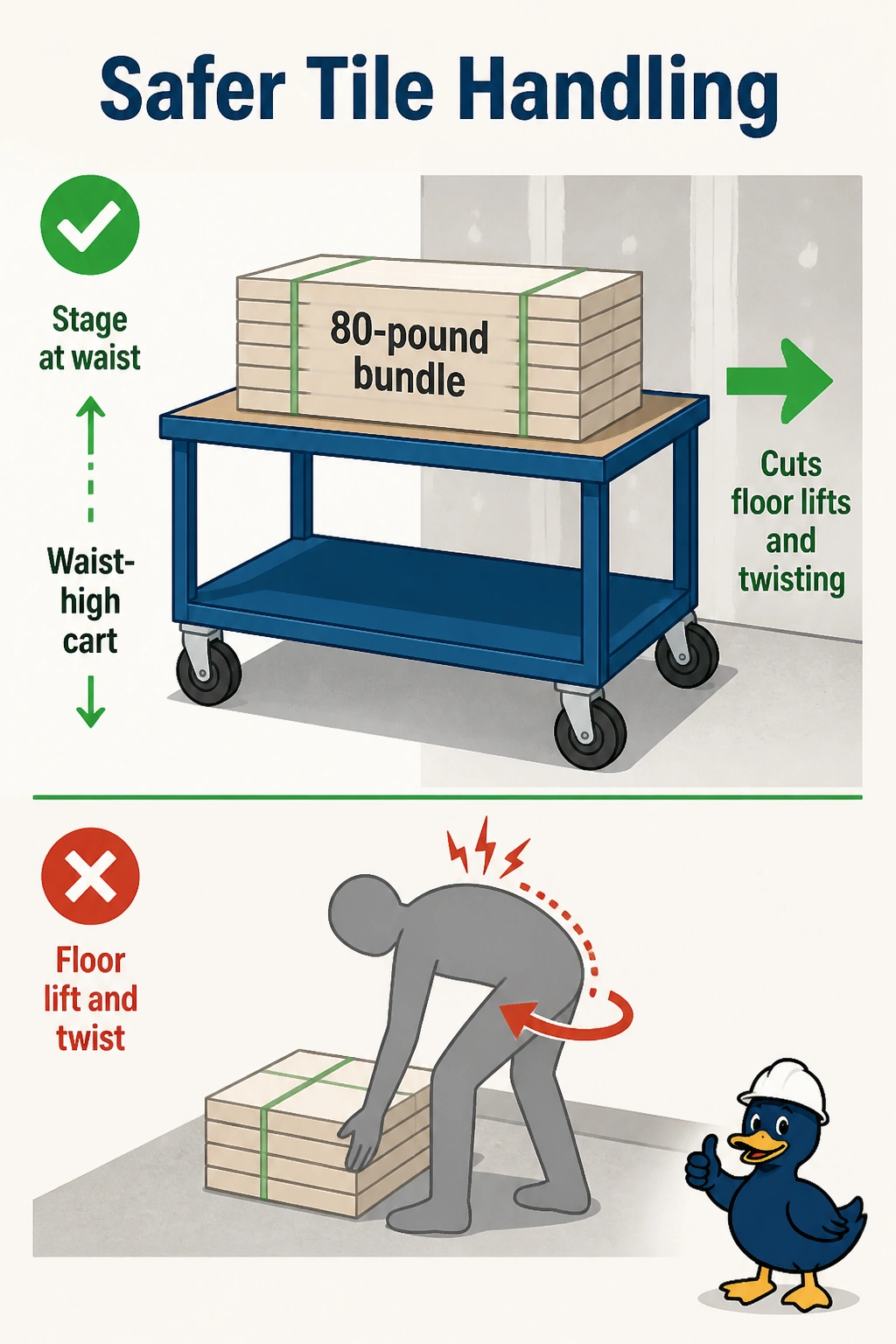
During a multi-floor office buildout, two carpenters repeatedly twist at the waist to lift 80-pound bundles of ceiling tile from the floor onto a rolling scaffold, and both report mid-shift back soreness. Which control should the foreman implement?
Select an answer to reveal the explanation.
Short Explanation
Twisting your spine under an eighty-pound load is like bending a paperclip back and forth until it snaps. The trap is handing out back belts or rushing lifts instead of raising the load to waist height and rolling it.
Full Explanation
Engineering controls that eliminate awkward postures and heavy manual lifts are the most effective way to prevent musculoskeletal injuries, so the foreman should "Stage tile bundles on waist-high rolling carts to cut floor lifts and twisting" immediately. Raising materials into the power zone between mid-thigh and chest height and rolling loads to the scaffold removes repeated bending and spinal rotation. Choosing to "Require the carpenters to wear elastic back belts while continuing to lift bundles from the floor" relies on a device that OSHA and NIOSH do not recognize as effective personal protective equipment for preventing back injury. Choosing to "Instruct the carpenters to lift the tile bundles faster so each lift takes less time" increases jerking forces on the lower back and raises strain risk. Choosing to "Have the carpenters hold their breath during each twist to stabilize their lower back" does not remove the hazardous twisting motion or heavy load. One caveat is that carts must not be overloaded beyond their rated capacity or pushed over debris-strewn floors where wheels can jam. Check that rolling carts have working wheel locks and fit through corridor doors before the next tile delivery.
Prefer to study offline? Printable PDF study book + test engine ($7.50, unofficial). These questions stay free here.