
While walking a commercial framing floor, a carpentry supervisor sees a worker ripping narrow plywood strips on a portable table saw with the blade hood guard, spreader, and anti-kickback dogs removed. What should the supervisor do first?
Select an answer to reveal the explanation.
Short Explanation
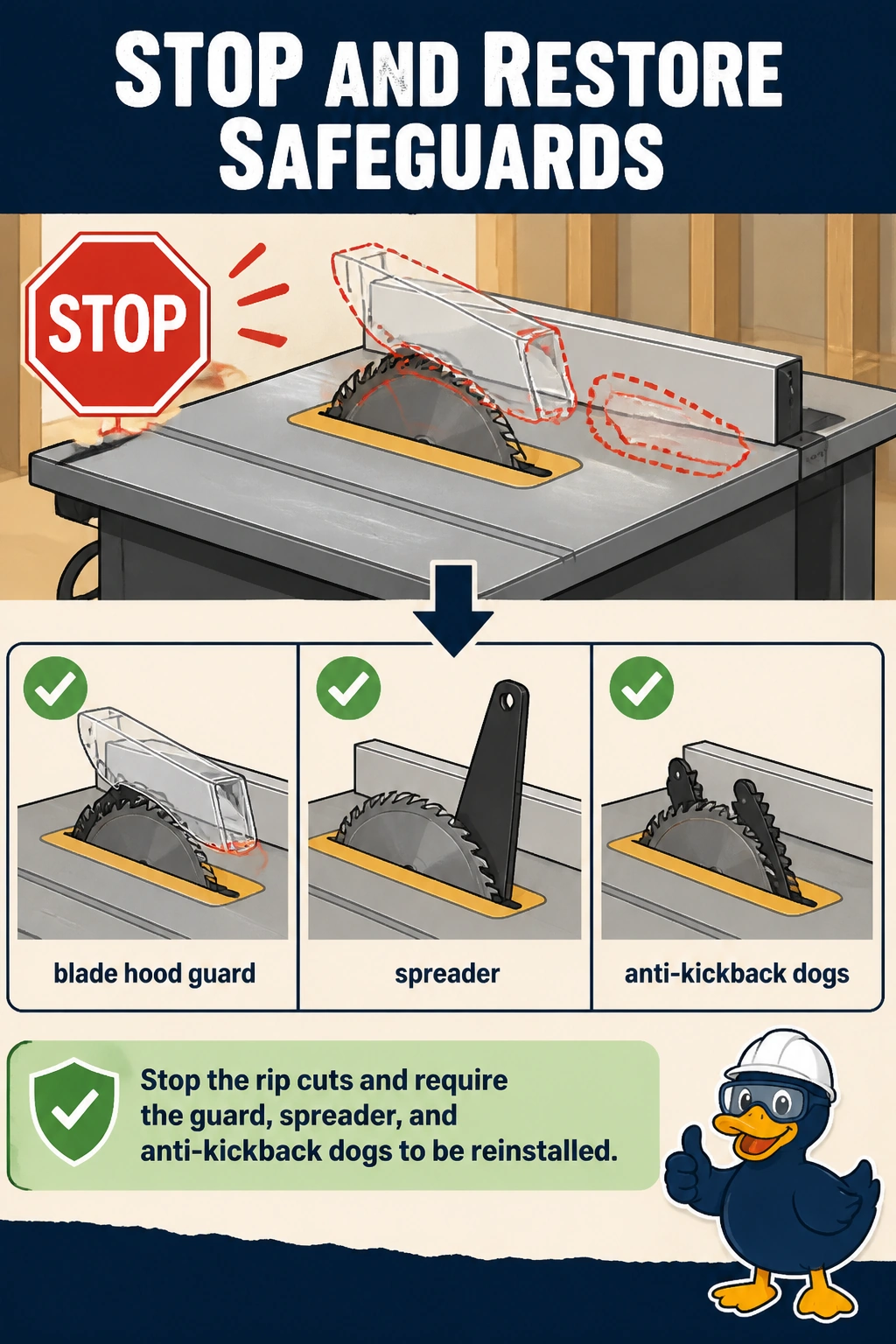
You’re right to stop the work: ripping with the blade guard, spreader, and anti-kickback dogs removed creates a serious risk of amputation or kickback. A wooden push stick and safety glasses, standing to the left of the kickback path, or lowering the blade do not make the exposed blade safe. Require the guarding to be reinstalled before cutting resumes.
Full Explanation
Under OSHA woodworking standards in 29 CFR 1926.304, a hand-fed portable table saw used for ripping requires a hood guard enclosing the blade above the stock, a spreader to keep the kerf from pinching the blade, and anti-kickback dogs to catch wood before it is thrown backward. Stop the rip cuts and require all three devices to be reinstalled before any further cutting. A wooden push stick and safety glasses provide a work practice and PPE, but leave the unguarded blade able to cause severe hand contact or kickback. Standing to the left of the blade’s kickback path does not protect the operator’s hands from the blade or nearby coworkers from flying stock. Lowering the blade so only the top teeth clear the plywood reduces tooth exposure slightly, but still omits the physical barrier, spreader, and anti-kickback protection required for ripping. One exam caveat: if a specific dado or rabbet cut makes a standard hood guard unusable, use a dedicated jig or alternate guarded tool rather than operating unguarded. For a practical check, disconnect power and verify that the hood moves freely, the spreader aligns with the blade, and the anti-kickback dogs bite cleanly.
Prefer to study offline? Printable PDF study book + test engine ($7.50, unofficial). These questions stay free here.