
A roofing crew lead welcomes two newly hired laborers on a humid 92-degree afternoon for tear-off work, and both workers say they previously worked only in air-conditioned warehouses. How should the crew lead manage their workload on day one?
Select an answer to reveal the explanation.
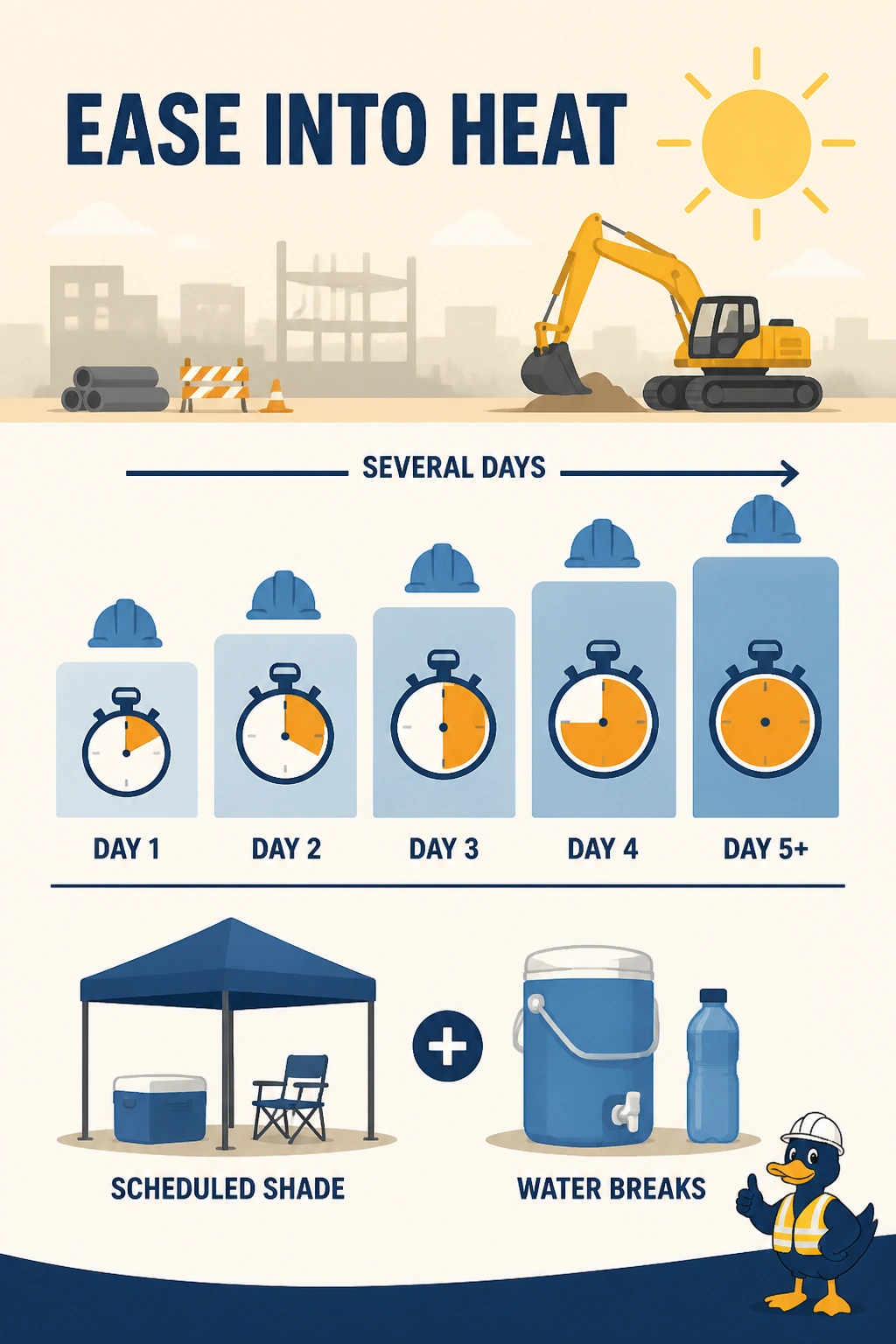
Short Explanation
Throwing new hires straight into full summer roof work is like redlining a cold engine on the highway. The trap is thinking water alone or toughing it out will protect them, when your best tool is gradual acclimatization paired with shade and rest.
Full Explanation
New or returning workers have not adapted physiologically to working in high heat, making the first week on a hot jobsite the highest-risk period for heat stroke and heat exhaustion. Choosing to "Gradually increase their heat exposure over several days with scheduled shade and water breaks" follows OSHA and NIOSH acclimatization guidance by letting cardiovascular and sweating responses adjust safely. Deciding to "Assign them full tear-off shifts immediately so they build heat tolerance faster" overwhelms unacclimatized bodies and sharply increases the chance of sudden collapse. Choosing to "Allow them to work at full pace as long as they drink cold water every two hours" spaces hydration far too wide in high heat and ignores rest and shade needs. Choosing to "Move them to evening hours only after they report dizziness or heavy sweating" waits until heat illness symptoms have already begun before intervening. Caveat: even acclimatized workers need buddy monitoring because early heat confusion can keep a worker from recognizing their own symptoms. Operational check: check the daily heat index before morning stretch-and-flex, assign shortened heat-exposure blocks for new hires, and verify shaded rest and cool water are within easy walking distance.
Prefer to study offline? Printable PDF study book + test engine ($7.50, unofficial). These questions stay free here.