
A plumbing foreman assigns two apprentices to manually carry 90-pound cast-iron pipe sections up two flights of temporary stairs all morning, and one apprentice reports lower-back strain before lunch. What is the foreman's best ergonomic control?
Select an answer to reveal the explanation.
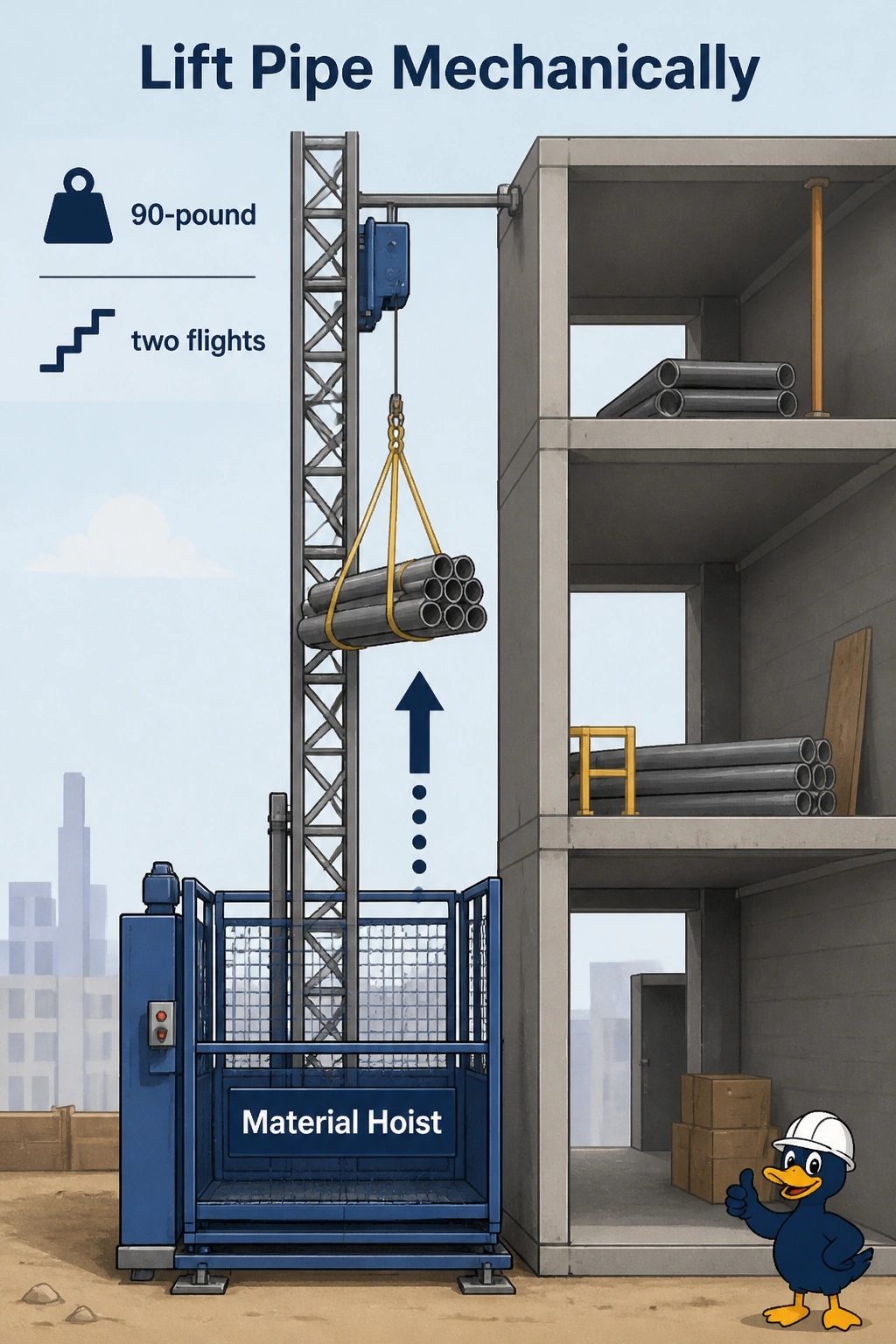
Short Explanation
When you replace repeated stair carries of heavy cast-iron pipe with a mechanical lift, you remove much of the strain from your crew’s backs. Elastic belts, stretching breaks, or walking faster leave the hazardous manual lift in place—or make it riskier.
Full Explanation
Following the hierarchy of controls for ergonomic hazards, the most effective corrective action is to use a material hoist or mechanical lift to move the pipe to the upper floor. This engineering control physically removes or reduces the excessive force, awkward stair posture, and repetitive loading that can cause cumulative musculoskeletal injuries to the lumbar spine. Elastic back-support belts do not eliminate the manual lift; OSHA and NIOSH do not recognize them as effective PPE for preventing back injuries, and they can create a false sense of security. Brief stretching breaks after every tenth trip are only a weak administrative measure: the heavy lifting hazard remains on every trip. Having the apprentices walk faster up the stairs does not make the task safer; it increases dynamic spinal stress and raises the risk of a slip, trip, or dropped load on temporary stairs. Caveat: mechanical lifting still requires a clear landing zone and control of the load path so workers are not struck by swinging or suspended pipe. As a practical check, review material-delivery staging before the shift to confirm heavy pipe can be hoisted directly to the work floor.
Prefer to study offline? Printable PDF study book + test engine ($7.50, unofficial). These questions stay free here.