
A utility crew lead on a street-widening project sees a laborer rolling plain cotton into balls and stuffing them into both ears before operating a pneumatic pavement breaker. What should the crew lead do?
Select an answer to reveal the explanation.
Short Explanation
Stuffing plain cotton in your ears during concrete breaking is like bringing a screen door to a thunderstorm. OSHA specifically bans plain cotton as hearing protection, so the trap is letting a crew member improvise for comfort instead of fitting real earplugs or earmuffs.
Full Explanation
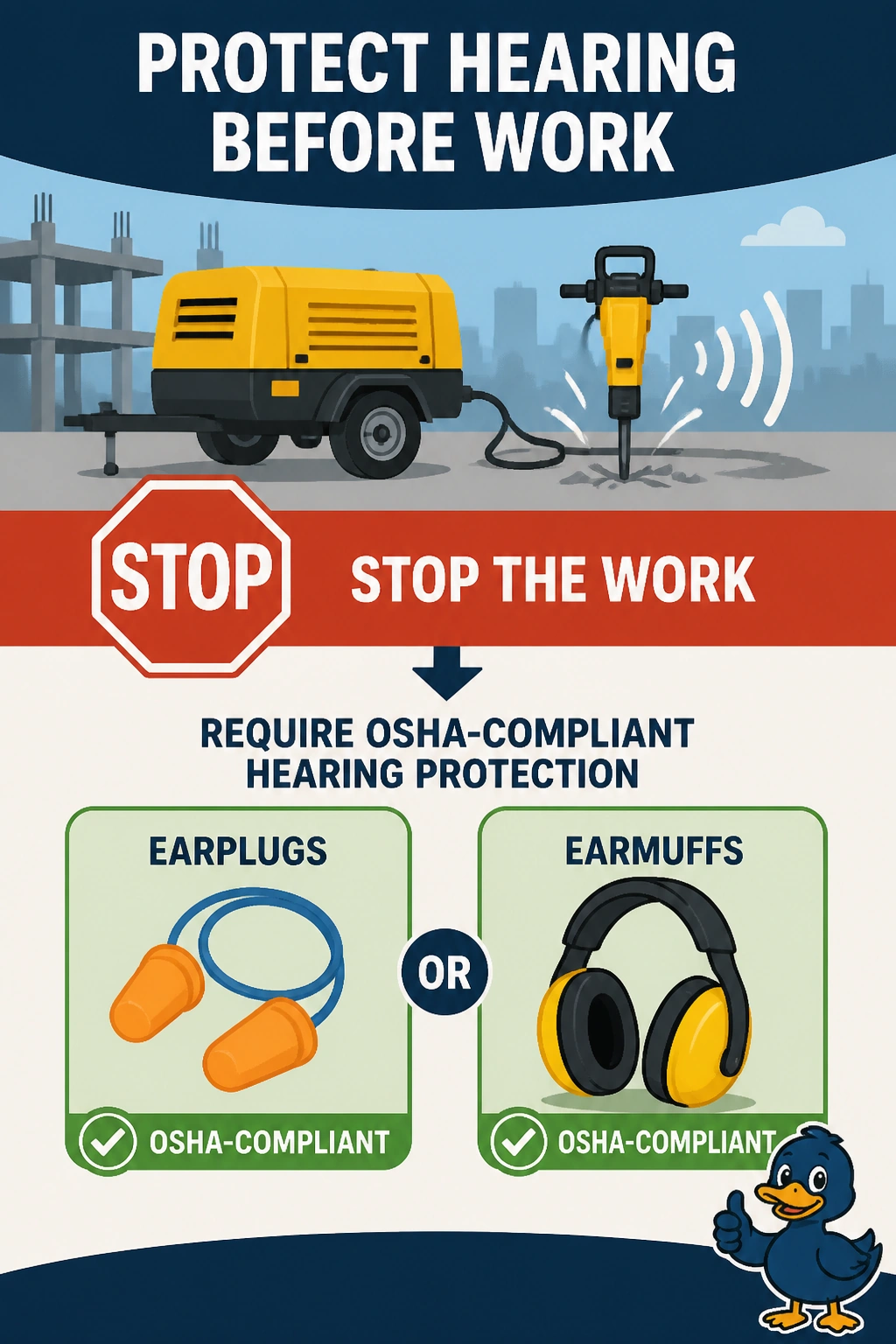
Under 29 CFR 1926.101, plain cotton is explicitly not an acceptable protective device against hazardous noise, so the crew lead must Stop the work and require properly fitted OSHA-compliant earplugs or earmuffs. Cotton fibers do not seal the ear canal or provide a tested Noise Reduction Rating, leaving the inner ear exposed to permanent sensorineural hearing loss from high-decibel pneumatic tools. Choosing to Allow the cotton plugs for the morning shift if the worker takes quiet breaks every hour still exposes the worker to damaging peak and time-weighted noise during each operating interval. Asking to Have the worker wear a standard hard hat suspension liner over the ears to block noise fails because winter liners and fabric headbands are not engineered or rated for acoustic attenuation. Choosing to Permit the cotton plugs as long as the crew rotates off the pavement breaker before lunch relies on an unverified administrative control while leaving an unapproved device in use. Caveat: even rated foam plugs lose most of their protection when inserted shallowly or pulled out to talk. As an operational check, verify that each operator has clean, rated hearing protection properly seated before starting the compressor.
Prefer to study offline? Printable PDF study book + test engine ($7.50, unofficial). These questions stay free here.