
An ironworker brings a new box of abrasive cutoff wheels to a portable 7-inch angle grinder station during a structural steel retrofit. Which verification must the supervisor ensure is completed before a wheel is mounted?
Select an answer to reveal the explanation.
Short Explanation
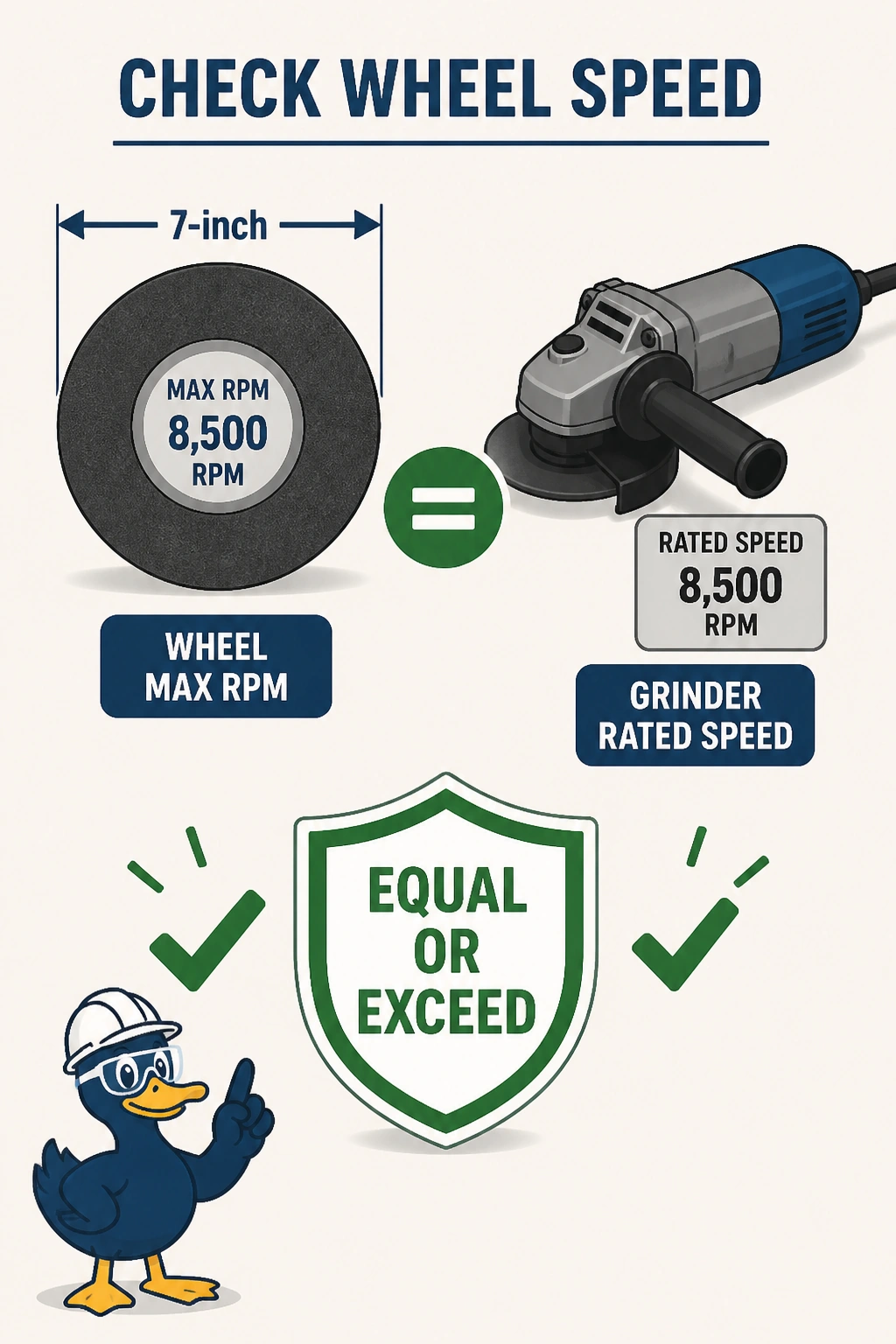
An underrated abrasive wheel can break apart at high speed and cause serious injury. Before mounting it, check that its maximum RPM rating meets or exceeds the grinder’s rated speed; a wheel’s fit on the arbor alone does not show that it is safe.
Full Explanation
Centrifugal force rises sharply with rotational speed, so under OSHA abrasive-wheel safety requirements you must verify that the wheel’s maximum safe RPM rating equals or exceeds the grinder’s rated speed before mounting it. If a wheel rated for a lower speed is installed on a faster grinder, its bonding matrix can fail and the wheel can disintegrate violently at startup. Confirming that the wheel thickness matches the wrench used on the arbor nut checks a mechanical fastening detail, not the wheel’s structural speed limit. Checking that the wheel’s outer diameter is smaller than the guard opening does not establish its safe speed: smaller-diameter or specialty wheels can still carry lower RPM ratings than the tool spindle. Ensuring that the wheel label lists the same manufacturer as the grinder is unnecessary; compatible third-party wheels are safe when their speed rating, arbor size, and guard fit match tool specifications. Caveat: inspect new wheels with a ring test or visual crack check before mounting, and never remove the wheel guard. Practical check: read the grinder nameplate RPM, compare it with the maximum RPM printed on the wheel blotter, and confirm that the guard properly covers the wheel.
Prefer to study offline? Printable PDF study book + test engine ($7.50, unofficial). These questions stay free here.