
At the end of a concrete form strip, two laborers climb onto the side step and empty forks of a moving telehandler to catch a ride back to the job trailer 300 yards away. What must the site supervisor order immediately?
Select an answer to reveal the explanation.
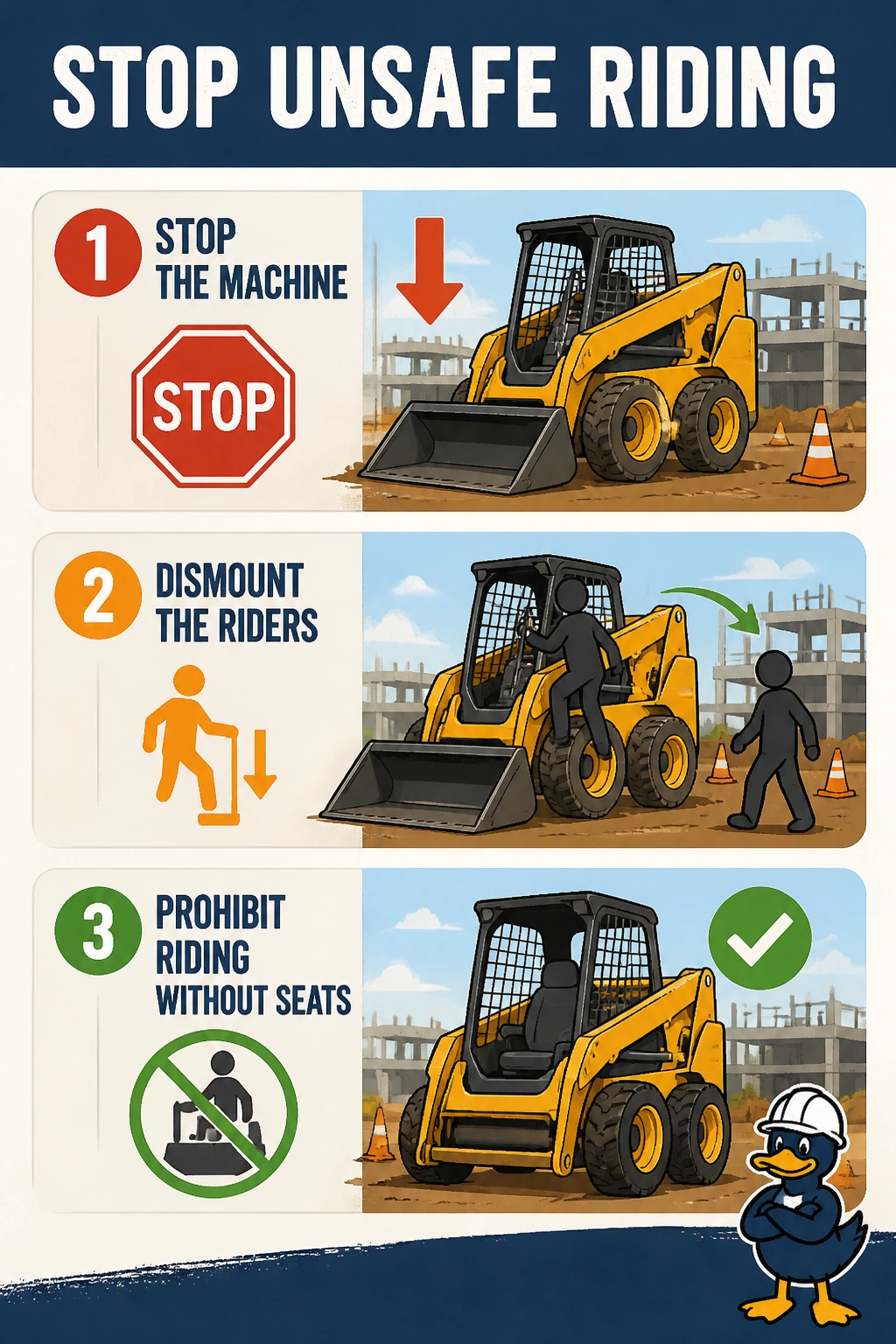
Short Explanation
You’re right to stop the telehandler and get the riders down: a side step or empty forks can leave them exposed to a fall or run-over hazard. Low speed, a tied-off harness, or standing behind the operator’s seat does not make riding safe; prohibit riding without seats.
Full Explanation
Under 1926.602(c)(1)(vii), unauthorized personnel must not ride on a telehandler, and a safe place to ride must be provided where riding is authorized. A telehandler used to haul material is covered by 1926.602; 1926.601(a) says its rules do not apply where 1926.602 prescribes rules. The supervisor must stop the machine, dismount the riders, and prohibit riding without seats because a sudden turn, stop, or rut can throw a rider into the wheel path or a pinch point. Allowing the laborers to ride on the side step in first gear still leaves them outside the cab structure and vulnerable to falling under the tires; low speed does not remove that danger. Having them ride on the forks with tied-off harnesses still permits riding without a safe place, and a harness cannot control exposure to falls, run-over, or mast movement. Letting one worker stand behind the operator’s seat leaves that passenger unrestrained and may block the operator’s visibility during a stop or rollover. Exam caveat: the rule addresses unauthorized riders and requires a safe place where riding is authorized; it does not make a step or forks a safe place. Practical check: review the no-riding rule at the site huddle and verify operators stop if anyone climbs onto moving equipment.
Prefer to study offline? Printable PDF study book + test engine ($7.50, unofficial). These questions stay free here.