
Before sending a crew into an underground concrete storm-water chamber, a utility foreman sets up a portable forced-air ventilation blower directly beside an idling diesel air compressor. What must the foreman correct before ventilation begins?
Select an answer to reveal the explanation.
Short Explanation
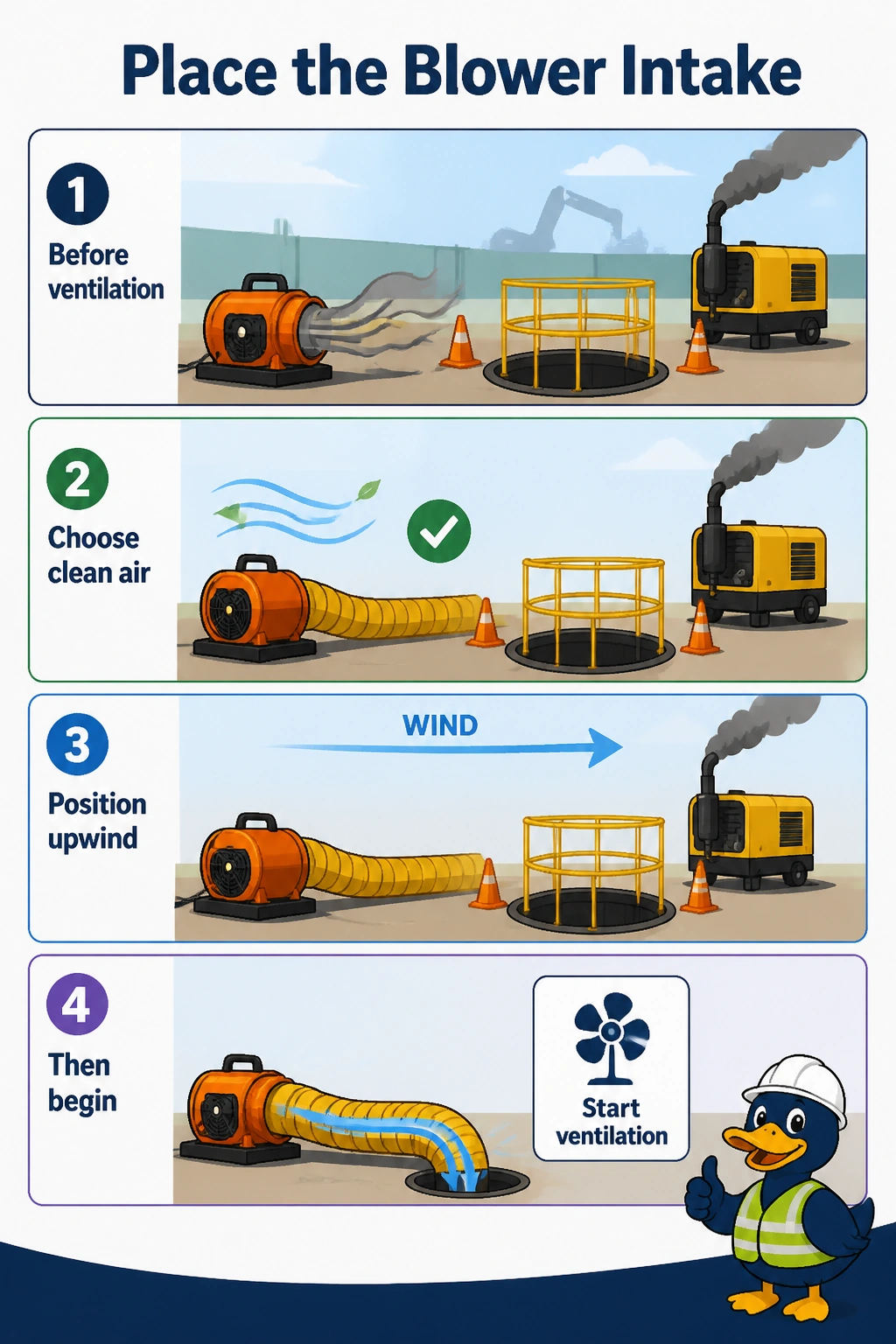
A confined-space blower is only as safe as the air it pulls in—put it next to a running diesel engine and you are pumping exhaust straight to your crew. The trap is thinking a filter or lower fan speed can clean up dirty intake air. Move that blower intake upwind into clean, fresh air before anyone enters.
Full Explanation
Forced-air ventilation in a confined space under 29 CFR 1926.1203 and 1926.1204 must supply a continuous flow of uncontaminated breathing air from a clean source. The foreman must Move the blower intake upwind into clean air away from equipment exhaust because placing the intake beside a running diesel compressor draws carbon monoxide and exhaust particulates directly into the enclosed chamber. Choosing to Point the blower outlet upward so fresh air circulates near the hatch only fails to flush heavier-than-air or pocketed gases from the bottom work zone where entrants stand. Deciding to Run the blower at half speed so diesel fumes settle outside the air duct does not stop exhaust from entering the intake and reduces the air-exchange rate needed to control atmospheric hazards. Attempting to Add a paper dust filter over the blower intake to trap carbon monoxide gas is ineffective because particulate filters cannot capture toxic gases. Caveat: even with clean intake placement, atmospheric testing must verify acceptable oxygen, flammable gas, and toxic levels before entry and continuously during work. Operational check: walk around the blower intake, check wind direction relative to all nearby engines, and re-test the space atmosphere after startup.
Prefer to study offline? Printable PDF study book + test engine ($7.50, unofficial). These questions stay free here.