
A civil foreman excavating a 9-foot-deep utility trench parallel to an existing brick retail building's shallow footing notices loose soil raveling beneath the footing edge. What must the foreman require before excavation continues?
Select an answer to reveal the explanation.
Short Explanation
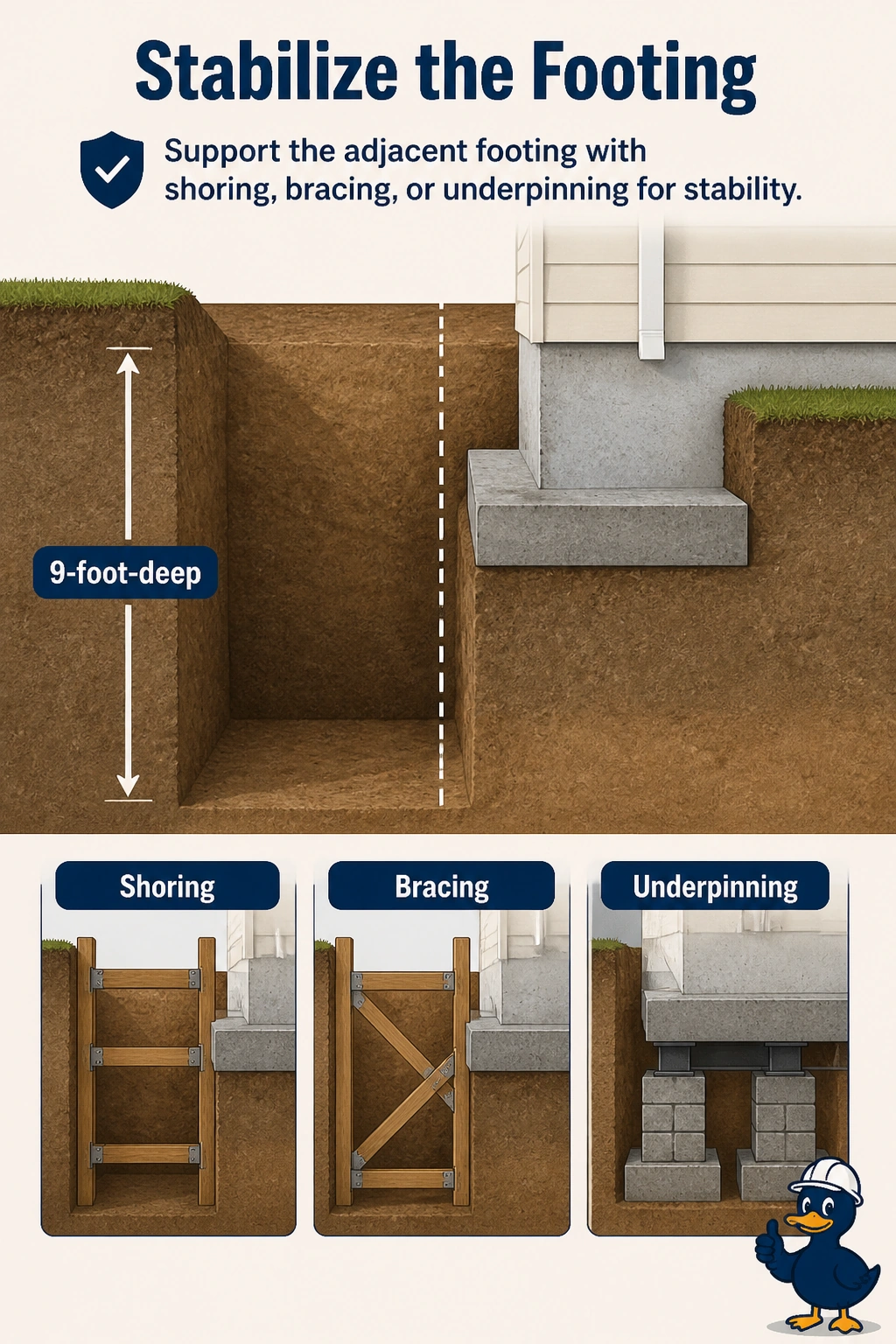
Digging beside a building’s footing is like pulling a chair leg out while someone is still sitting in it. Before you continue, require shoring, bracing, or underpinning; don’t assume the brick wall will bridge the gap until it cracks or collapses.
Full Explanation
Under 29 CFR 1926.651(i), when excavation endangers the stability of an adjoining building, wall, or other structure, you must support the adjacent footing with shoring, bracing, or underpinning before digging proceeds. Soil beneath a shallow foundation carries the structure’s dead and live loads; removing that support can cause shear failure, rapid settlement, or wall collapse. Spraying the exposed soil face with water to help loose dirt compact adds weight and reduces soil cohesion, which can accelerate sloughing. Sloping the opposite trench wall away from the building while leaving the footing side vertical protects only the opposite side and leaves the undermined foundation unsupported. Continuing quickly to lay the pipe and backfill before the wall shifts gambles with an unpredictable structural collapse. Exam caveat: excavation below a footing that could endanger employees may proceed if a support system is provided; it may also be allowed in stable rock or when a registered professional engineer determines the structure is sufficiently removed or the work will not pose a hazard. As a practical check, halt digging, look for fresh cracks at the footing edge, and verify shoring or underpinning is in place before re-entry.
Prefer to study offline? Printable PDF study book + test engine ($7.50, unofficial). These questions stay free here.