
The approved temporary traffic control plan includes a longitudinal buffer space after the taper. Why must the foreman keep the paver and crew out of that buffer?
Select an answer to reveal the explanation.
Short Explanation
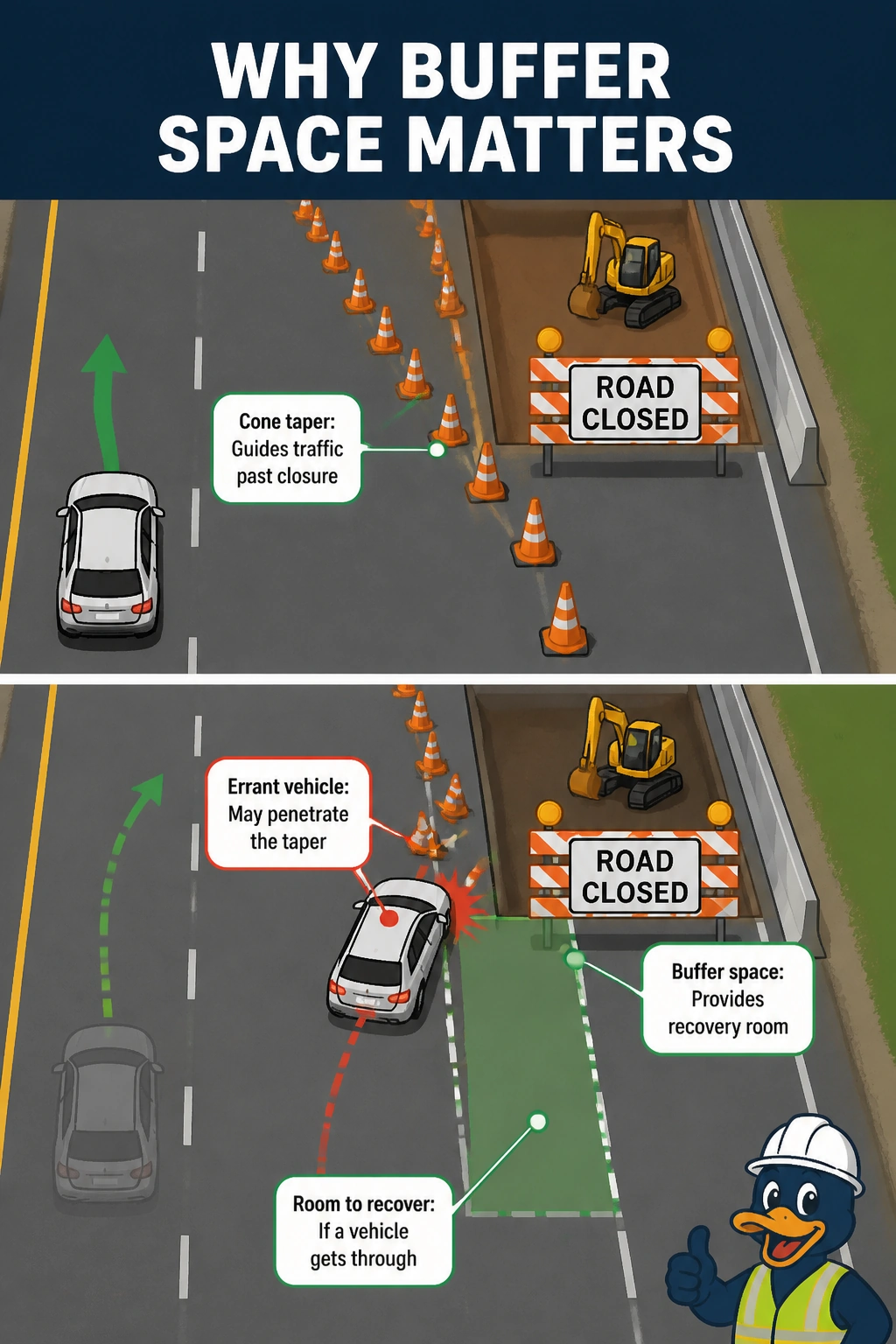
When your approved plan includes that buffer, think of it as your crew's airbag if a driver misses the cones. You keep the paver and crew out of it so an errant vehicle might have room to recover before reaching you.
Full Explanation
When the traffic-control plan includes a longitudinal buffer, MUTCD Section 6B.06 says that space might give an errant vehicle room to recover, and work, equipment, and vehicles should stay out of it. The Manual does not require every lane closure to have a buffer, and advance warning signs remain required. That is why keeping the paver and crew out of the buffer is correct To provide recovery room if an errant vehicle penetrates the cone taper, giving the driver time and distance to brake or steer back into the open lane before striking workers or equipment. Choosing to To give flaggers a shaded area where they can sit between passing trucks fails because flaggers must remain alert, visible, and stationed in an escape-ready position upstream — never sitting inside the buffer. Choosing to To allow delivery drivers to park haul trucks inside the closed lane fails because staging trucks or materials in the buffer occupies the recovery area the plan intended to keep clear. Choosing to To eliminate the need for advance warning signs upstream of the lane closure fails because advance warning signs are still required before the taper so drivers can react early. Keep any designated buffer completely free of equipment, materials, and parked vehicles throughout the shift, and confirm by pacing off the distance between the last taper device and the work area before allowing crews in.
Prefer to study offline? Printable PDF study book + test engine ($7.50, unofficial). These questions stay free here.