
During a retail store remodel, an electrical foreman sees an apprentice setting up an aluminum stepladder directly in front of an energized 277/480-volt lighting panel to pull branch-circuit wire. What must the foreman require?
Select an answer to reveal the explanation.
Short Explanation
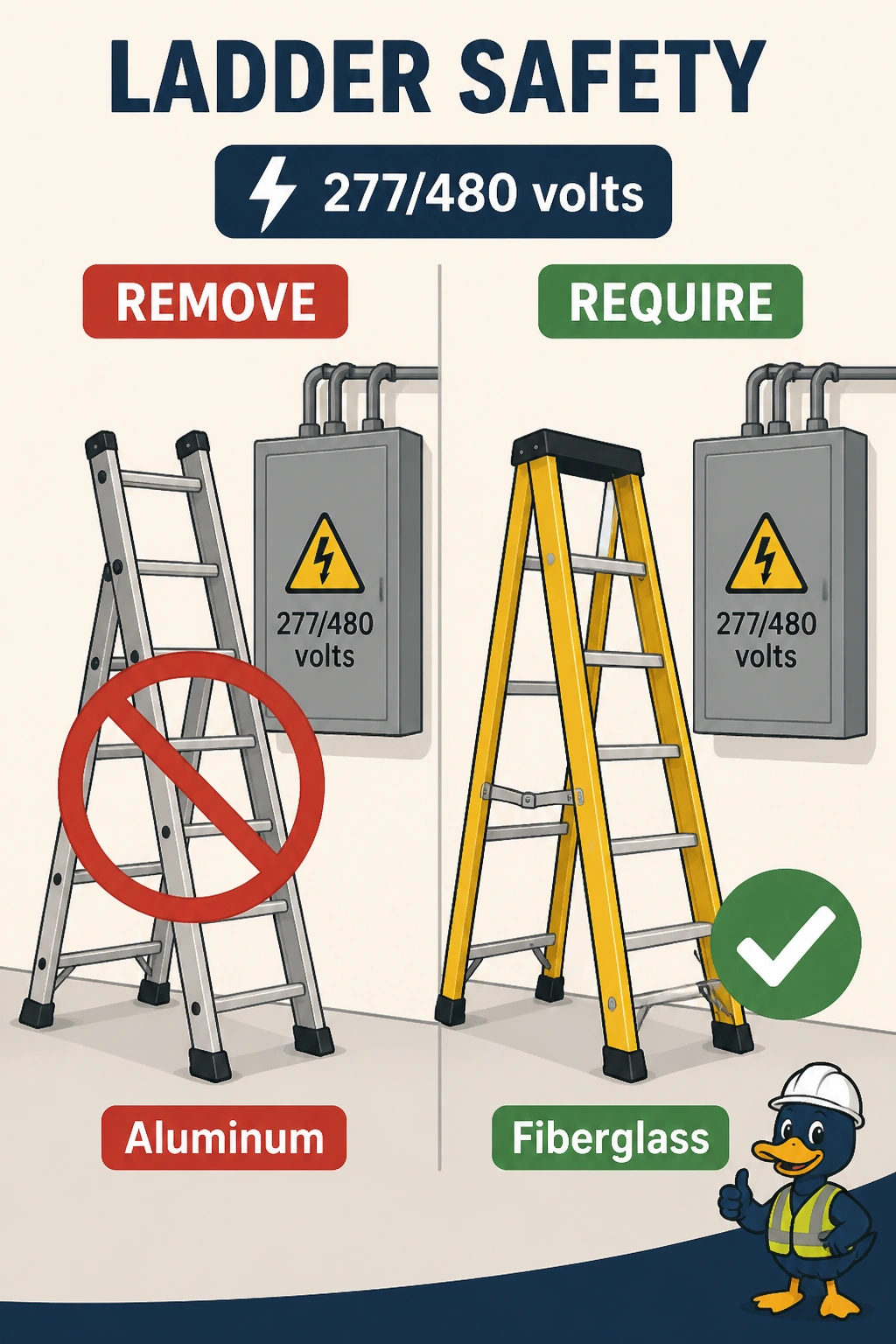
Aluminum and live electricity are a dangerous pair—bringing a metal ladder near an energized panel is like holding a lightning rod in a storm. Your safest move is swapping to fiberglass, while the trap is thinking tape or gloves can insulate a metal frame.
Full Explanation
Under 29 CFR 1926.1053, ladders used where the employee or ladder could contact exposed energized electrical equipment must have non-conductive siderails, so the supervisor must Remove the aluminum ladder from the area and require a non-conductive fiberglass ladder. Aluminum conducts electricity readily, meaning any accidental contact with a live busbar or bare conductor can energize the entire ladder and electrocute the worker. Attempting to Wrap rubber electrical tape around the aluminum ladder's side rails and feet before climbing does not make a metal ladder non-conductive or protect against phase-to-ground faults. Asking to Have a helper hold the base of the aluminum ladder while wearing leather work gloves puts both workers at risk of shock because standard leather gloves are not rated electrical insulation. Letting the crew Use the aluminum ladder as long as the electrician keeps both hands on the fiberglass conduit ignores that the metal rails themselves can still contact energized parts inside the open panel. As a caveat, de-energizing and locking out the panel remains the primary control whenever feasible. Before electrical work starts, inspect the ladder's side rails and label to confirm it is clean, dry, non-conductive fiberglass.
Prefer to study offline? Printable PDF study book + test engine ($7.50, unofficial). These questions stay free here.