
At the end of an interior welding shift, a mechanical foreman sees two disconnected oxygen cylinders standing freely near a busy corridor without valve caps. What must the foreman require before leaving the area?
Select an answer to reveal the explanation.
Short Explanation
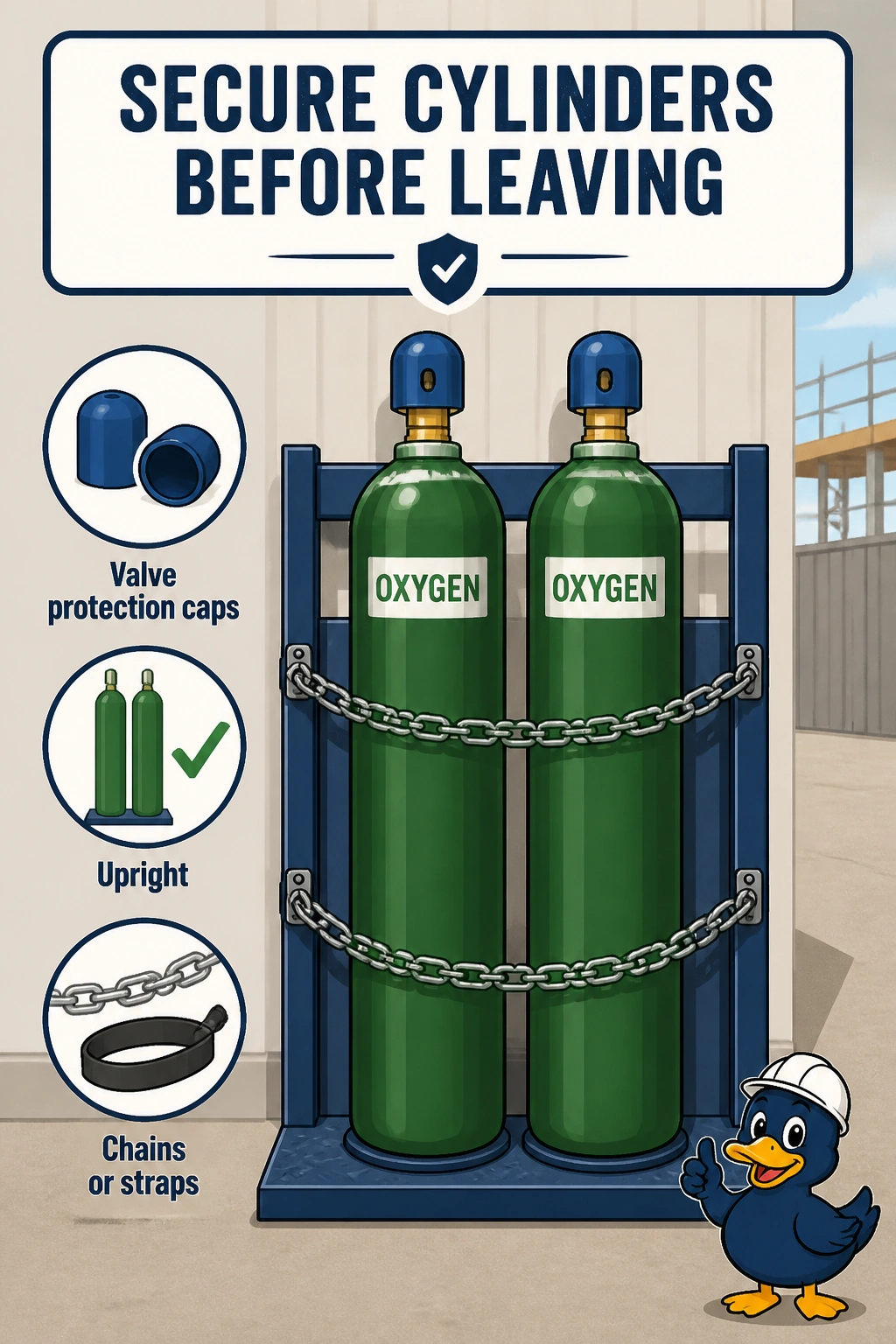
A compressed gas cylinder without its cap is a steel rocket waiting for a hard knock to snap the valve off. Your crew needs to cap disconnected cylinders and chain them upright, avoiding the trap of laying them flat or leaving gauges on.
Full Explanation
Under 29 CFR 1926.350, when compressed gas cylinders are disconnected, moved, or stored, the crew must Install the valve protection caps and secure the cylinders upright with chains or straps. Valve protection caps shield the brass valve stem from impact, while upright chaining prevents tipping that could shear the valve and release high-pressure gas violently. Choosing to Lay the cylinders flat on wooden pallets beside the job trailer violates upright storage requirements. Secure these oxygen cylinders upright and keep the valve caps on under 1926.350(a)(1) and (a)(9). Acetone is in acetylene cylinders, not in oxygen. Keep oxygen fittings free of oil and grease. Deciding to Leave the regulators attached so the gauges protect the valves exposes delicate regulators to impact damage and creates a leak hazard if a cylinder tips over. Attempting to Lean the uncapped cylinders against the exterior masonry wall leaves both the valve and the heavy steel body unsecured against bumps from passing carts or workers. As a caveat, oxygen cylinders must also be separated from fuel-gas cylinders and combustibles by required distance or a noncombustible barrier during storage. Walk the staging area before leaving the site to confirm every disconnected cylinder is capped, chained upright, and properly separated.
Prefer to study offline? Printable PDF study book + test engine ($7.50, unofficial). These questions stay free here.