
While two utility workers are inside a permit-required sewer manhole bolting pipe flanges, the assigned confined-space attendant asks the foreman for permission to walk to the tool trailer for ten minutes to sort fittings. What must the foreman require?
Select an answer to reveal the explanation.
Short Explanation
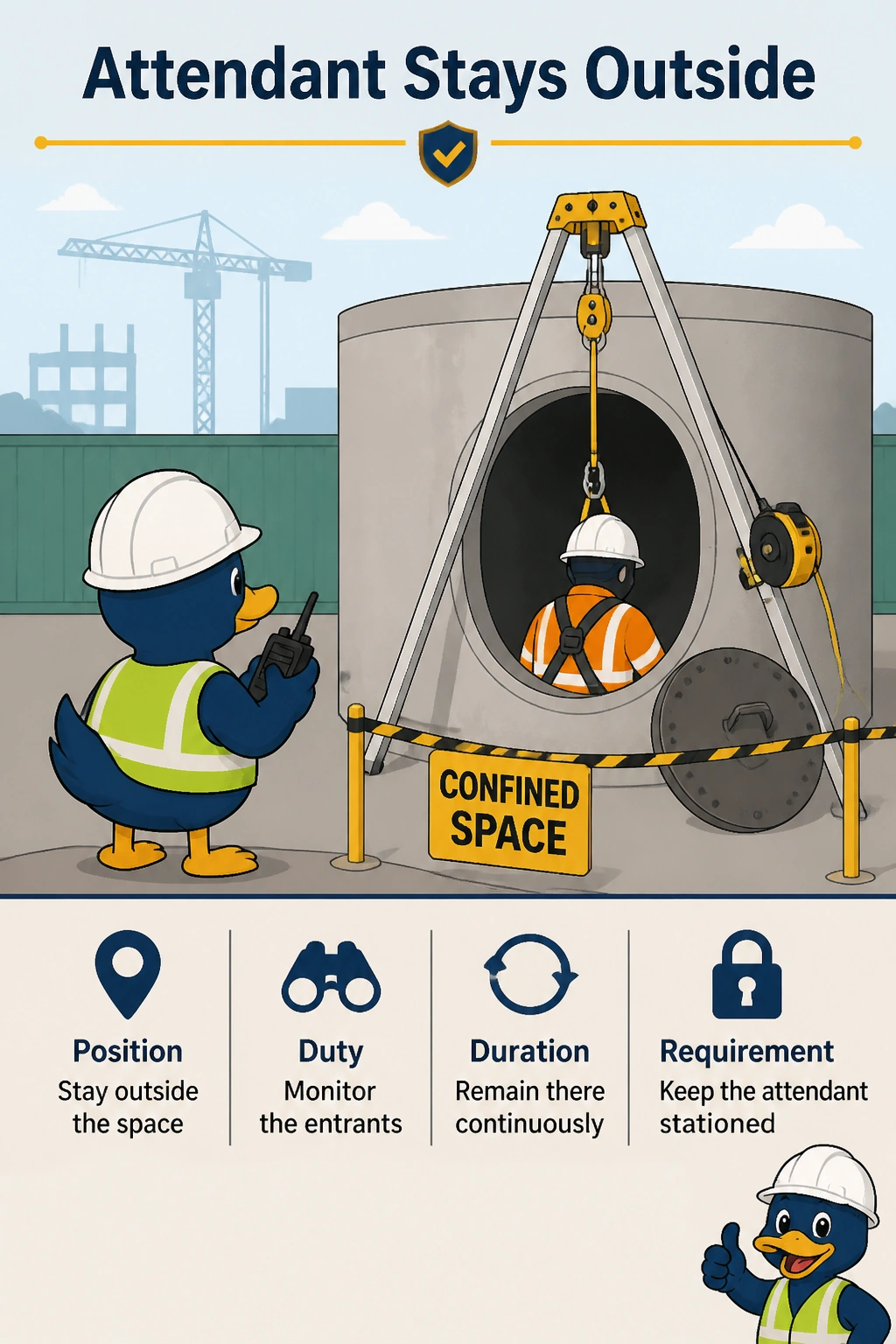
Your attendant is the crew’s lifeline at the rim, not an extra pair of hands for errands. Even with radios and air monitors running, a confined-space emergency can unfold in seconds, so keep the attendant outside and focused on the entrants throughout the entry.
Full Explanation
Under 29 CFR 1926.1209, a permit-required confined-space attendant must remain outside the space during entry operations until relieved by another qualified attendant, and must not take on duties that interfere with monitoring and protecting entrants. Keeping the attendant stationed outside continuously allows prompt recognition of behavioral changes, atmospheric alarms, or distress and timely activation of rescue services. A portable two-way radio does not make it safe for the attendant to leave: a worker overcome by toxic gas or oxygen deficiency may be unable to use it to call for help. Leaving while an air monitor runs on the rim also fails; an alarm cannot summon rescue or prevent unauthorized entry without an attentive person present. Partly closing the manhole cover could obstruct emergency egress and ventilation. Even while stationed at the rim, an attendant must not enter the space to attempt an impulsive rescue. As an exam caveat, the attendant may step away only after a qualified relief attendant takes over; the entrants’ radio and a running monitor do not replace that relief. As a practical check, confirm that the qualified relief attendant is physically present and has accepted the duties before the assigned attendant leaves, even briefly.
Prefer to study offline? Printable PDF study book + test engine ($7.50, unofficial). These questions stay free here.