
A general contractor is mobilizing a crew to demolish a two-story masonry annex attached to an older warehouse. What must the site supervisor verify is completed before any demolition work begins?
Select an answer to reveal the explanation.
Short Explanation
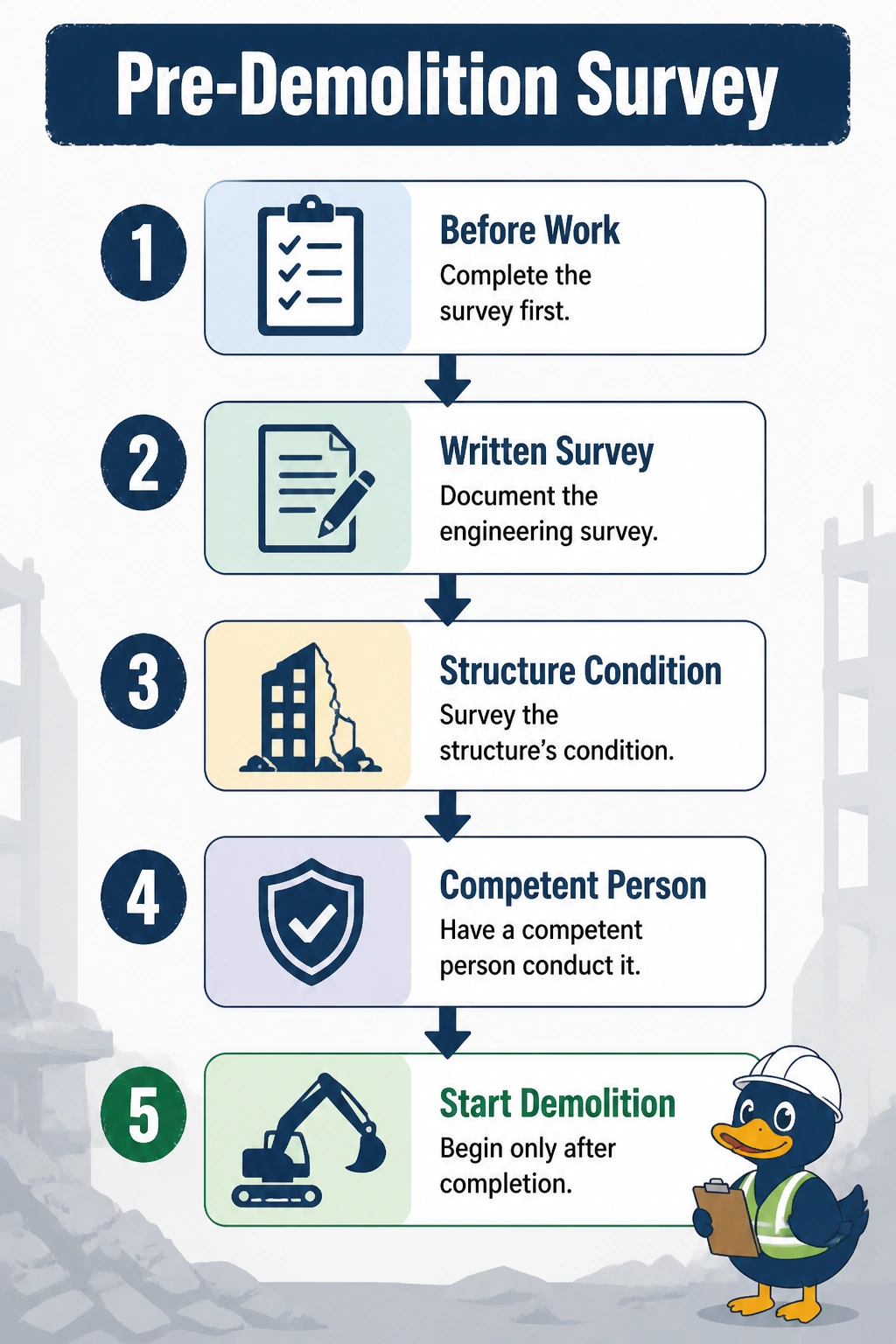
Older structures can hide weakened walls, damaged trusses, and unexpected load paths that may collapse around you. Before you begin, make sure a formal engineering survey is complete; an informal walkthrough cannot replace it. Verify the written survey is on site before anyone disturbs a load-bearing element.
Full Explanation
Under 29 CFR 1926.850, before you permit employees to begin demolition, a competent person must conduct an engineering survey to determine the condition of the framing, floors, and walls and assess the possibility of an unplanned collapse; written evidence must be maintained on site. Verifying a written engineering survey of the structure’s condition by a competent person helps you identify hidden structural weaknesses, ties to adjacent buildings, and shoring needs before demolition weakens support. A verbal walkthrough by the lead excavator operator to plan the debris haul route provides neither the required written documentation nor a qualified structural evaluation. A rough floor-area estimate for ordering roll-off containers addresses logistics, not structural stability or collapse hazards. A crew stretch-and-flex session focused on sledgehammer and pry-bar ergonomics can warm up workers but cannot determine whether the building can safely support demolition crews. As an exam caveat, the employer must also check adjacent structures where workers may be exposed to collapse. As a practical check, review the signed engineering survey at the pre-demolition huddle and confirm all utilities are shut off and capped before work starts.
Prefer to study offline? Printable PDF study book + test engine ($7.50, unofficial). These questions stay free here.