
A roofing subcontractor arrives on a commercial roof project wearing vintage leather waist body belts clipped to vertical lifelines for personal fall arrest. What must the site supervisor require before anyone accesses the roof?
Select an answer to reveal the explanation.
Short Explanation
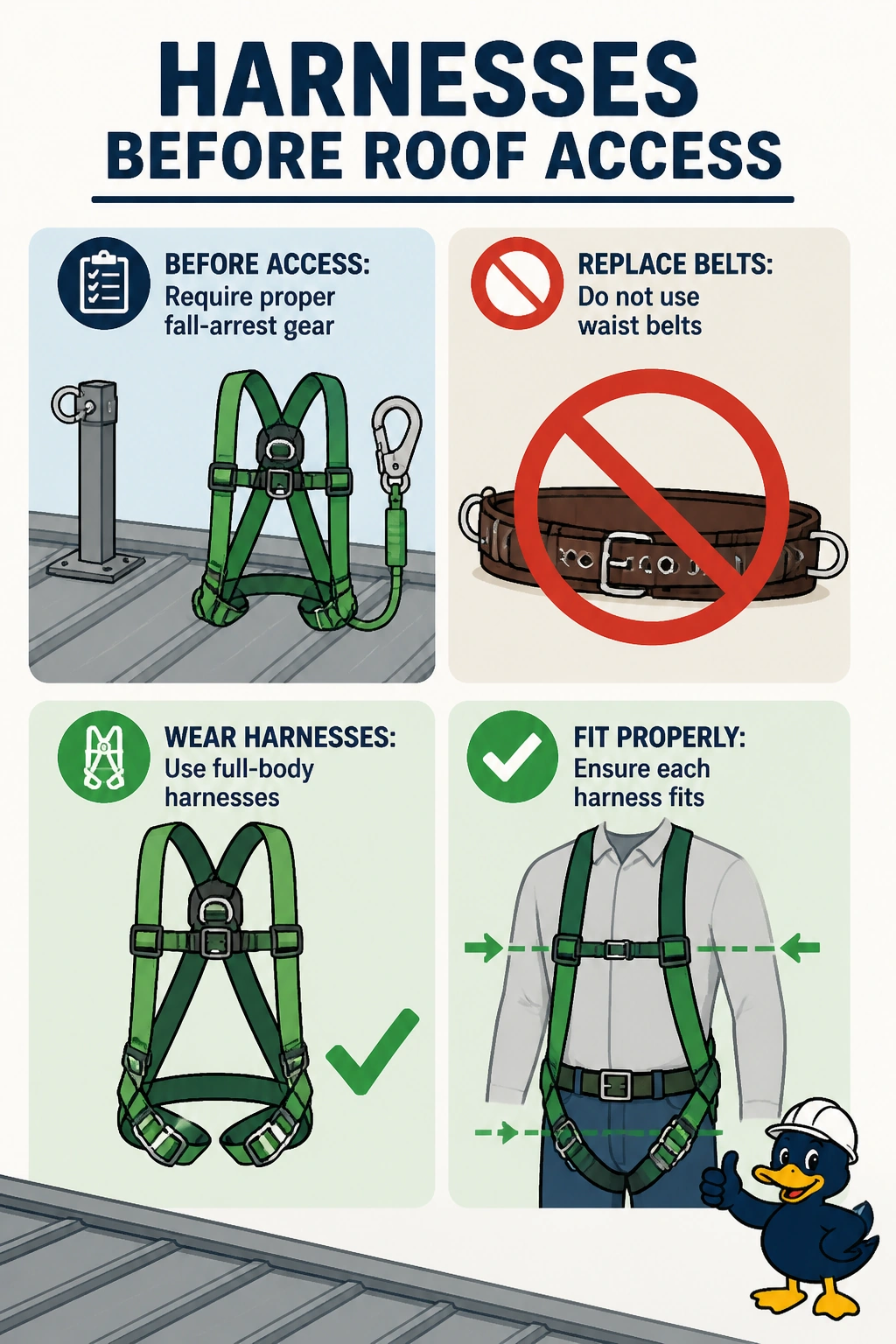
Waist body belts belong in a museum when it comes to fall arrest, because hanging from your waist after a fall can cause fatal internal injuries. The trap is thinking a shock-absorbing lanyard or good leather makes a body belt legal for fall arrest. You must stop roof access until every worker wears a properly fitted full-body harness.
Full Explanation
Under 29 CFR 1926.502, body belts are prohibited as part of a personal fall arrest system in construction because arresting a fall at the waist concentrates impact forces on the abdomen and spine and can cause a worker to slip out or suffer lethal suspension trauma. Choosing to "Replace the body belts with properly fitted full-body harnesses for fall arrest" distributes fall-arrest forces across the thighs, pelvis, chest, and shoulders as required by OSHA. Choosing to "Allow the body belts if workers attach shock-absorbing lanyards to the side D-rings" still violates the prohibition on body belts in fall arrest systems and misuses side positioning D-rings. Choosing to "Permit the body belts for work under two hours as long as the leather is uncracked" is invalid because OSHA grants no short-duration exception for fall-arrest equipment. Choosing to "Have the crew cinch the waist belts tighter so they cannot slip over the rib cage" worsens abdominal compression during a fall arrest without making the equipment compliant. Exam caveat: body belts are permitted only in positioning device systems where free fall is limited, never for personal fall arrest. As an operational check, inspect every harness during pre-work huddles for intact webbing, legible labels, and a properly positioned dorsal D-ring between the shoulder blades.
Prefer to study offline? Printable PDF study book + test engine ($7.50, unofficial). These questions stay free here.