
A mechanical foreman must install 30-foot-long chilled-water valve manifolds 22 feet above a warehouse slab, and the crew plans to bolt the heavy assemblies together piece by piece from ladders. Applying the hierarchy of controls, what is the foreman's best approach?
Select an answer to reveal the explanation.
Short Explanation
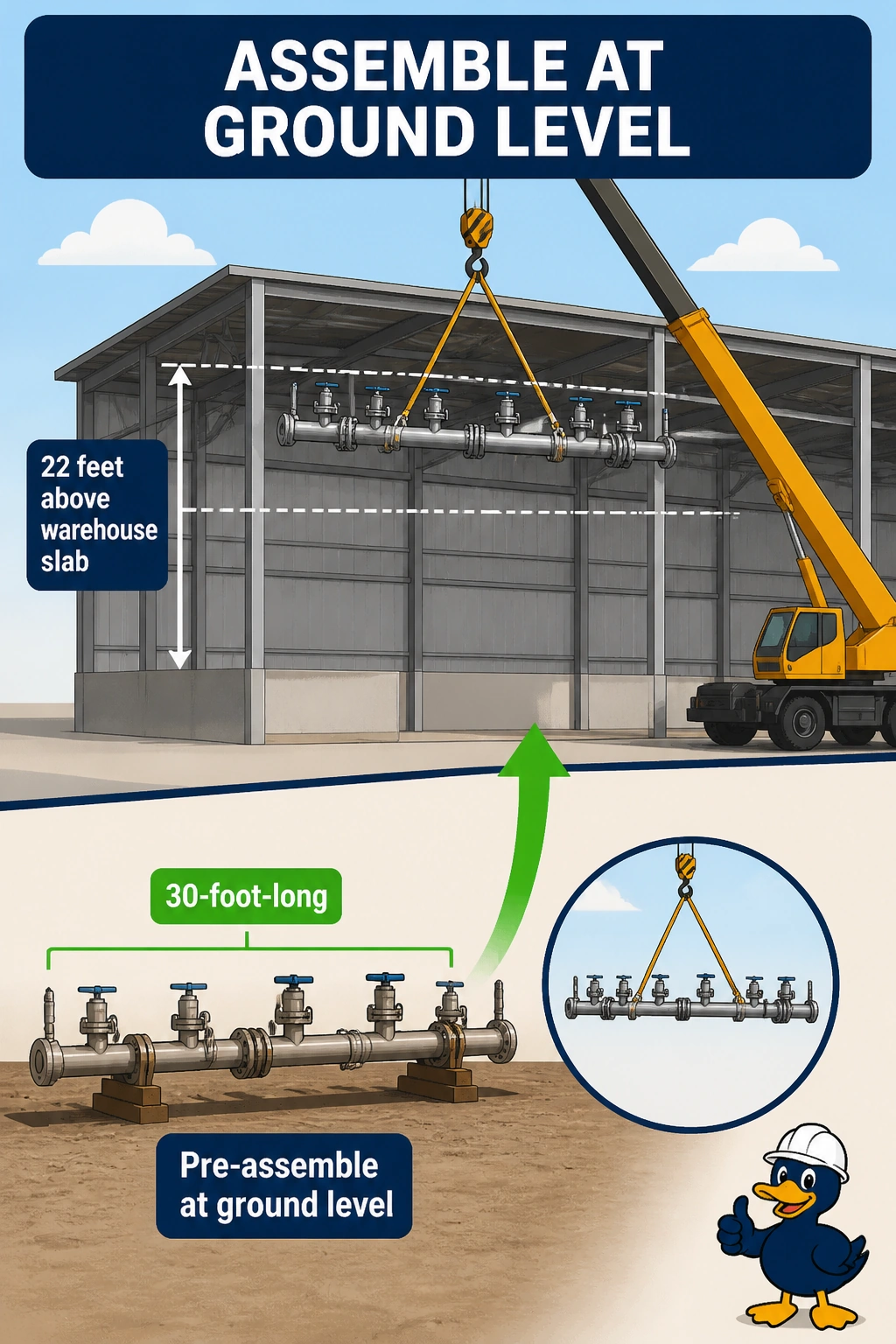
When you can build a heavy assembly on solid ground instead of 20 feet in the air, you cut fall risk out of the job completely. The trap is jumping straight to harnesses or signs when the hierarchy of controls tells you to engineer out the height exposure first.
Full Explanation
Choosing to Pre-assemble the pipe manifolds at ground level before hoisting them into place applies the top tiers of the hierarchy of controls by eliminating most elevated assembly work and reducing total time spent at height. Building manifolds on waist-high stands on the slab avoids awkward overhead bolting from ladders and minimizes dropped-object exposure. Deciding to Issue every pipefitter a personal fall arrest harness and lanyards for ladder work relies on personal protective equipment—the least protective tier—while leaving workers exposed to prolonged ladder climbing and fall arrest forces. Relying on a plan to Post warning signs below the work zone reminding crews to wear hard hats at all times only warns bystanders of overhead risk and does nothing to protect the pipefitters working aloft. Choosing to Rotate the pipefitters every two hours so they do not fatigue while working on ladders is an administrative control that shares the fall hazard among more workers instead of removing it. As a caveat, hoisting the completed assembly still requires a lift plan, rated rigging, and cleared fall zones. Before fabrication begins, review the piping layout with the crew to identify which sections can be built on the ground and hoisted safely.
Prefer to study offline? Printable PDF study book + test engine ($7.50, unofficial). These questions stay free here.