
While framing a commercial roof deck, a carpenter wearing a personal fall arrest harness plans to anchor their self-retracting lifeline 20 feet horizontally to the side of their work zone to avoid moving the anchor point. What should the framing foreman require?
Select an answer to reveal the explanation.
Short Explanation
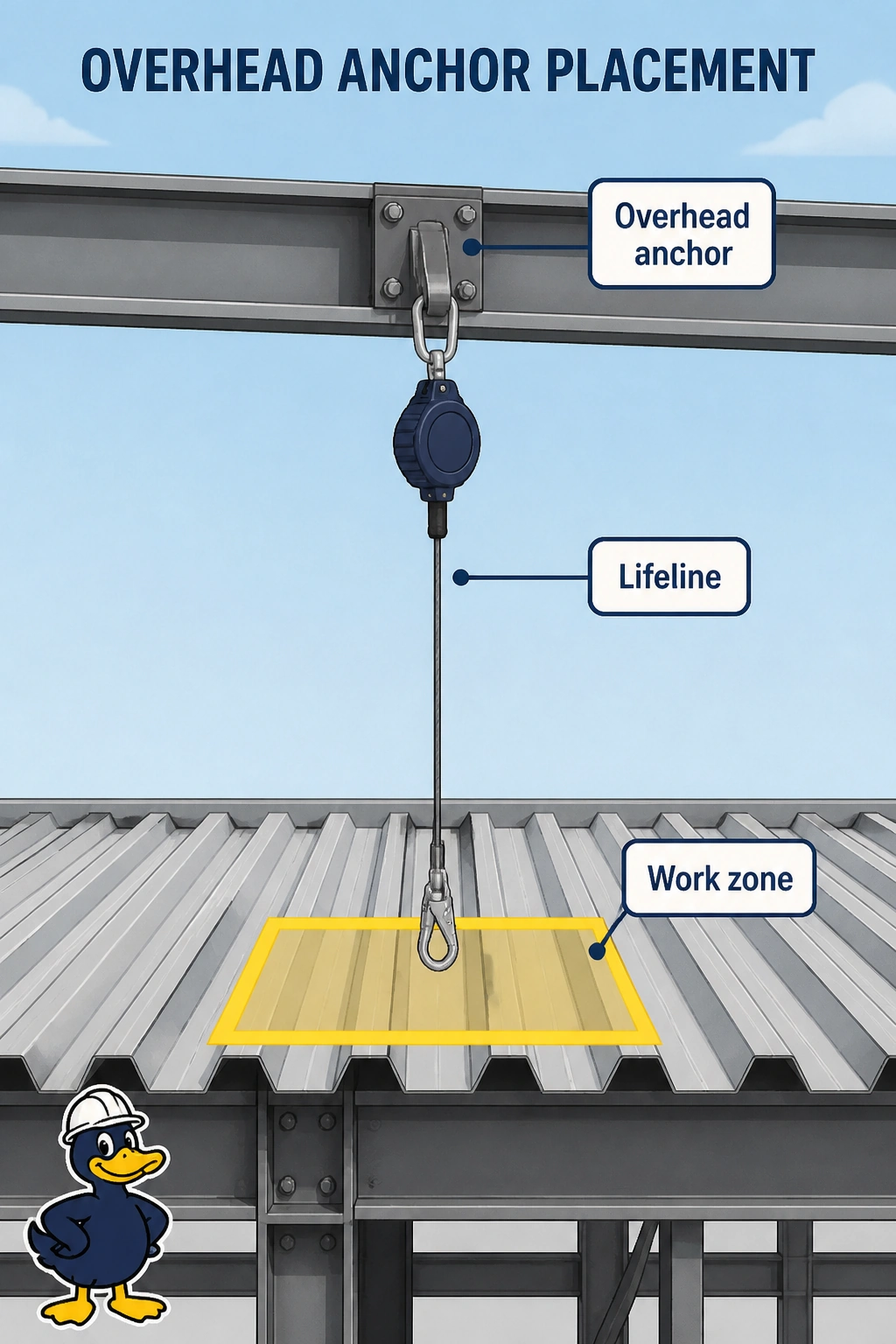
You can prevent a dangerous pendulum swing by placing the anchor directly overhead of your active work zone. Working slowly, adding a lanyard in series, or relying on a fast-locking lifeline won’t remove the swing hazard.
Full Explanation
A personal fall arrest anchor 20 feet horizontally from your work zone creates a severe swing-fall hazard: if you fall, you can swing like a pendulum and strike structural steel, walls, or a lower level. Require the anchor to be relocated directly overhead of the active work zone; this keeps your fall path vertical and minimizes pendulum momentum. Keeping the side anchor in place and telling you to work slowly near the edge relies on caution rather than controlling the physical geometry of the hazard. Attaching a second shock-absorbing lanyard in series to reach the work zone increases total fall distance and can exceed deceleration limits. Allowing the side anchor because the self-retracting lifeline locks within two feet overlooks that a fast-locking device can still let you swing sideways into obstacles when the line is angled. An exam caveat is that an overhead anchor minimizes swing but does not eliminate the need to assess fall clearance and anchor suitability. As a practical check, walk the deck before tie-off and verify that the anchor is directly above the work zone and within the manufacturer’s permitted cone angle.
Prefer to study offline? Printable PDF study book + test engine ($7.50, unofficial). These questions stay free here.