
A utility crew is excavating a six-foot-deep trench for a new water main directly beside an old underground fuel storage tank and a leaking sanitary sewer lateral. What must the foreman require before any worker enters the trench?
Select an answer to reveal the explanation.
Short Explanation
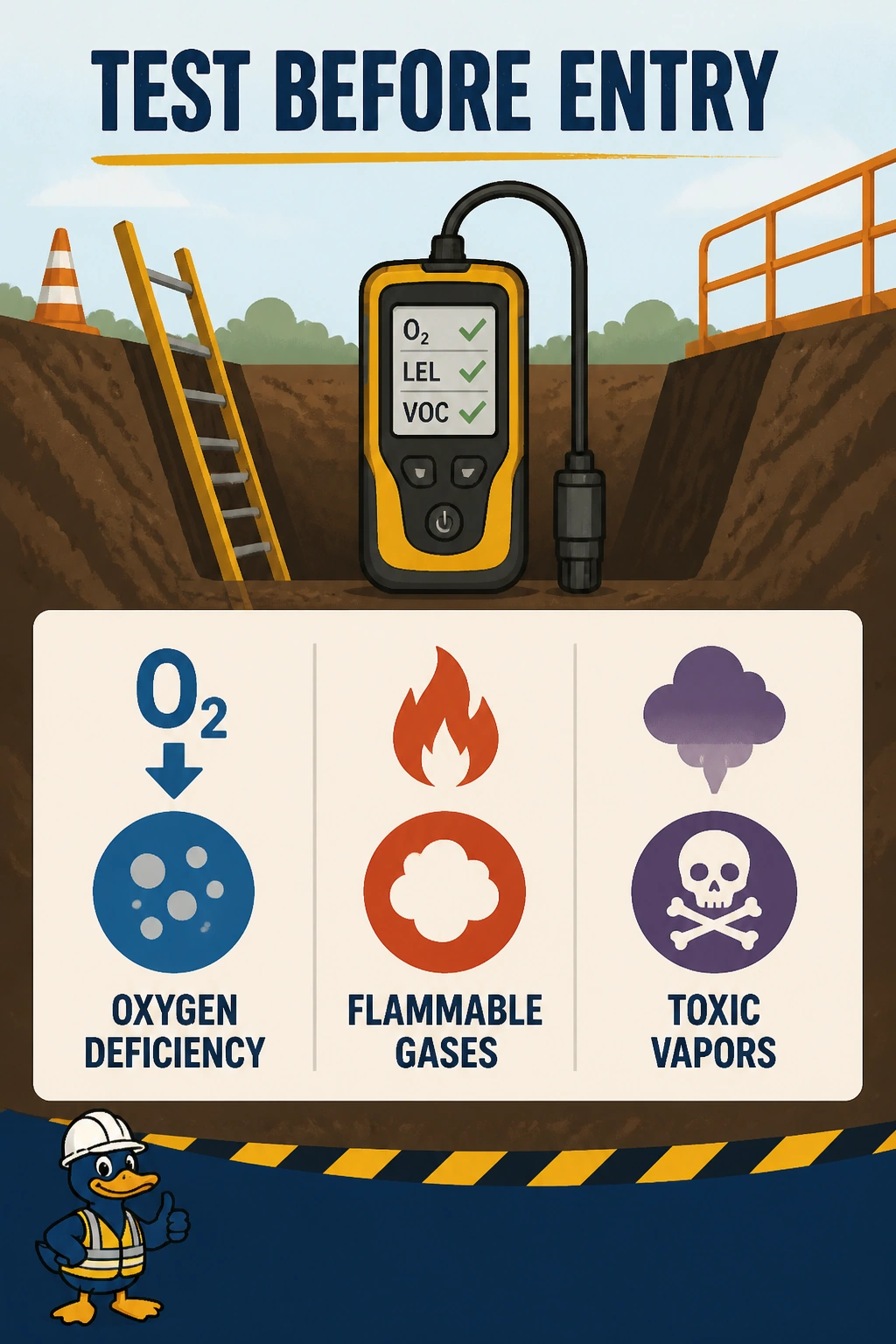
You’re right to require atmospheric testing before anyone enters: a trench beside fuel tanks and a leaking sewer can silently accumulate hazardous vapors or lose oxygen. Don’t rely on an N95 mask, a fan, a ladder, or your sense of smell to establish that the air is safe.
Full Explanation
Under 29 CFR 1926.651(g), excavations deeper than 4 feet must be tested before entry when oxygen deficiency or a hazardous atmosphere exists or could reasonably be expected, including near fuel storage or sewers. Testing for oxygen deficiency, flammable gases, and toxic vapors identifies invisible, odorless, or explosive hazards before workers are exposed. An N95 dust mask does not protect against fuel vapors, hydrogen sulfide, or low oxygen. A portable electric box fan at the edge may introduce an ignition source into flammable vapors, and blowing air does not verify safe breathing levels without testing. A ladder provides a way out but cannot protect workers from an atmosphere that gives no warning or causes rapid collapse; smell is unreliable because some hazards are odorless and olfactory fatigue can occur. Exam caveat: readings near action thresholds may require continuous monitoring or mechanical ventilation, but these do not replace the required pre-entry test. For a practical check, confirm the multi-gas monitor’s bump test and calibration date, test at multiple depths, and log the readings.
Prefer to study offline? Printable PDF study book + test engine ($7.50, unofficial). These questions stay free here.