
A masonry crew sets up a gasoline-powered portable mortar mixer beside a concrete block wall, and the foreman notices the side sheet-metal guard covering the drive belt and pulleys is missing. What must the foreman require before mixing begins?
Select an answer to reveal the explanation.
Short Explanation
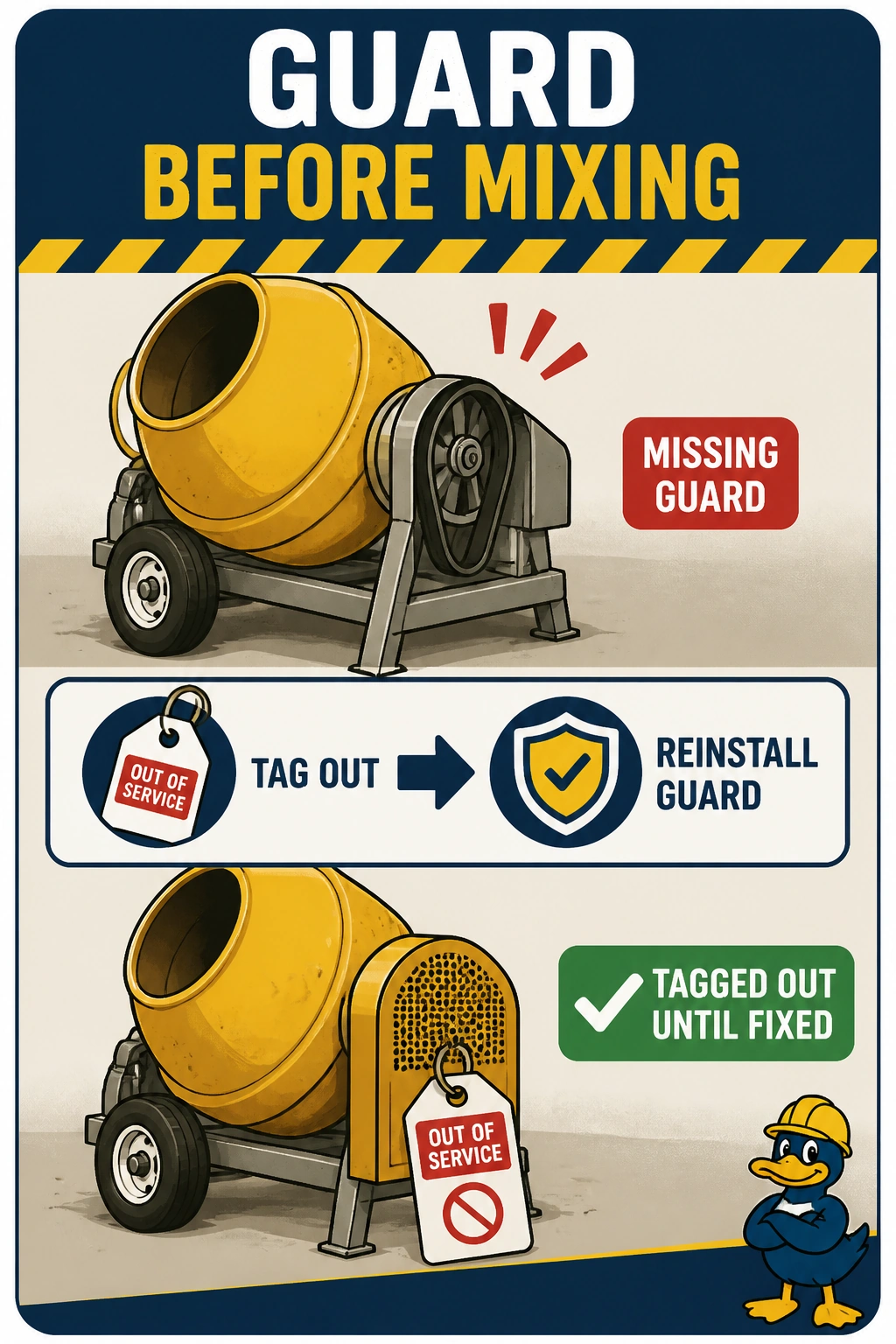
You’re right to stop work when the belt and pulley are exposed: they can snag a loose sleeve or glove before anyone can pull back. Yellow paint or a spotter cannot prevent a slip near the hopper from putting a hand into the nip point. Keep the mixer out of service until its proper guard is securely reinstalled.
Full Explanation
Under 29 CFR 1926.300, belts, gears, shafts, pulleys, sprockets, and other rotating or reciprocating parts must be guarded when employees could contact them. Tagging the mixer out of service until the drive-belt guard is properly reinstalled is the required response: the guard is an engineering control that physically blocks fingers, clothing, and tools from the in-running nip point. Painting a yellow warning stripe on the exposed pulley relies on visual awareness and provides no physical protection if someone slips or reaches toward the moving parts. Assigning a spotter to keep laborers three feet away does not remove the hazard, and the operator must still work close to the mixer to load bags, add water, and discharge mortar. Running the mixer at half throttle still leaves the belt and pulley exposed; slower movement does not eliminate a pinch hazard that can cause severe crushing or amputation injuries. As an exam caveat, crews must not bypass or prop open guards to speed up belt inspections or cleanup. As a practical check, verify during pre-shift equipment walkarounds that every machine guard is intact and securely fastened before use.
Prefer to study offline? Printable PDF study book + test engine ($7.50, unofficial). These questions stay free here.