
While installing ceiling grid wire in a retail tenant space, an apprentice stands with both feet on the top cap of an eight-foot fiberglass stepladder to reach a concrete deck anchor. What must the foreman require immediately?
Select an answer to reveal the explanation.
Short Explanation
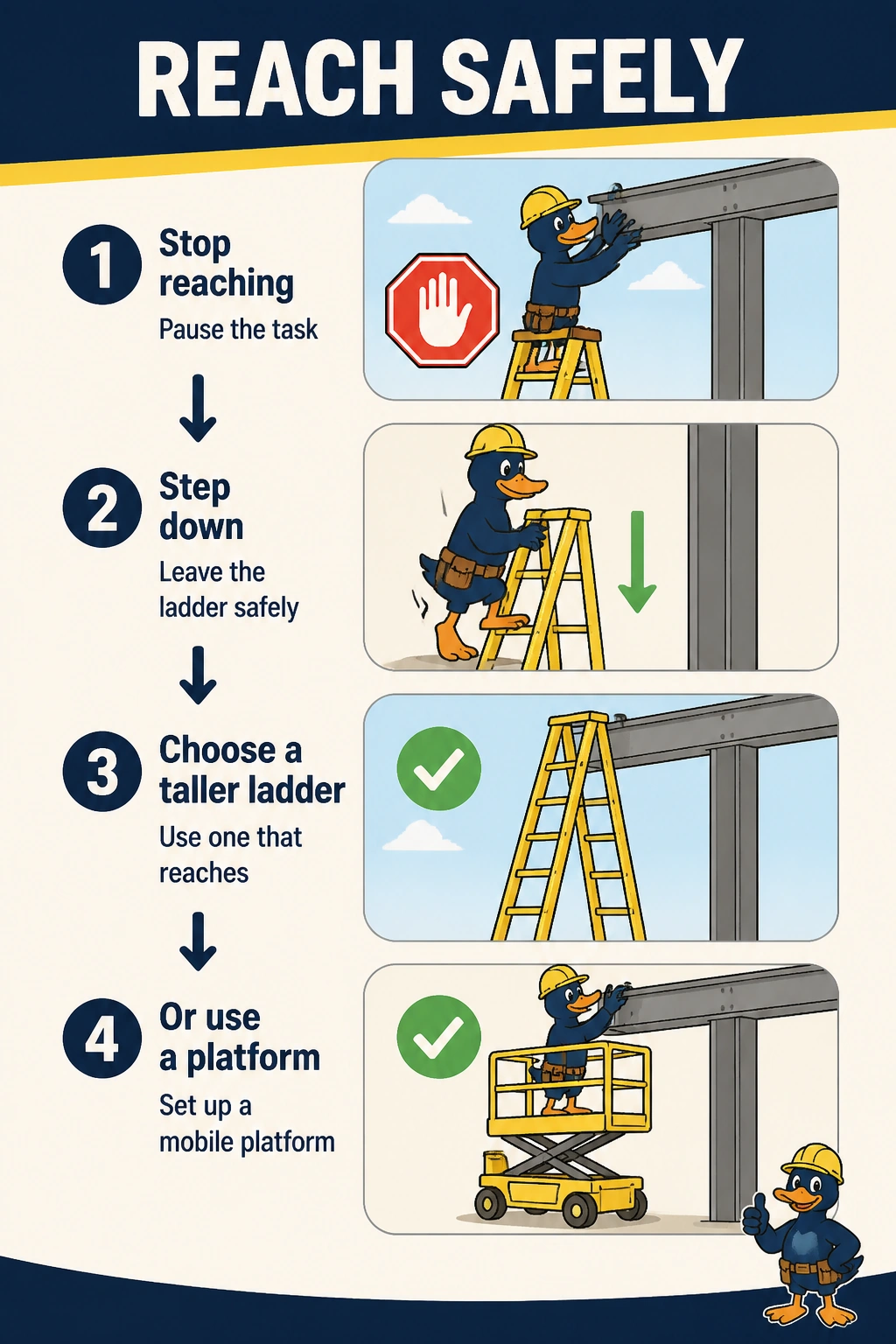
Standing on the top cap of a stepladder puts your center of gravity above the frame with nothing left to hold onto. Under 29 CFR 1926.1053, the top step and cap are strictly off-limits—don't let a coworker's steady hand or a taller reach tempt you into breaking that rule.
Full Explanation
Under 29 CFR 1926.1053, the top or top step of a stepladder must not be used as a step because standing at the apex eliminates any handhold and dramatically increases tipping and loss-of-balance falls. Requiring the crew to Have the apprentice step down and use a taller ladder or mobile platform provides the necessary working height while keeping the worker's feet on lower, rated rungs. Choosing to Have a coworker hold the base of the ladder steady while the apprentice finishes the anchor does not prevent the worker from losing balance off the top cap with no side rails to grab. Opting to Allow the apprentice to stand on the top cap as long as they keep one hand on the ceiling grid violates the standard and relies on non-structural ceiling wire that cannot support body weight. Telling the worker to Move the stepladder closer to the wall so the apprentice can lean against the drywall still leaves the worker illegally standing on the top cap and encourages unsafe side-leaning. One caveat is that a taller ladder must still open fully with locked spreaders on a level surface. As an operational check, verify the apprentice's waist stays below the top cap and swap in a 10-foot ladder or scissor lift before work resumes.
Prefer to study offline? Printable PDF study book + test engine ($7.50, unofficial). These questions stay free here.