
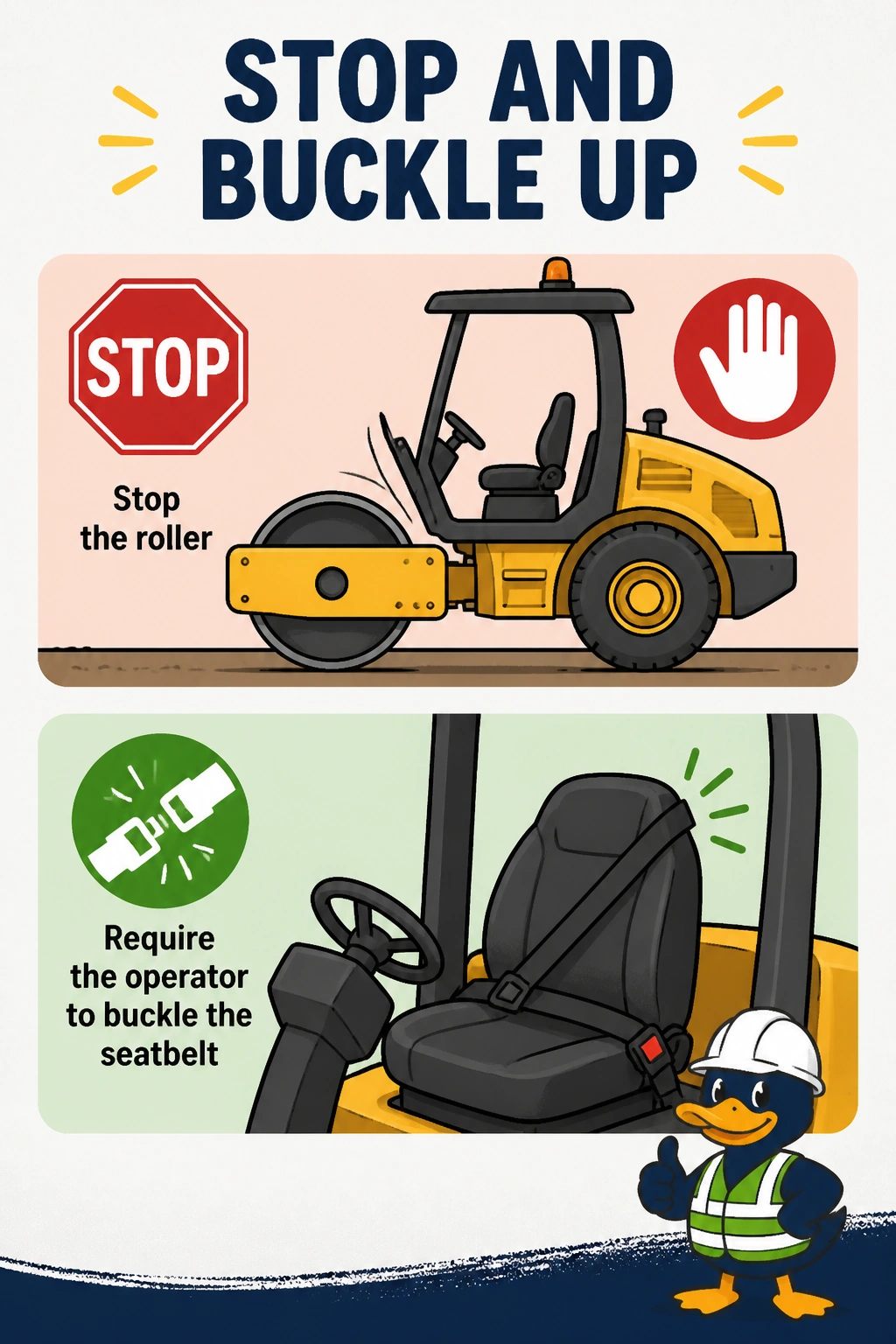
On a civil grading site, a supervisor sees a vibratory roller operator compacting an embankment slope without wearing the seatbelt inside the machine's Rollover Protective Structure (ROPS) cab. What must the supervisor require?
Select an answer to reveal the explanation.
Short Explanation
A Rollover Protective Structure only protects you if you stay inside the cab—without a seatbelt, the steel frame itself becomes the crushing hazard. The trap is thinking the cab alone keeps you safe or that jumping clear is possible during a tip-over.
Full Explanation
Seat belts under 1926.602(a)(2) apply to the earthmoving equipment listed in 1926.602(a)(1). Compactors are reserved in that paragraph. 1926.1000 requires ROPS on compactors made after July 15, 2019 and does not state a seat-belt rule. With a ROPS cab, require the operator to buckle the belt before the roller moves. A ROPS frame creates a protective zone only when the seatbelt keeps the operator inside the seat; without it, a tipping machine can throw the operator out and crush them beneath the ROPS. Where the roller has a ROPS, rollover is a recognized hazard and 1926.28(a) requires appropriate personal protective equipment, so the supervisor still stops the machine and requires the belt. Choosing to Allow operation without a belt since the cab frame blocks ejection fails because open cab doors, broken glass, or violent roll forces easily eject an unrestrained operator. Deciding to Require the seatbelt only when driving on steep public roads fails because embankments, soft trench edges, and uneven fill on jobsites cause most equipment rollovers. Opting to Lower the cab canopy so the operator can jump clear in a tip fails because rollovers happen in a fraction of a second, making jumping clear nearly impossible and removing overhead crush protection. Ensure seatbelts are functional, not frayed or tucked behind the seat.
Prefer to study offline? Printable PDF study book + test engine ($7.50, unofficial). These questions stay free here.