
A steel erection crew is rigging heavy I-beams with sharp flange edges using nylon web slings without corner protection. What must the rigging foreman require before lifting?
Select an answer to reveal the explanation.
Short Explanation
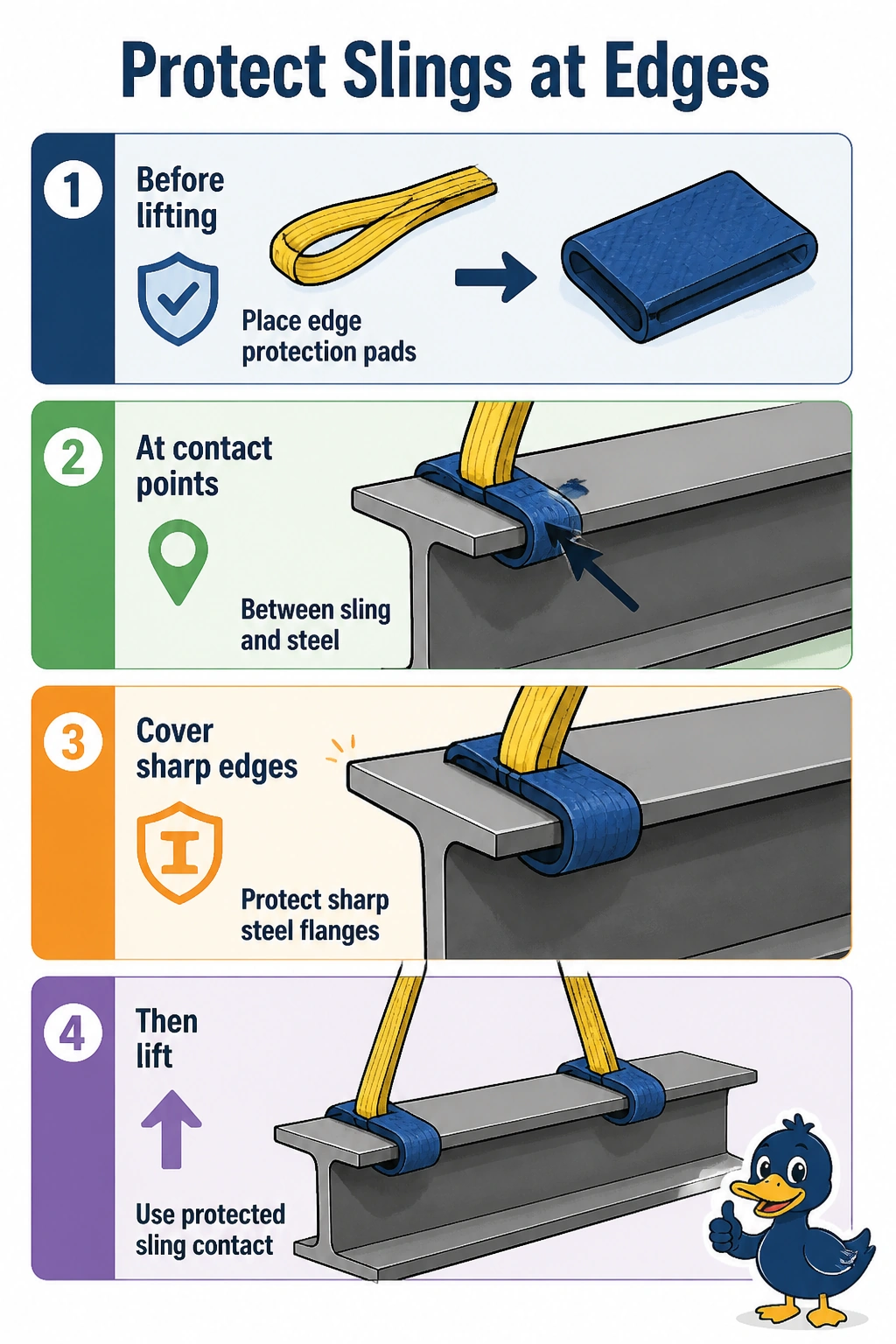
Think of a nylon sling under tension like a guitar string pressed against a razor blade—one sharp corner can slice right through it. The trap is thinking slower hoisting or extra wraps will protect bare webbing. Always pad sharp edges before you lift!
Full Explanation
Under 29 CFR 1926.251, slings must be padded or protected from the sharp edges of their loads. Placing edge protection pads between the sling and sharp steel distributes the bearing pressure and prevents the sharp I-beam flange from cutting or abrading the synthetic fibers as tension builds during the pick. Doubling the sling choke wraps tightly around the bare steel flange does not stop cutting; instead, it creates additional sharp contact points and reduces the sling's rated choke capacity. Reducing the crane hoist line speed while swinging the beam only slows load movement and cannot prevent static tension or dynamic shock from severing unprotected webbing against a sharp edge. Switching to a smaller shackle pin to keep the sling centered alters the hardware geometry without shielding the sling body from the beam flange and can even overload or damage the shackle. As an operational caveat, softeners must be durable enough to resist crushing under the full load weight, not thin cardboard or rags. Before every pick, perform a pre-lift inspection by verifying that rated edge guards are secured at all sharp corners and checking the sling webbing for cuts or exposed red warning yarns.
Prefer to study offline? Printable PDF study book + test engine ($7.50, unofficial). These questions stay free here.