
Three electricians must pull feeders inside a large switchgear cabinet fed by a main breaker, and the lead electrician offers to put a single personal padlock on the disconnect so the others can work faster. What must the electrical foreman require?
Select an answer to reveal the explanation.
Short Explanation
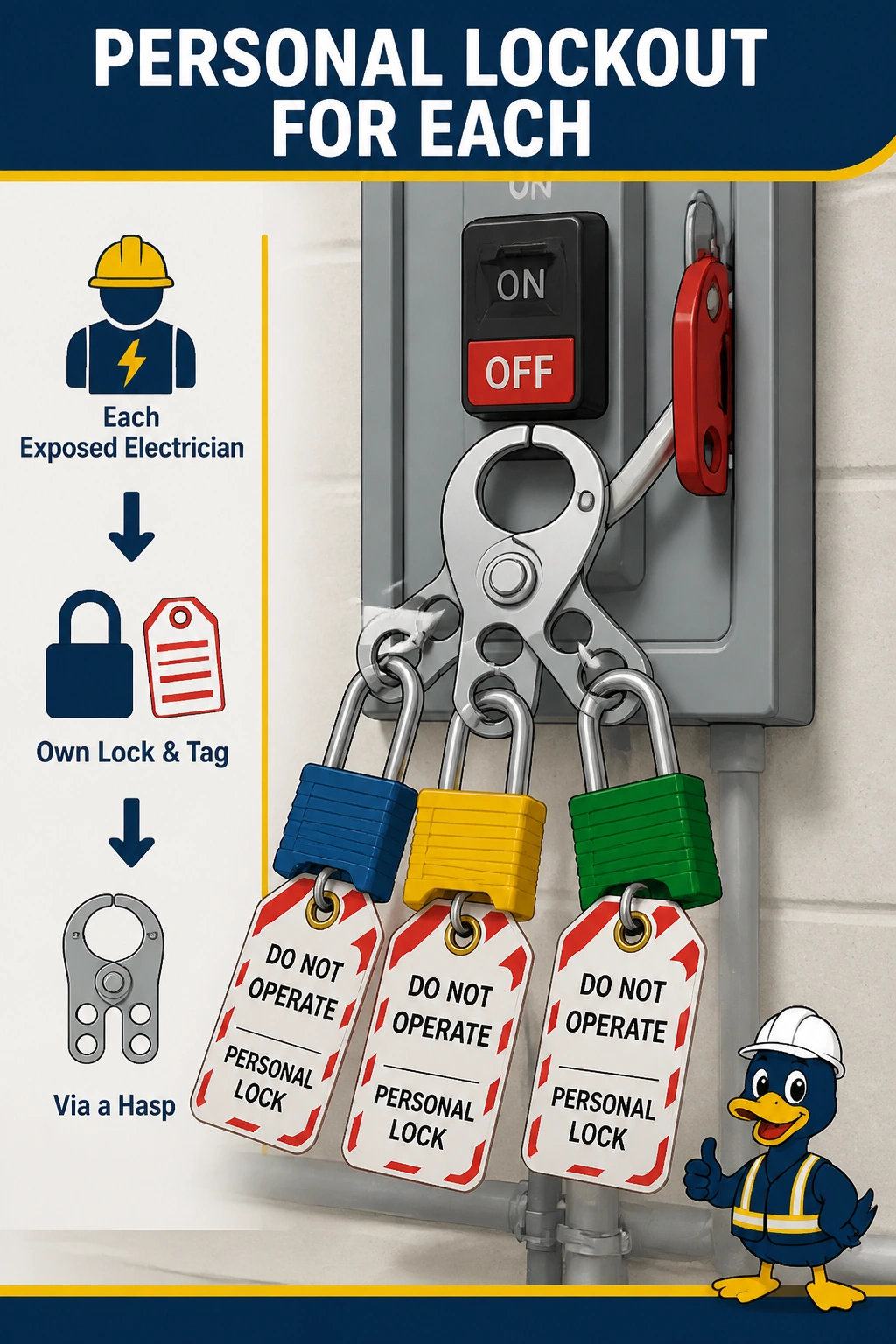
Sharing one lock across three workers means two of them are trusting someone else with their lives. You must ensure each exposed electrician places their own personal lock and tag on a multi-lock hasp and keeps the key. The trap is thinking one crew lock is enough as long as the lead holds the key.
Full Explanation
Group lockout principles require every exposed worker to maintain personal control over the energy-isolating device, so the foreman must Have each exposed electrician apply their own personal lock and tag via a hasp. That way, the main breaker cannot be re-energized until every single electrician has finished and removed their own lock. Choosing to Let the lead electrician hold the single key while the other two wear insulated gloves leaves the two helpers unprotected if the lead mistakenly assumes the cabinet is clear and closes the breaker. Opting to Use a single zip-tie and paper tag on the breaker handle instead of three padlocks fails to provide a positive physical lockable restraint where the disconnect accepts padlocks. Deciding to Post a laborer outside the electrical room door to warn anyone not to close the breaker relies on human attention rather than physical energy isolation. Even after all three locks are applied, each worker must still verify zero energy before touching conductors. As an operational check, inspect the hasp for three individual locks and tags, and witness a live-dead-live voltage test at the switchgear.
Prefer to study offline? Printable PDF study book + test engine ($7.50, unofficial). These questions stay free here.