
While checking a framing crew's generator staging area, a supervisor sees laborers pouring gasoline from an unvented household plastic jug with a loose screw cap. What must the supervisor require?
Select an answer to reveal the explanation.
Short Explanation
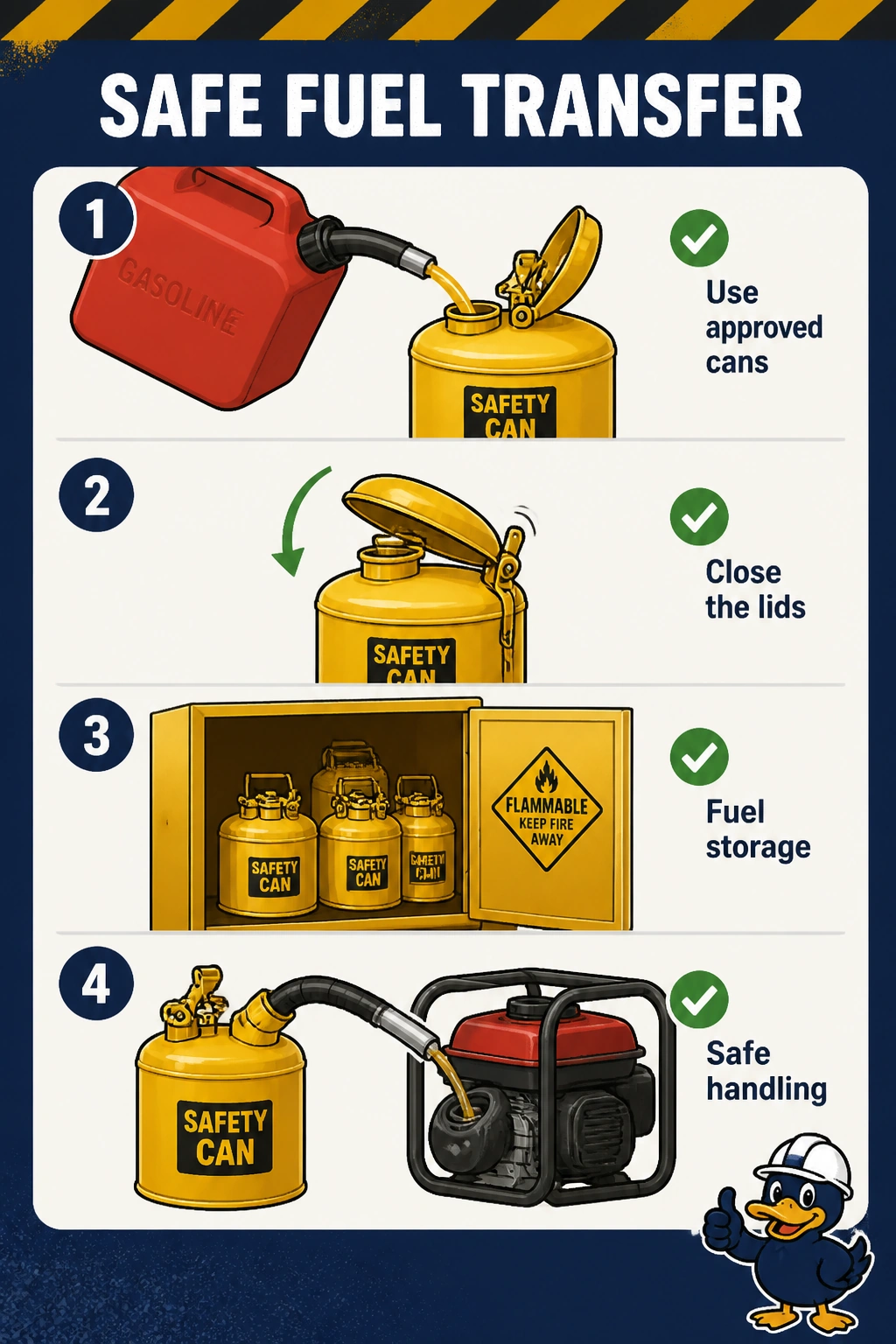
Household plastic jugs build up static and lack flame arresters, turning a simple refuel into a flash-fire hazard. You need approved safety cans with spring-closing lids and flame-arresting screens for flammable liquids on site. The trap is thinking a marker label or tight cap makes a plastic jug compliant.
Full Explanation
Under OSHA's flammable liquids standard, 29 CFR 1926.152, only approved containers and portable tanks may be used for storing and handling flammable liquids, so the supervisor must Transfer the fuel to approved safety cans with self-closing lids. Approved metal safety cans include flame arresters and spring-closing caps that relieve pressure safely and prevent flashback into the container. Choosing to Wrap duct tape around the plastic jug's cap to stop vapors from escaping does not provide a flame arrester or UL/FM-listed impact resistance. Opting to Store the plastic jug inside a closed gang box next to battery chargers traps flammable vapors right beside potential ignition sources. Deciding to Label the plastic jug with black marker and keep it away from direct sun addresses container identification but leaves an unapproved, static-prone container in service. Even approved safety cans must be kept clear of heat sources and bonding/grounding rules followed during bulk transfers. As an operational check, verify the UL or FM approval stamp, intact spring-closing lid, and undamaged spout screen on every fuel can.
Prefer to study offline? Printable PDF study book + test engine ($7.50, unofficial). These questions stay free here.