
While installing overhead fire-sprinkler mains from a raised scissor lift, a pipefitter climbs onto the lift's midrail to gain an extra 18 inches of reach to tighten a hanger. What must the mechanical foreman order?
Select an answer to reveal the explanation.
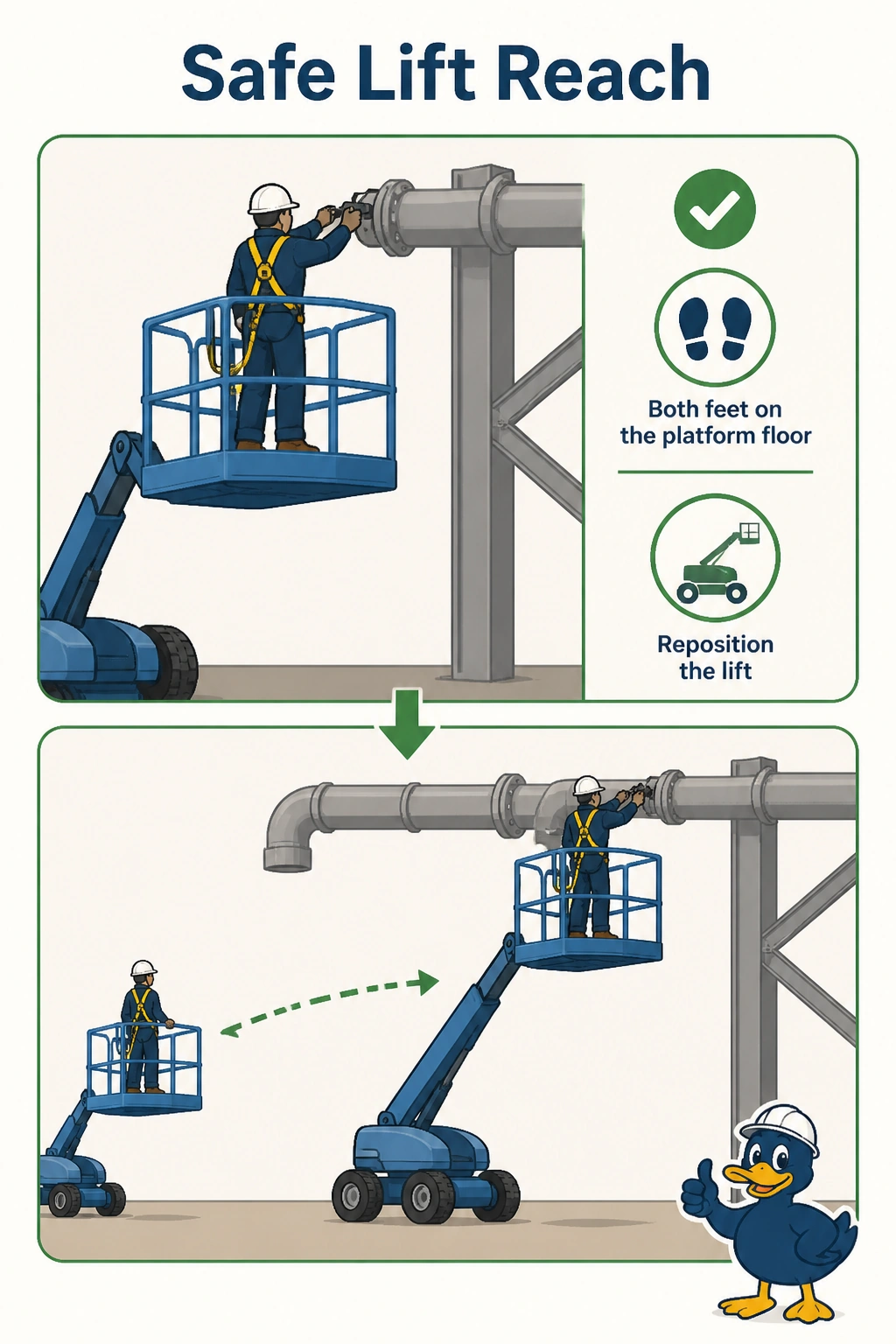
Short Explanation
When you’re working from a scissor lift, climbing the midrail turns a stable platform into a fall hazard. A quick reach or a lanyard clipped to the top rail doesn’t make it safe: keep both feet on the platform floor and reposition the lift.
Full Explanation
Under 29 CFR 1926.451 and standard mobile scaffold operating rules, you must never stand on midrails, toprails, or planks on a lift to gain extra height. The foreman must require the pipefitter to keep both feet on the platform floor and reposition the lift. Clipping a six-foot shock-absorbing lanyard to the top rail first fails because guardrails are not designed to support elevated standing loads, and a six-foot lanyard will not arrest a short fall before the worker strikes the platform or a lower level. Having a coworker hold the pipefitter’s ankles adds another worker to an unstable posture without correcting the fall hazard. Allowing the pipefitter to finish the hanger from the midrail leaves the worker exposed to a fall over the top rail. On an exam, distinguish fall-protection equipment from permission to climb a guardrail: a lanyard does not make standing on the midrail acceptable. As a practical check during lift operations, confirm every worker’s boots remain flat on the deck and all access gates are latched.
Prefer to study offline? Printable PDF study book + test engine ($7.50, unofficial). These questions stay free here.