
During a winter commercial remodel, a crew brings four 100-pound LP-gas cylinders inside the building overnight and stores them beside the main stairwell exit to keep them from freezing. What must the foreman require?
Select an answer to reveal the explanation.
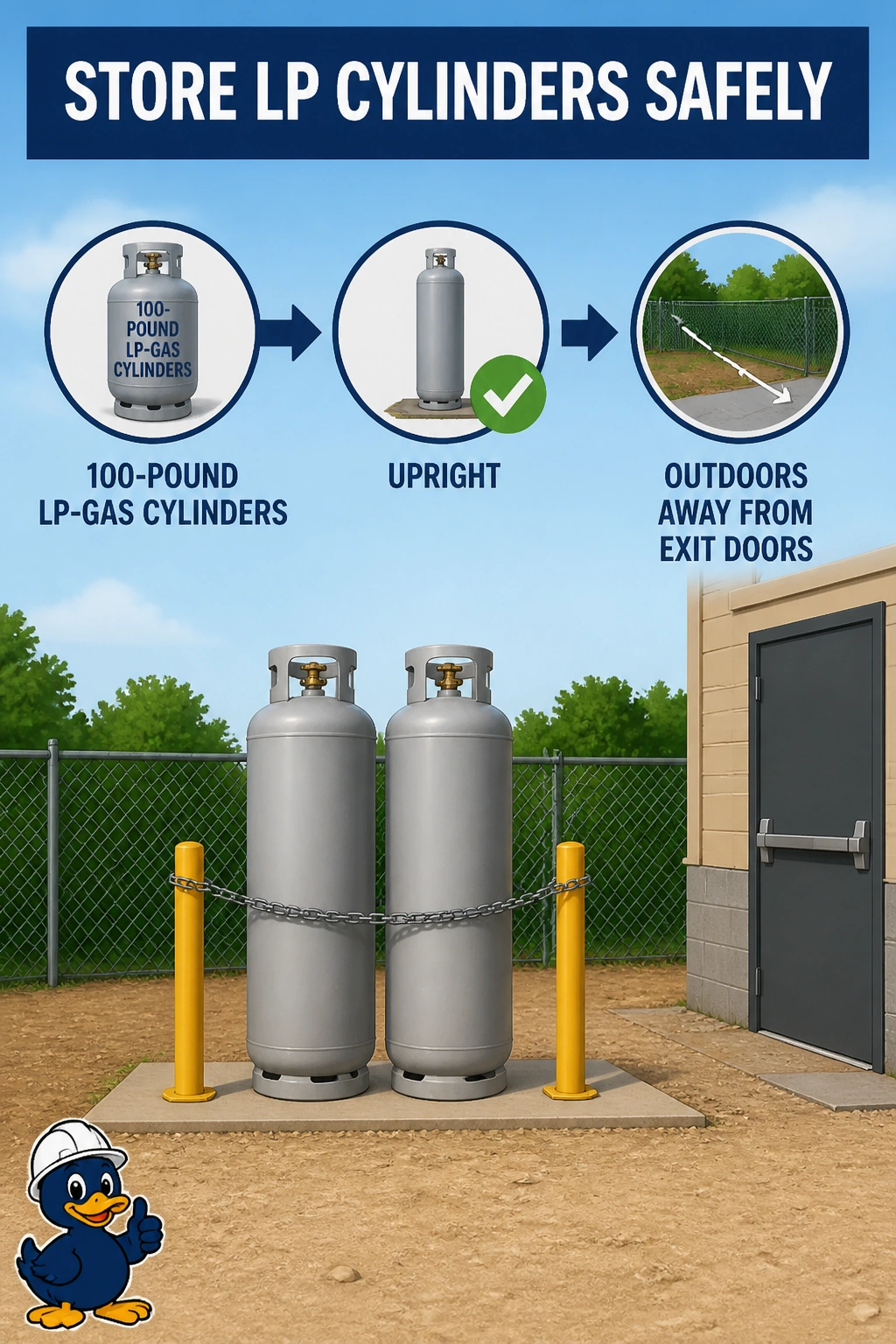
Short Explanation
Propane is heavier than air, so a slow leak indoors pools along the floor like invisible water waiting for a spark near your only exit. The trap is storing cylinders inside out of the cold instead of keeping them outdoors, upright, and clear of exits.
Full Explanation
Under 29 CFR 1926.153, storage of LP-gas inside buildings is prohibited, so the foreman must Move the cylinders outdoors upright away from exit doors immediately. Outdoor storage prevents leaked propane vapor—which is heavier than air—from accumulating in enclosed spaces or blocking emergency egress routes. Choosing to Lay the cylinders flat on wooden pallets away from heaters fails because cylinders remain indoors under that option and laying them horizontal can allow liquid propane to contact the pressure relief valve. Deciding to Keep them inside the stairwell but wrap them in fire blankets fails because blankets do not stop gas leaks and keeping fuel cylinders in an exit stairwell endangers evacuation. Opting to Store them inside an enclosed mechanical closet with a lock fails because an unventilated indoor room traps leaking gas and creates a severe explosion hazard. Keep in mind that outdoor cylinder cages should also be protected from vehicle impact. Walk the perimeter at the end of each shift to verify all LP-gas cylinders are stored outdoors, upright, and secured away from doorways.
Prefer to study offline? Printable PDF study book + test engine ($7.50, unofficial). These questions stay free here.