
A utility crew opens a 6-foot-deep trench in previously disturbed sandy soil to repair a water main, and the operator says the walls look vertical and firm enough for a quick 20-minute valve swap. What must the foreman require before anyone enters?
Select an answer to reveal the explanation.
Short Explanation
Soil does not care how quick your repair is—a cubic yard of earth weighs as much as a small car and collapses faster than anyone can climb. The trap is trusting a firm-looking cut for a short task when you need a protective system in any trench five feet or deeper.
Full Explanation
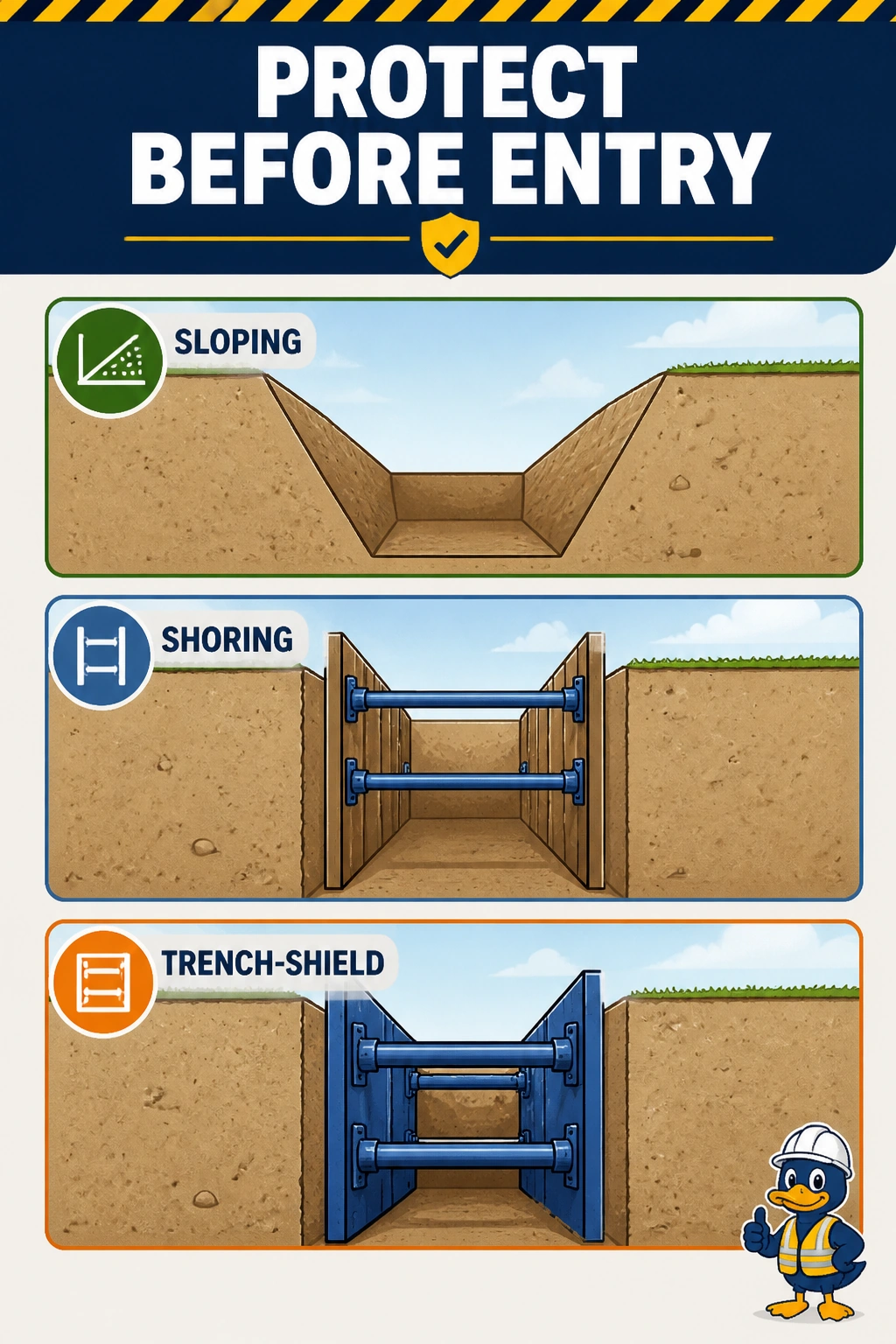
Under 29 CFR 1926.652, every excavation five feet or deeper requires protection from cave-ins unless cut entirely in stable rock, so the foreman must "Install an approved sloping, shoring, or trench-shield protective system before anyone enters" regardless of task duration. Previously disturbed sandy soil is classified as Type C, the least stable category, and can fail without warning. Choosing to "Station a laborer on the bank to watch for soil cracks during the brief repair" cannot prevent a sudden collapse or rescue a buried worker in time. Choosing to "Allow one plumber in the trench at a time while keeping the bucket lowered nearby" still exposes that worker to fatal engulfment and adds struck-by risk from the excavator. Choosing to "Place a second extension ladder in the trench so the plumber can climb out faster" improves egress but does not stop a trench wall from caving in. One caveat is that even trenches shallower than five feet require a protective system if a competent person identifies cave-in potential. Have the competent person inspect soil conditions, check for water seepage, and verify shield or slope dimensions before entry.
Prefer to study offline? Printable PDF study book + test engine ($7.50, unofficial). These questions stay free here.