
During structural steel erection on a commercial gym, an ironworker uses bare fingers to feel whether bolt holes align between a column splice and a suspended girder while the crane holds the load. What should the foreman require instead?
Select an answer to reveal the explanation.
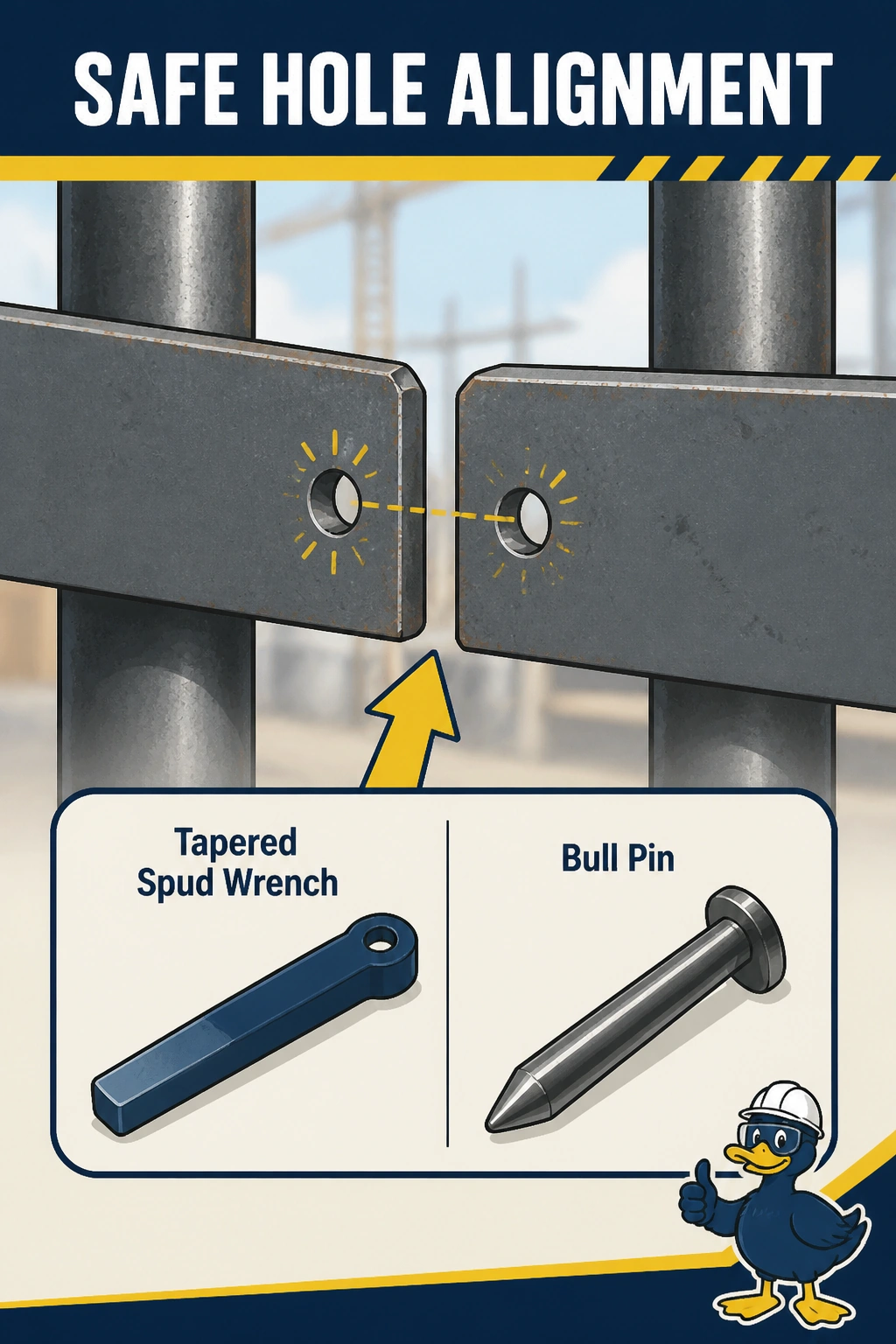
Short Explanation
Never put flesh where steel can shear, because a suspended girder can shift in a heartbeat and turn your finger into a pinch-point casualty. The trap is thinking leather gloves protect against thousands of pounds of shearing steel.
Full Explanation
Suspended structural steel can swing, settle, or bind without warning, creating severe pinch-point and amputation hazards at bolted connections. Choosing to Use a tapered spud wrench or bull pin to align the holes safely keeps the ironworker's hands out of the shear zone while providing positive mechanical leverage to draw the holes into line. Deciding to Have the worker wear thicker leather gloves before probing the holes offers zero crush or shear protection against the weight of a steel girder. Choosing to Ask the crane operator to lower the girder slightly faster into place increases impact energy and makes sudden movement even more dangerous for anyone near the splice. Opting to Have a second worker steady the girder by hand from the opposite side places another crew member into the caught-between hazard instead of controlling the load mechanically. As a caveat, verify that tapered pins and wrenches are tethered when working at height so dropped tools do not strike crews below. For an operational check, watch bolt-up crews during pre-lunch rounds to confirm alignment tools and tag lines are used on every connection.
Prefer to study offline? Printable PDF study book + test engine ($7.50, unofficial). These questions stay free here.