
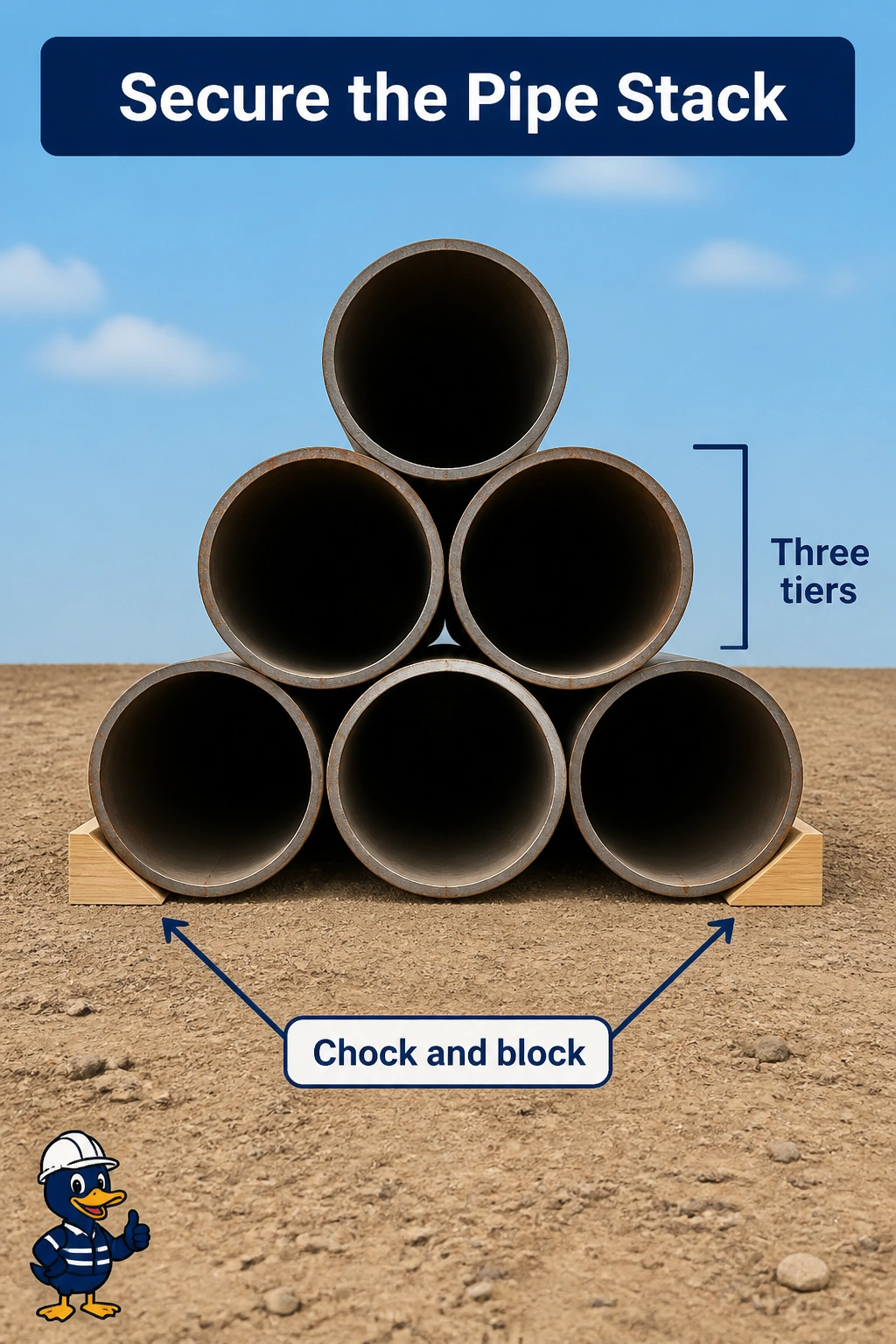
On a civil pipeline job, a delivery crew stacks 18-inch-diameter coated steel pipe three tiers high on bare ground next to the crew parking area without any side restraints. What must the foreman require?
Select an answer to reveal the explanation.
Short Explanation
Round steel pipe behaves like giant bowling pins if the bottom row is free to shift on bare dirt. Your job is to lock the base in place, not just dress up the pile with cones or tape that will never stop tons of rolling steel.
Full Explanation
Under 29 CFR 1926.250, stored materials must be stacked, racked, blocked, interlocked, or otherwise secured to prevent sliding, falling, or collapse, and structural steel or pipe must be blocked to prevent tilting or rolling. Selecting Chock and block the bottom tier securely to prevent the pipes from rolling stabilizes the base of the pyramid so upper tiers cannot shift outward and crush nearby workers or vehicles. Choosing Place orange traffic cones around the ends of the pipe stack offers only a minor visual cue and provides zero physical restraint if a pipe settles or is bumped. Choosing Restack the pipes four tiers high to reduce the yard footprint increases the height, weight, and instability of an already unrestrained pile. Choosing Tie caution tape between the top pipes as a visual warning neither restrains the heavy bottom tier nor prevents sudden collapse when a single pipe is removed. One important caveat is that blocking timbers must be placed on firm, level dunnage so soft or rain-soaked soil does not allow the chocks to sink and release the stack. As an operational check, inspect laydown racks at the start of each shift and verify chocks remain tight before and after removing any pipe.
Prefer to study offline? Printable PDF study book + test engine ($7.50, unofficial). These questions stay free here.