
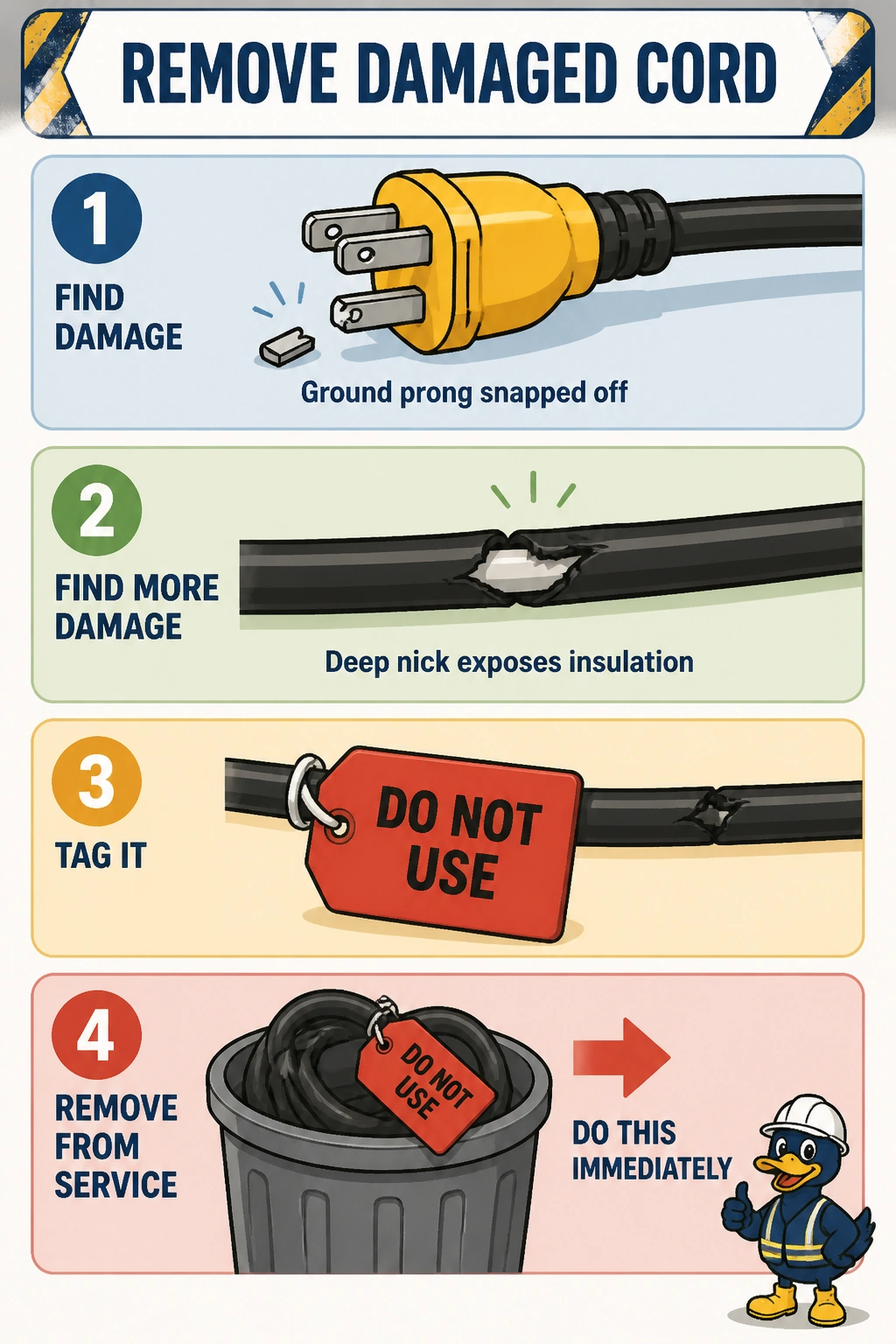
While checking temporary power on a commercial tenant buildout, an electrical foreman finds a 12-gauge extension cord powering a miter saw with its ground prong snapped off and a deep nick exposing inner conductor insulation. What must the foreman do?
Select an answer to reveal the explanation.
Short Explanation
You’re right to treat a missing ground prong and a deep jacket nick as serious shock and fire hazards, not minor wear. Don’t rely on tape, a GFCI pigtail adapter, or a drier location; tag the cord and remove it from service immediately.
Full Explanation
Under 29 CFR 1926.404 and 1926.416, flexible cords must maintain a continuous equipment grounding path and intact outer insulation, and worn or frayed cords must not be used. Tagging and removing the damaged cord from service immediately prevents workers from being exposed to energized conductors or an ungrounded saw frame. Wrapping the nicked jacket with vinyl electrical tape and continuing to use the cord does not restore the broken ground prong or provide the mechanical protection of the factory outer jacket. Plugging the two remaining prongs into a three-prong GFCI pigtail adapter still leaves the miter saw without a continuous equipment ground path and relies solely on downstream interruption if a fault occurs. Moving the cord to a dry interior hallway does not correct the exposed inner insulation or missing ground, which remain serious hazards around metal framing or concrete slabs. As an exam caveat, if a damaged cord is discarded rather than sent for qualified repair, cut off the male plug so nobody pulls it out of the trash. For a practical check, inspect all temporary cords daily at start-up, checking both strain reliefs, the outer jacket, and the ground pin before plugging in.
Prefer to study offline? Printable PDF study book + test engine ($7.50, unofficial). These questions stay free here.