
On a four-story commercial facade project, a glazing foreman notices workers installing curtain-wall brackets on the third floor directly above an active pedestrian walkway where crews carry materials below. What should the foreman do?
Select an answer to reveal the explanation.
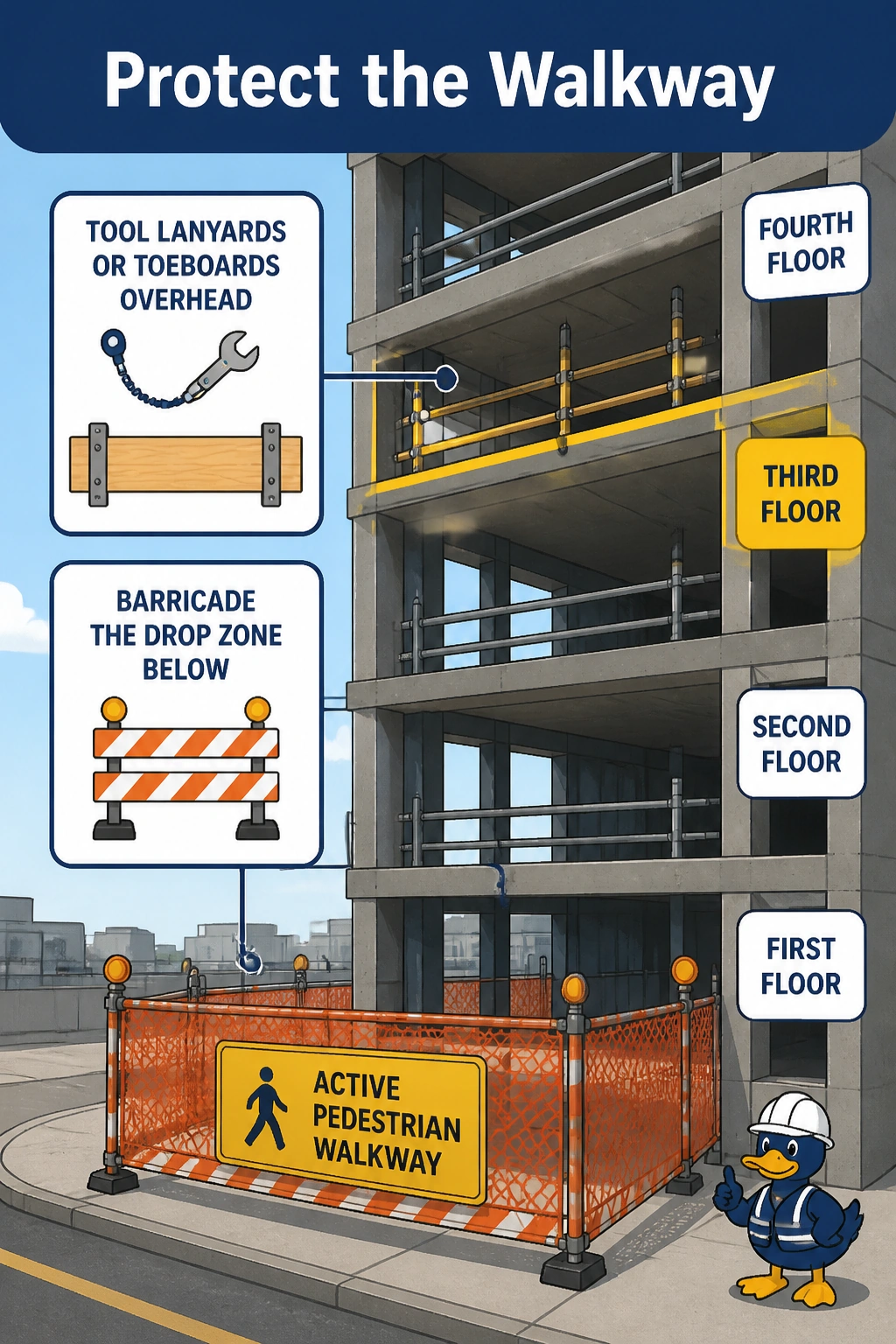
Short Explanation
A dropped wrench from three stories up moves faster than anyone below can look up and dodge. You keep people safe by barricading the drop zone and securing tools overhead, not by relying on shouted warnings or rushing foot traffic through.
Full Explanation
Under 1926.501(c), workers need hard hats plus a measure that protects them from falling objects. Barricading the drop zone and requiring tool lanyards or toeboards overhead control the hazard at its source and keep pedestrians out of the impact path; together, these measures exceed the basic protection needed here. Having the glazing crew shout a warning before loosening bolts is unreliable because an accidental drop may happen without warning, and jobsite noise can drown out a shout. Requiring workers walking below to wear safety glasses and vests does not protect them from heavy falling brackets or tools, so the overhead hazard remains uncontrolled. Posting a laborer at the corner to wave pedestrians past quickly still sends people beneath active overhead fastening rather than routing them clear of the hazard. One exam caveat: hard hats remain mandatory across the site, but personal protective equipment does not replace barricading and overhead containment. As a practical check, walk the ground perimeter to confirm that barricades and signage reroute all foot traffic clear of the facade, then inspect the third-floor crew’s tool lanyards before work resumes.
Prefer to study offline? Printable PDF study book + test engine ($7.50, unofficial). These questions stay free here.