
While installing exterior curtain-wall clips from an articulating boom lift, an ironworker clips a personal fall arrest lanyard to an adjacent structural steel column instead of the basket anchor to get extra reach. What should the supervisor do?
Select an answer to reveal the explanation.
Short Explanation
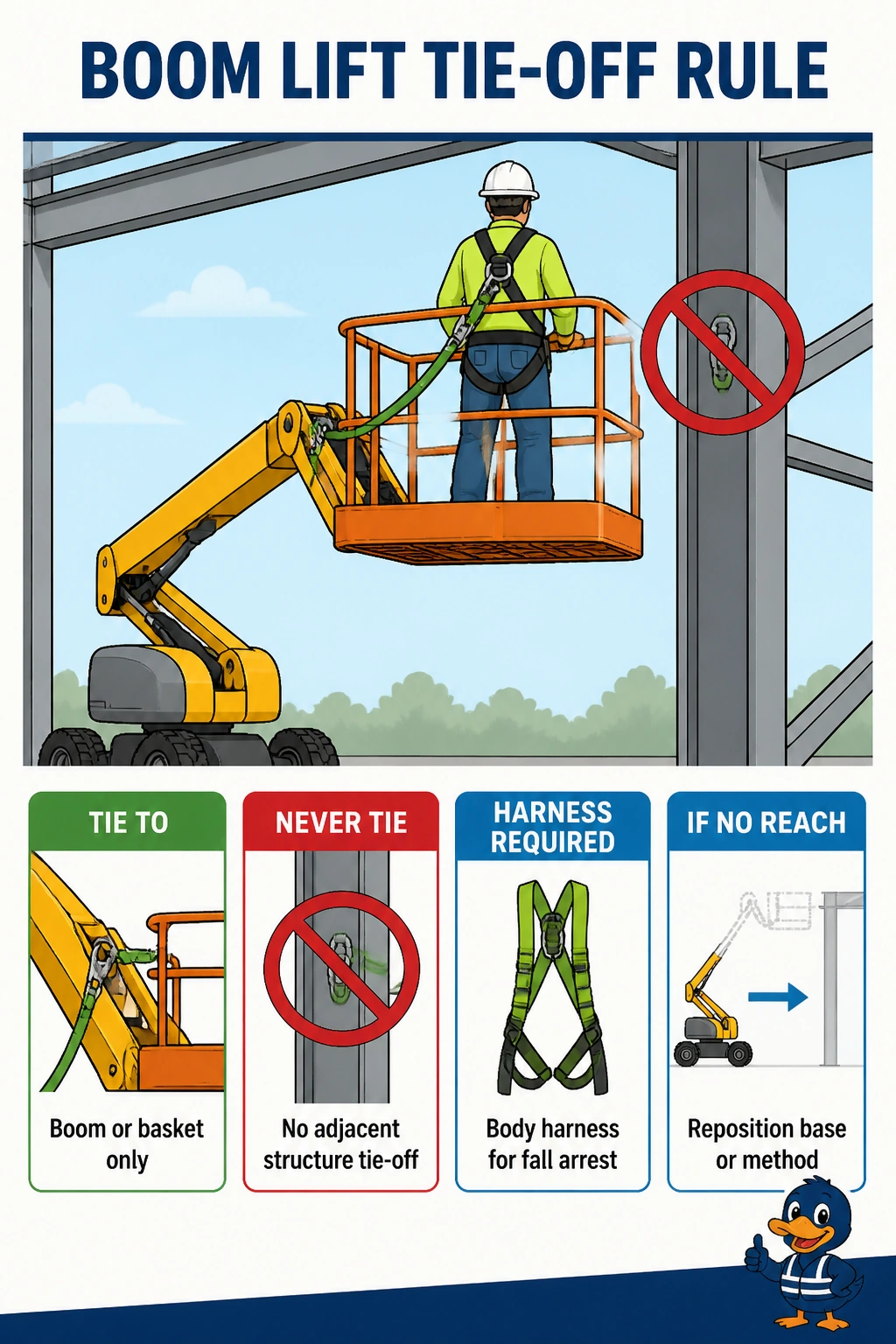
You should stop the work and have the ironworker tie off to the boom or basket, not the adjacent column. An outside column can create a pull-out hazard if the boom shifts or settles, even when the steel looks solid.
Full Explanation
Under OSHA’s aerial lift standard (29 CFR 1926.453(b)(2)(v)), an occupant must wear a body harness with a lanyard attached to the boom or basket; the note with 1926.502(d) requires a body harness rather than a body belt for fall arrest. Tying off to an adjacent structure is prohibited by 1926.453(b)(2)(iii), because an anchor outside the lift can create a deadly relative-motion trap if the boom drifts, settles, or is inadvertently moved. Verifying that the column is rated as a fall arrest anchor does not address this hazard: even an engineered anchor leaves the worker tied between separately moving structures. Using a shorter shock-absorbing lanyard on the column can worsen the pull-out risk by reducing slack before the basket moves. Keeping the lanyard on the column while the boom controls are locked out is also unsafe, since hydraulic drift or accidental contact with the controls can still move the lift. Exam caveat: if the lift cannot safely reach the work point, reposition its base or use a different access method rather than stretching out of the basket. Practical check: inspect the designated boom or basket anchor and confirm each occupant’s lanyard is attached there before elevating.
Prefer to study offline? Printable PDF study book + test engine ($7.50, unofficial). These questions stay free here.