
At the end of a framing shift, a carpenter picks up a shop air hose connected to a portable compressor and begins blowing sawdust off their shirt and forearms. What should the supervisor do?
Select an answer to reveal the explanation.
Short Explanation
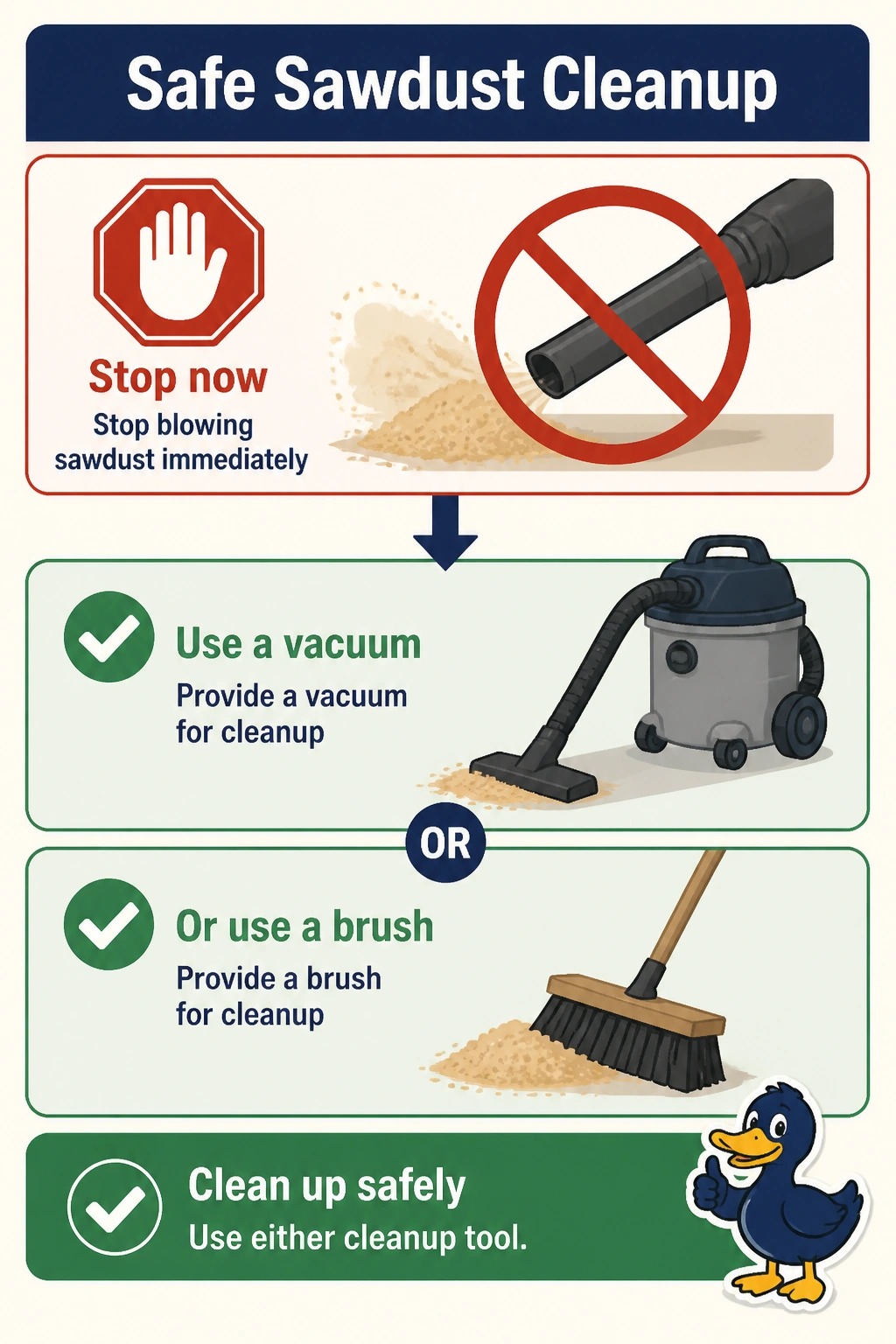
Using compressed air to dust off clothing feels quick, but it can drive wood splinters into skin, launch debris into eyes, or force air into the bloodstream through a small cut. You need to stop the air hose right away and hand the worker a brush or vacuum.
Full Explanation
Compressed air must never be used to clean clothing or skin because high-pressure air can inject particles or air bubbles through minor abrasions—causing a potentially fatal embolism—and propel debris into eyes, so the supervisor must "Stop the practice immediately and provide a vacuum or brush for cleanup". While OSHA's pneumatic tool standard (29 CFR 1926.302) restricts compressed air for cleaning surfaces to reduced pressure with chip guarding and PPE, blowing dust off personnel is never acceptable. Choosing to "Require the carpenter to wear safety glasses while blowing off their shirt" leaves skin, ears, and bystanders exposed to high-velocity particles and air-injection hazards. Choosing to "Allow the carpenter to continue if the nozzle stays at least two feet away" still creates airborne dust clouds and eye hazards without solving the unsafe habit. Choosing to "Have the carpenter step outside the building before using the air hose" moves the dust outside while leaving the worker exposed to the same direct-injury risks. As a caveat, even surface cleaning with compressed air requires a pressure-reducing nozzle, chip guarding, and eye protection. As an operational check, remove unregulated blowguns from framing carts and stage HEPA vacuums or bench brushes at exit points.
Prefer to study offline? Printable PDF study book + test engine ($7.50, unofficial). These questions stay free here.