
A mobile crane is scheduled to hoist rooftop HVAC units near an energized overhead distribution line, and the operator suggests having a laborer watch the boom by eye. What must the foreman do?
Select an answer to reveal the explanation.
Short Explanation
Electricity from an overhead line can arc before a boom ever touches the wire, so eyeballing clearance is a gamble you never want to take. The trap is relying on a casual lookout, special slings, or mats instead of formal distance controls.
Full Explanation
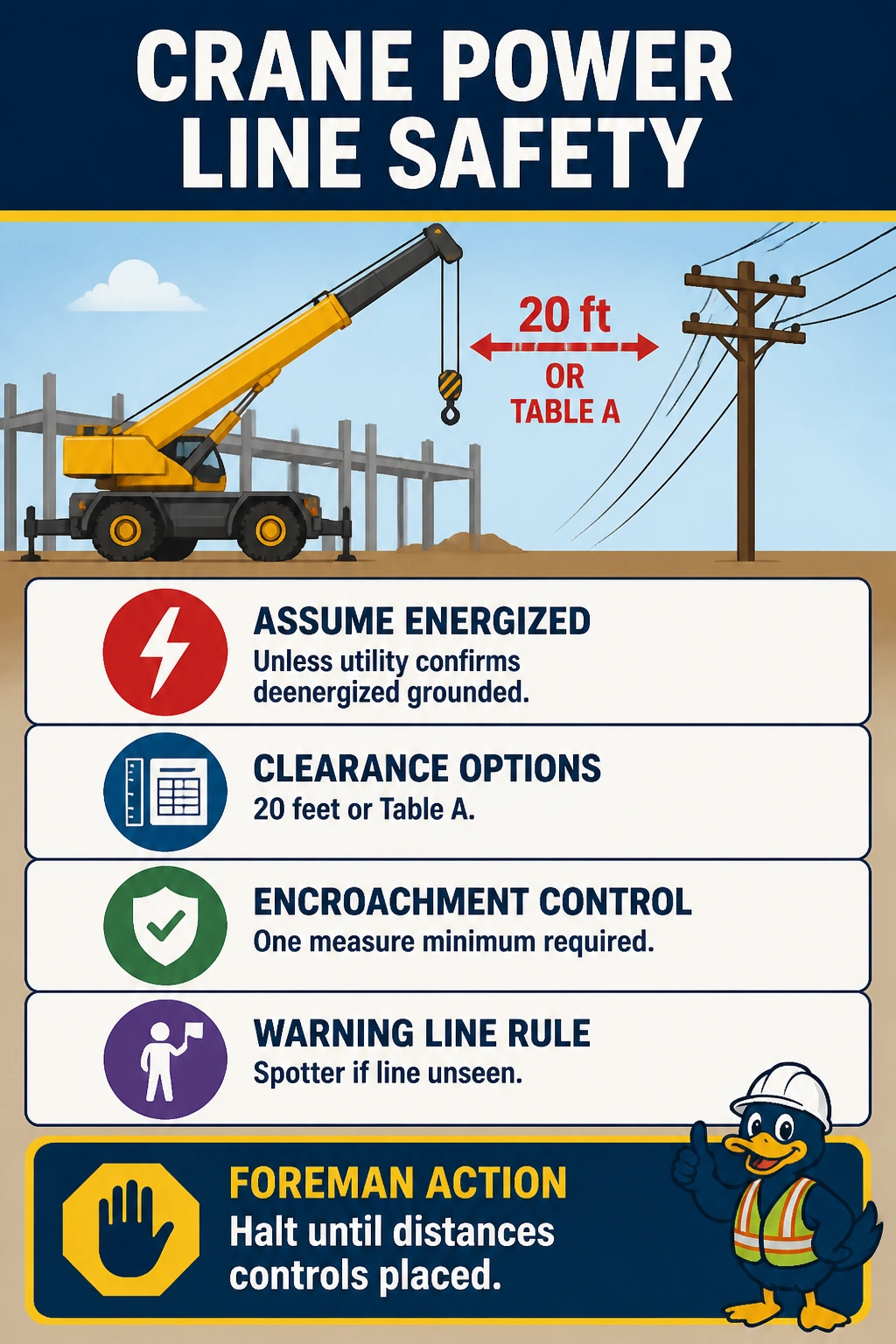
Under OSHA's crane power-line safety rules (29 CFR 1926.1408), employers must identify the work zone and enforce required minimum clearance distances before operating near energized lines. Lines are presumed energized unless the utility confirms they are deenergized and visibly grounded. The foreman must Halt setup until power-line clearance distances and required encroachment controls are in place. One compliance path is maintaining a 20-foot clearance without a voltage determination, while Table A clearances apply after the utility provides the voltage. Encroachment prevention requires at least one measure such as a proximity alarm, a dedicated spotter, an automatic warning device, a range-limiting device, or an insulating link, with an additional spotter only when the operator cannot see the required elevated warning line. Having the laborer watch the boom from beside the cab and call out when the line looks close fails because casual visual judgment cannot enforce measured distances or prevent arcing. Deciding to Proceed with the lift using synthetic web slings instead of wire rope slings to insulate the load fails because the crane boom, hoist cable, and structure remain conductive. Choosing to Have the crew place rubber insulating mats beneath the crane's outrigger pads before starting the hoist does not prevent high-voltage contact or step-potential hazards around the crane.
Prefer to study offline? Printable PDF study book + test engine ($7.50, unofficial). These questions stay free here.