
A utility crew foreman on a commercial site notices the excavator operator is placing trench spoil right up against the top edge of a 6-foot-deep water-line trench to save swing time. What should the foreman do first?
Select an answer to reveal the explanation.
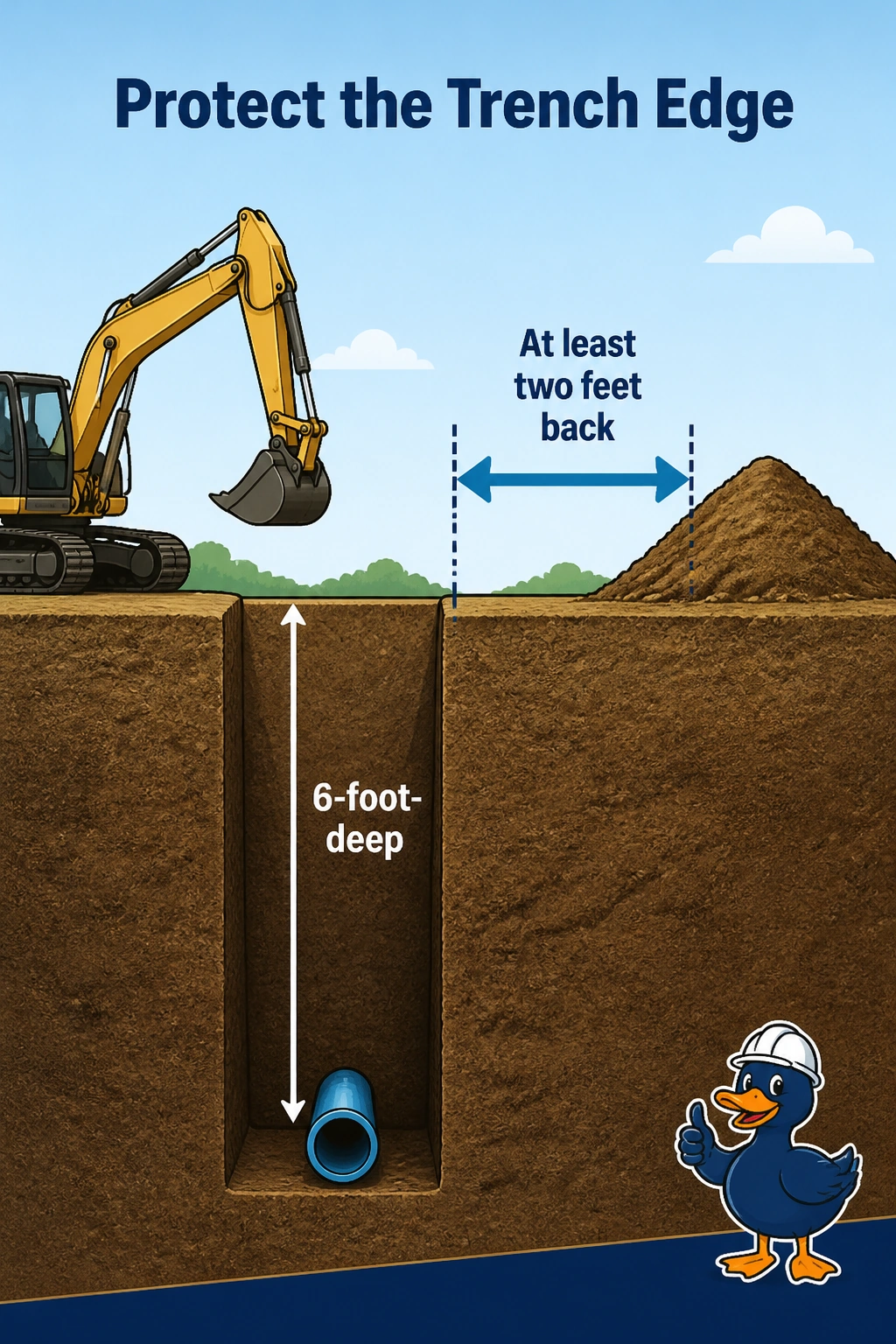
Short Explanation
Think of a spoil pile on a trench edge like stacking bricks on a cardboard box—sooner or later the wall gives way. The trap is letting the crew keep digging while trying to dress up a pile that is still too close; you have to get that weight back at least two feet first.
Full Explanation
Under OSHA 29 CFR 1926.651(j)(2), excavated soil and other materials must be kept at least 2 feet back from the edge of an excavation, or retained by a device that prevents them from falling or rolling in. Choosing to "Stop the digging and require the spoil pile to be moved at least two feet back from the edge" removes both the surcharge weight that stresses the trench wall and the loose rock hazard above workers. Deciding to "Have the operator slope the spoil pile away from the trench while keeping it at the edge" still leaves heavy surcharge weight right on the unstable lip, inviting a cave-in. Choosing to "Install a warning line two feet back from the trench edge for foot traffic" addresses pedestrian access rather than soil load and falling debris. Waiting to "Pause work only if groundwater begins seeping into the bottom of the trench" ignores an active cave-in hazard until conditions worsen. Caveat: even a two-foot setback does not replace protective systems such as shoring, shielding, or sloping in trenches five feet or deeper. As an operational check, walk the trench rim with a tape measure before entry and verify both the two-foot spoil setback and the competent person's daily inspection.
Prefer to study offline? Printable PDF study book + test engine ($7.50, unofficial). These questions stay free here.